Time-Spent: The New Advertising Currency?
How long will you spend reading this article? Do you usually watch an entire video ad on YouTube without hitting skip?
The answers circle back to engagement — something every advertiser cares about deeply, yet struggles to measure with any real precision.
Engagement is at the centre of a growing movement in digital advertising: buying and selling online inventory where time itself is the unit of value and the basis of price.
That model is called time-spent, and it's measured in terms of cost-per-second (CPS) or cost-per-hour (CPH).
How Does Time-Spent Work?
Up until now, online advertising has been bought and sold largely the same way it was in traditional print media. Brands contracted with publishers to deliver a certain number of ads — impressions — in specific placements. Because of the volumes involved, rates were calculated per thousand, producing the familiar cost per thousand (CPM) metric.
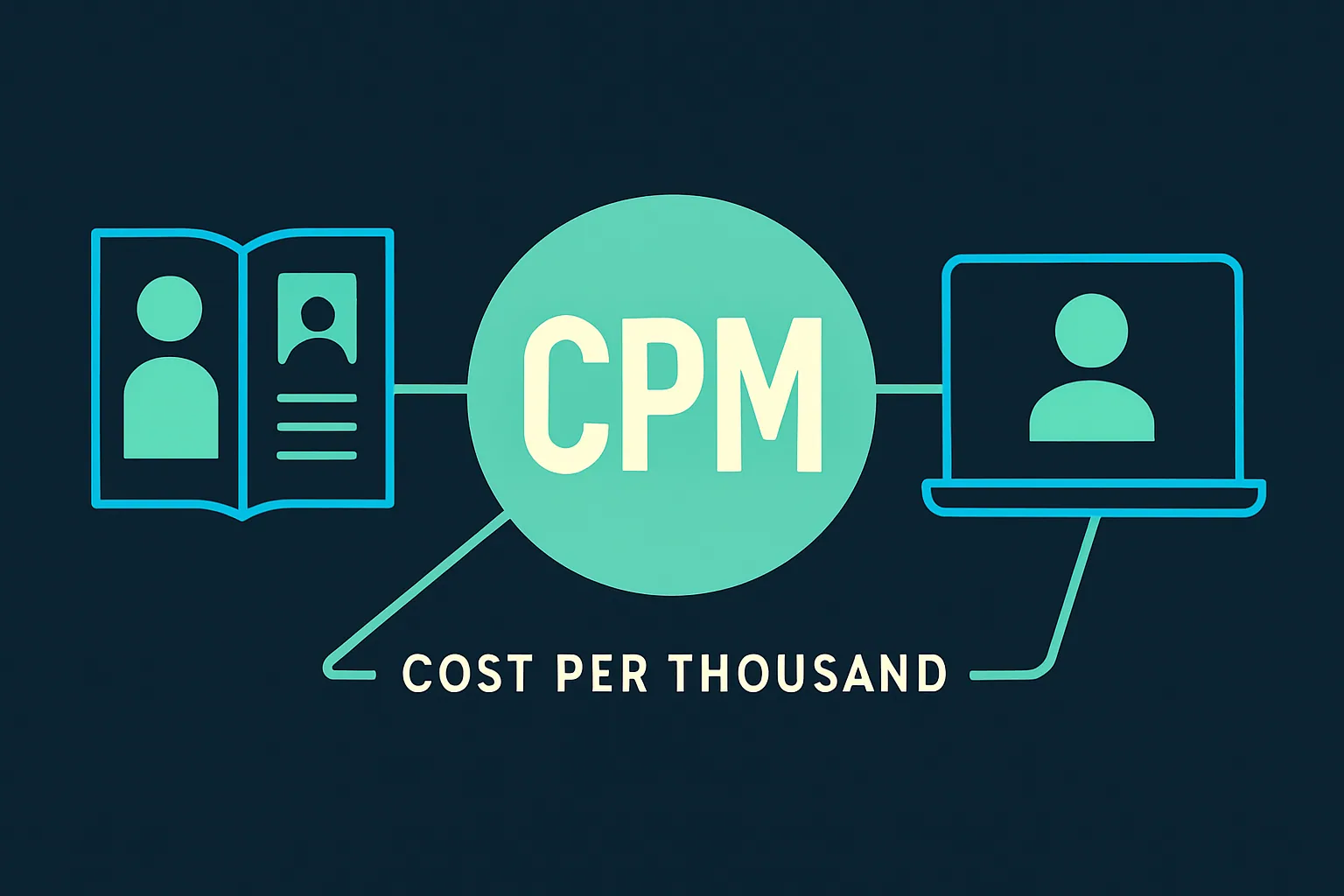
That legacy approach was eventually complemented by measurements unique to the digital environment: Cost Per Click (CPC) and the broader Cost Per Action (CPA).
As inventory expanded with the rapid growth of the internet, advertisers pushed for more control over their ad spend — and more importantly, over the measurable value of the media they were buying. That pressure gave rise to the "viewable impression" standard.
Now there's another contender. In May 2015, the Financial Times announced a partnership with Chartbeat to begin selling premium inventory on a cost-per-hour basis — a meaningful signal that the industry was ready to experiment with time as currency.
Because time-spent is still a relatively young concept, implementations vary. The FT's model charges advertisers for blocks of time, but only when a creative has been viewed for at least five seconds. A different approach, promoted by vendors like Webspectator and adopted by major magazine publishers including large print-and-digital media groups, uses a "guaranteed time slot" — typically in 20-second increments — to ensure an ad is actually seen.
Why Does This Matter?
It would be easy to dismiss time-spent as just another set of numbers. But there are two substantive reasons why this metric deserves serious attention.
Engagement
Buying and selling inventory based on impressions served has an intuitive appeal — it makes calculating ROI feel straightforward. That simplicity, however, is exactly the problem.
CPM treats every impression identically, regardless of the advertiser, the creative's quality, or the context of the surrounding content. The viewable impression standard doesn't improve things much. Neither approach captures the complex reality of how people actually engage with what they see online.
The result, amplified by the efficiency of programmatic technology, is oversaturation. Users get inundated with ads and respond by tuning out — or by installing ad blockers. A more engagement-centred approach to buying and selling media has become less of a nice-to-have and more of a structural necessity.
Fraud
The second driver for adopting time-spent metrics is the ongoing fight against ad fraud. The scale of the problem is significant: estimates put advertiser losses to ad fraud at over $7 billion for 2016 alone.

Progress has been made on this front — monitoring suspicious traffic sources, patching vulnerabilities in legacy browsers, and deploying more sophisticated analytics have all helped. But fraud operators continue to evolve.
Measuring time spent on websites — even as a standalone analytics signal — is one of the strongest indicators that a visitor is human rather than machine-generated. By embedding the time element directly into the ad-serving process, advertisers gain a more robust mechanism for protecting their spend.
Will Time-Spent Metrics Reshape AdTech?
Given the acknowledged limitations of the CPM model and mounting pressure to put engagement and user experience at the centre of digital marketing, time-spent has real potential to change the dynamics of the industry:
Reduced inventory: Under a guaranteed time slot model, creatives must be viewed for longer than the current viewable impression standard of one second. Even as a user navigates to a new page, they may continue to see the same brand's ad. That might sound unfavourable for publishers, but reducing supply while increasing emphasis on value can ultimately work in their favour.
Greater emphasis on content quality: Once ads are priced by the amount of time they're viewed, placement and context become critical. Creatives placed alongside high-quality, long-form text and premium video — think viral clips or live-streamed content — will command significantly higher demand.
More sophisticated analytics and programmatic tooling: Measuring effectiveness and calculating ROI under a time-spent model will require sharper tools. That means advances in audience segmentation within DMPs, ad servers capable of matching publisher content with contextually relevant creatives, and more refined RTB processes at the exchange level.
Rethought campaign structures: As advertisers adapt to the paradigm shift, they may find themselves reassessing campaigns from the ground up. If a potential customer is exposed to an ad for a guaranteed duration — producing a meaningful uplift in brand awareness — the entire conversion funnel logic may need to be restructured.
An overnight revolution in AdTech driven by CPH and guaranteed time slot buying is unlikely. But the trajectory is clear: more publishers are experimenting with this model, and as adoption grows, advertisers will face real adjustments — alongside a genuinely different set of opportunities.