3 Key Areas Ad Agencies Need to Consider Before Renting or Building a DSP
The rise of technology-driven processes like real-time bidding (RTB) has fundamentally reshaped the online advertising ecosystem. AdTech companies have developed algorithms and platforms that now allow brands to bypass the traditional advertising agency entirely — enjoying lower costs, higher ROI, and more direct audience targeting than agencies have historically offered.
One way agencies can counter this trend and retain brand clients is by building their own demand-side platform (DSP).
Key Points
- A demand-side platform (DSP) is an AdTech platform that allows brands and ad agencies to programmatically buy ad impressions from publishers in a streamlined, optimized manner.
- DSPs enable precise ad impression evaluation and bidding based on set criteria, improving ad relevance and campaign performance.
- DSPs integrate with ad exchanges, SSPs, DMPs, and e-commerce platforms to access ad inventory, enhance targeting capabilities, and leverage data for campaigns.
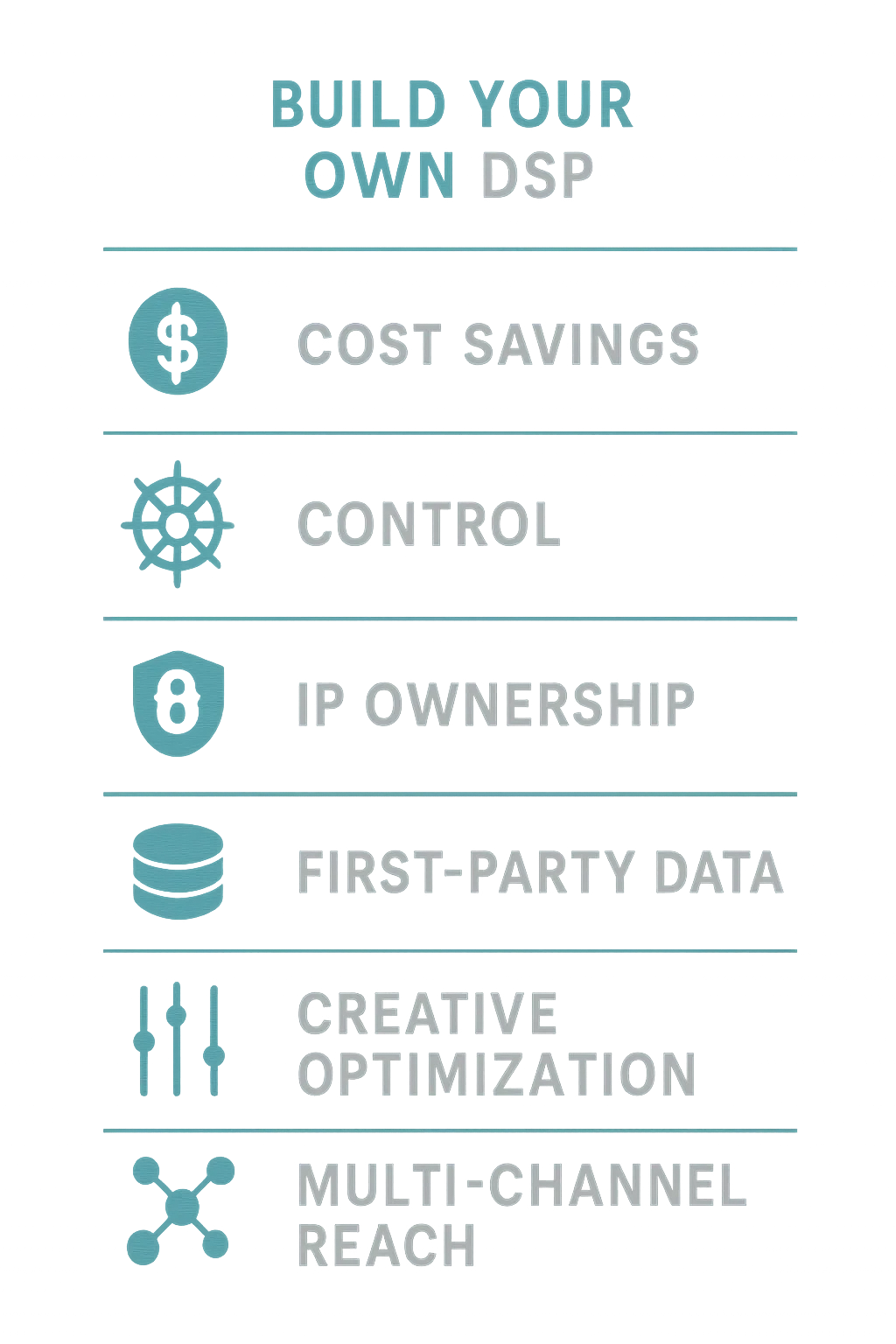
- Building a DSP allows agencies to save on ad markup, gain complete control over technology and product roadmap, and own intellectual property.
- Agencies need to consider the financial advantages, media budget, ongoing costs, and technical skills when deciding whether to rent or build a DSP.
- Effective utilization of DSPs enhances ad campaigns, ensures they reach the right audiences, and achieves better ROI for agencies and their clients.
Why a Demand-Side Platform Matters for an Ad Agency
A demand-side platform (DSP) is an AdTech platform that allows ad agencies to buy ad impressions from publishers via supply-side platforms (SSPs) and ad exchanges. DSPs are critical for any agency that wants to streamline and optimize its ad buying processes.
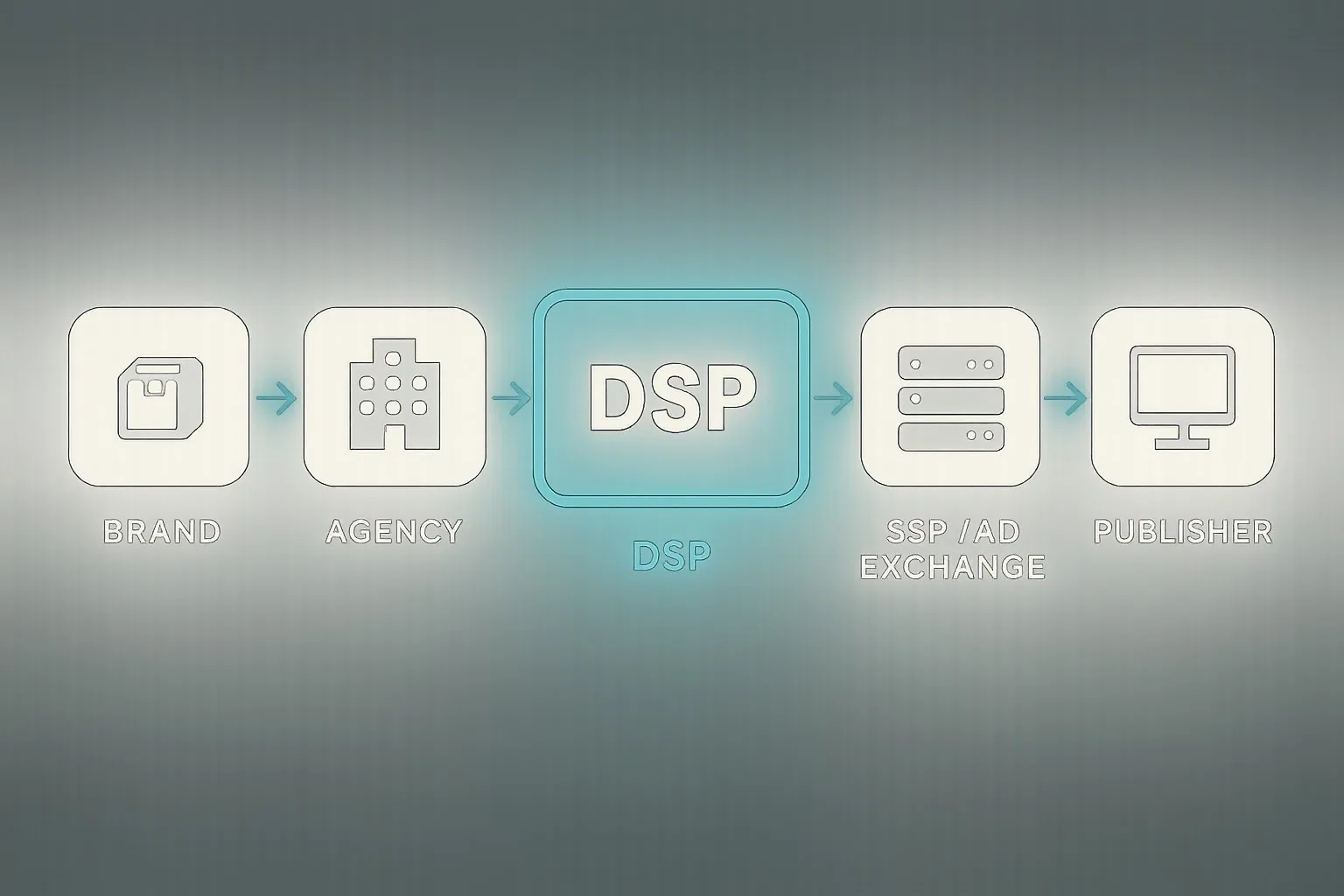
DSPs automate ad buying, making it faster, cheaper, and more efficient. Rather than manually negotiating with individual publishers, DSPs enable agencies to purchase advertising inventory at scale across channels — display, video, mobile, search, and CTV — from a broad range of publishers in real-time.
A core component of any DSP is the bidder: a mechanism built into the platform that automates the evaluation of ad impressions and bidding in real-time based on criteria set by the agency. These criteria can include target audience, budget, and campaign objectives. This automation lets agencies deliver impressions to the right audience, improving both ad relevance and campaign performance.
What Agencies Need to Know About DSPs
Navigating the DSP landscape effectively requires understanding several foundational aspects of how these platforms operate.
Platforms That Integrate with a DSP
To function correctly, a DSP must integrate with a range of other platforms:
- Ad exchanges: This integration enables the DSP to access a wide range of ad inventory from various publishers. Ad exchanges pass bids from SSPs to multiple DSPs simultaneously, allowing advertisers to evaluate each impression and bid accordingly.
- SSPs: This integration enables publishers to offer their inventory to multiple DSPs via ad exchanges.
- Data management platforms (DMPs): This integration enhances targeting capabilities by connecting the DSP to audiences and segments created within a DMP.
Fee Models Charged by DSPs
DSP fee structures vary considerably across vendors. Some charge a minimal monthly fee; others combine set fees, monthly fees, contract payments, and impression fees. The industry has moved toward greater transparency in fee disclosure, with vendors increasingly providing itemized breakdowns so that marketers and publishers can make informed decisions about their AdTech supply chain.
The main fee models in use include:
- Percentage of ad spend: The most common DSP fee model — a percentage of total media spend made through the platform. This typically falls between 8% and 15% of total ad spend.
- Managed services fee: An add-on to the percentage-of-spend model, covering campaign management, optimization, and support. This typically ranges from 10% to 12%.
- Third-party data revenue share: A revenue-share fee applied when external data sources are used for audience targeting, typically between 10% and 30%.
- Various add-on fees: Specific features or functionalities offered beyond the standard service at additional cost, varying by platform.
- Markups on proprietary supply and data: When a DSP offers its own curated inventory or proprietary data products, markups on those offerings affect the final cost to the advertiser.
- Inherent RTB costs: DSPs handle certain RTB-related costs — such as foreign exchange fees when buying in a different currency or managing discrepancies between buyer and seller reporting. Best practice is for these to be transparently disclosed.
Who Manages Ad Campaigns Inside a DSP?
Within a DSP, agencies set up and manage their clients' campaigns through a unified user interface. Most platforms include dedicated modules for uploading creatives, configuring targeting preferences, defining budgets, and selecting ad formats.
The typical operator is an AdOps specialist — a professional who manages and optimizes ad campaigns. AdOps practitioners generally require technical expertise across ad servers, DSPs, SSPs, self-serve ad platforms, analytics tools, HTML, JavaScript, and reporting platforms.
Inside the DSP, AdOps specialists test creatives, troubleshoot ad delivery issues, optimize campaign performance, and interpret data and metrics.
What Is a Self-Serve DSP?
Unlike managed-service DSPs — where the DSP's own AdOps team runs campaigns on the client's behalf — a self-serve DSP puts agencies and advertisers in direct control of their campaigns.
Benefits of the self-serve model include:
- Complete control over campaign settings, targeting options, and budget distribution, allowing tailoring to specific goals.
- Real-time optimization, including adjusting bids and targeting parameters as performance data comes in.
- Eliminating reliance on third-party ad management, extracting more value from ad spend.
- Access to detailed reports and analytics, enabling data-driven decisions without delay.
Should an Ad Agency Rent or Build a DSP?
Even agencies already offering programmatic buying to clients will eventually face this question: continue using existing rented technology, or bring it in-house by building a proprietary DSP?
While multiple factors are involved, the primary decision usually comes down to which option offers the greater financial advantage. Three areas require careful analysis:
- The agency's media budget.
- The ongoing operational costs of running a DSP.
- The technical skills required to maintain the platform.
For a comprehensive breakdown of the financial considerations, the ExchangeWire article Should Agencies Acquire or Build a Technology Stack to Remain Competitive? provides useful context.
The Main Reasons to Build a Proprietary DSP
There are several compelling reasons an advertising agency might choose to build rather than rent.
Save on Ad Markup, Fees, and Commissions
Renting a DSP typically means paying a markup of 8% to 15% on media costs. For agencies running significant media budgets, building a proprietary DSP can produce substantial savings over time by eliminating that markup entirely.
Control over Technology
Most off-the-shelf DSPs offer a standard feature set, but agencies often find they can't add the specific capabilities they need — or are stuck with features they don't use. Building a custom DSP means including exactly the functionality required, omitting the rest, and maintaining full control over the product roadmap and optimization algorithms.
Ownership of Intellectual Property
Beyond cost savings, owning proprietary DSP technology can meaningfully increase an agency's company value and create competitive differentiation.
Proprietary technology gives an agency full control over the ad buying process — inventory selection, targeting options, and campaign management — and enables it to offer unique features that attract clients and set the agency apart in the market.
There is also a licensing angle: an agency that owns its DSP technology can license it to other advertisers, generating additional revenue through licensing fees or royalties. And unlike a rented platform, a custom DSP can be tailored precisely to the agency's own business strategy, workflows, and client needs.
Key Functionalities to Include in a Custom DSP
First-Party Data Infrastructure
Agencies that want to run more personalized and targeted campaigns should build first-party data support directly into their DSP. This infrastructure enables more relevant targeting and ultimately better campaign performance and ROI.
Creative Optimization
Custom DSPs with creative optimization capabilities allow agencies to test and optimize ad creatives in real-time, ensuring the most engaging and effective ads are delivered to the target audience and driving better overall campaign results.
Multichannel Reach
Agencies typically build DSPs that access a broad range of ad formats and channels — display, video, mobile, in-app, CTV, audio, and more. Multichannel capabilities allow agencies to run comprehensive cross-channel campaigns from a single platform.
Reporting and Analytics
Robust reporting and analytics features are essential for measuring campaign performance, tracking key metrics, and optimizing advertising efforts on an ongoing basis.
The Benefits of Integrating a DSP with a DMP
Agencies can significantly improve media buying decisions by integrating their DSP with a data management platform (DMP). A DMP equips the DSP with valuable data — consumer demographics, browsing behaviour, purchase history, and more — enabling more precisely targeted campaigns that reach the most appropriate audience segments across relevant ad formats and placements.
DSPs and DMPs can be integrated through several methods, including APIs, cookie syncing, and server-to-server (S2S) integration.
DSP Development in Practice: Two Industry Examples
To illustrate what custom DSP development involves at scale, the following examples — drawn from publicly documented AdTech projects — highlight common engineering challenges and outcomes.
Data-Driven Programmatic DSP
One DSP project involved building a fault-tolerant, scalable platform capable of handling billions of bid requests in real-time while providing transparency and clear reporting for users.
The platform's backend was built using a combination of Python, Twisted, Redis, and Storm, while the frontend was crafted with JavaScript and Knockout JS to deliver a user-friendly interface. The platform achieved market recognition — including being featured at TechCrunch Disrupt 2013 — and was subsequently acquired in August 2014.
Location-Based Mobile DSP
A mobile advertising platform engaged development partners to build a DSP specifically designed to facilitate location-based mobile advertising campaigns for major brands. The key technical outcomes included:
- Expanded inventory access: Integration with multiple ad exchanges and SSPs enabled the DSP to tap into a broader inventory pool, boosting daily impression capacity to over 40 million impressions.
- Optimized infrastructure: Deploying Amazon Web Services (AWS) components — including Amazon RDS, EC2, DynamoDB, and Lambda — increased bidding request capacity, reduced manual operational tasks, improved frequency capping, streamlined instance management, and enhanced campaign reporting.
- Reduced discrepancies: Custom reporting mechanisms built in collaboration with ad exchanges and SSPs reduced discrepancies between impressions and media costs from approximately 50% down to around 1%, significantly improving media spend efficiency.
- Enhanced stability and monitoring: 24/7 monitoring and a defined service-level agreement (SLA) ensured platform stability and enabled immediate responses to performance issues and ongoing infrastructure optimizations.
Summary
A demand-side platform is a foundational tool for agencies that want to automate ad buying, implement advanced targeting strategies, scale their reach, participate in real-time bidding, and make data-driven decisions across programmatic channels. Building a custom DSP gives agencies the ability to eliminate third-party markup, maintain full technology control, and own the intellectual property that underpins their programmatic offering.
The decision to rent or build ultimately depends on the agency's media budget, operational capacity, and long-term technology strategy — but for agencies with sufficient scale, the financial and strategic case for a proprietary platform is compelling.