Agile vs. Waterfall: Comparing Methodology Success Rates and Trade-offs
Whether you're manufacturing a car, engineering a spacecraft, or building a house, project-management methodologies are the backbone of any plan. Software development is no different — it demands a solid, deliberate approach to managing scope, time, and cost.
There are a number of methodologies in the software-development industry: some are new takes on older methods, others represent genuinely fresh thinking. The two most widely used are Agile and the traditional Waterfall model. Practitioners on both sides tend to argue their preferred approach is superior, so before settling on which delivers better outcomes, it's worth examining their core differences.
Agile Methodologies
Agile methodologies were born in the early 1990s. The model has become the project-management approach of choice in many development shops, largely because of its emphasis on optimizing development time and delivering a functional application as quickly as possible.
There is an ongoing debate within the industry about what exactly constitutes agile development. The most widely accepted definition comes from a document produced by 17 development practitioners: The Manifesto for Agile Software Development, commonly called the Agile Manifesto. It establishes four core values:
Individuals and interactions over processes and tools. Working software over comprehensive documentation. Customer collaboration over contract negotiation. Responding to change over following a plan.
These values centre on obtaining the best results possible rather than adhering rigidly to a predefined plan.
A defining feature of agile is the concept of sprints — miniature projects within the main project, typically divided into two- to four-week increments. Each sprint is designed to produce a new or improved working feature, focusing development effort on the most essential parts of the application. This structure creates a sense of continuous progress and allows teams to re-evaluate the state of the product at each increment.
The piece-by-piece approach lets developers anticipate and respond to major obstacles — whether triggered by user feedback, changes in the target market, or evolving business priorities — and keep the project on a sensible course.
Waterfall Model
Originally drawn from the construction and manufacturing industries, the Waterfall model found its way into software development decades ago. Unlike agile's flexible nature, Waterfall is defined by strict, linear principles. Each phase of development must be completed entirely before the next one begins, with no overlap between stages.
Agile vs. Waterfall: Project Success and Failure Rates
Multiple independent studies have compared success and failure rates between agile and Waterfall, and the results point consistently in one direction.
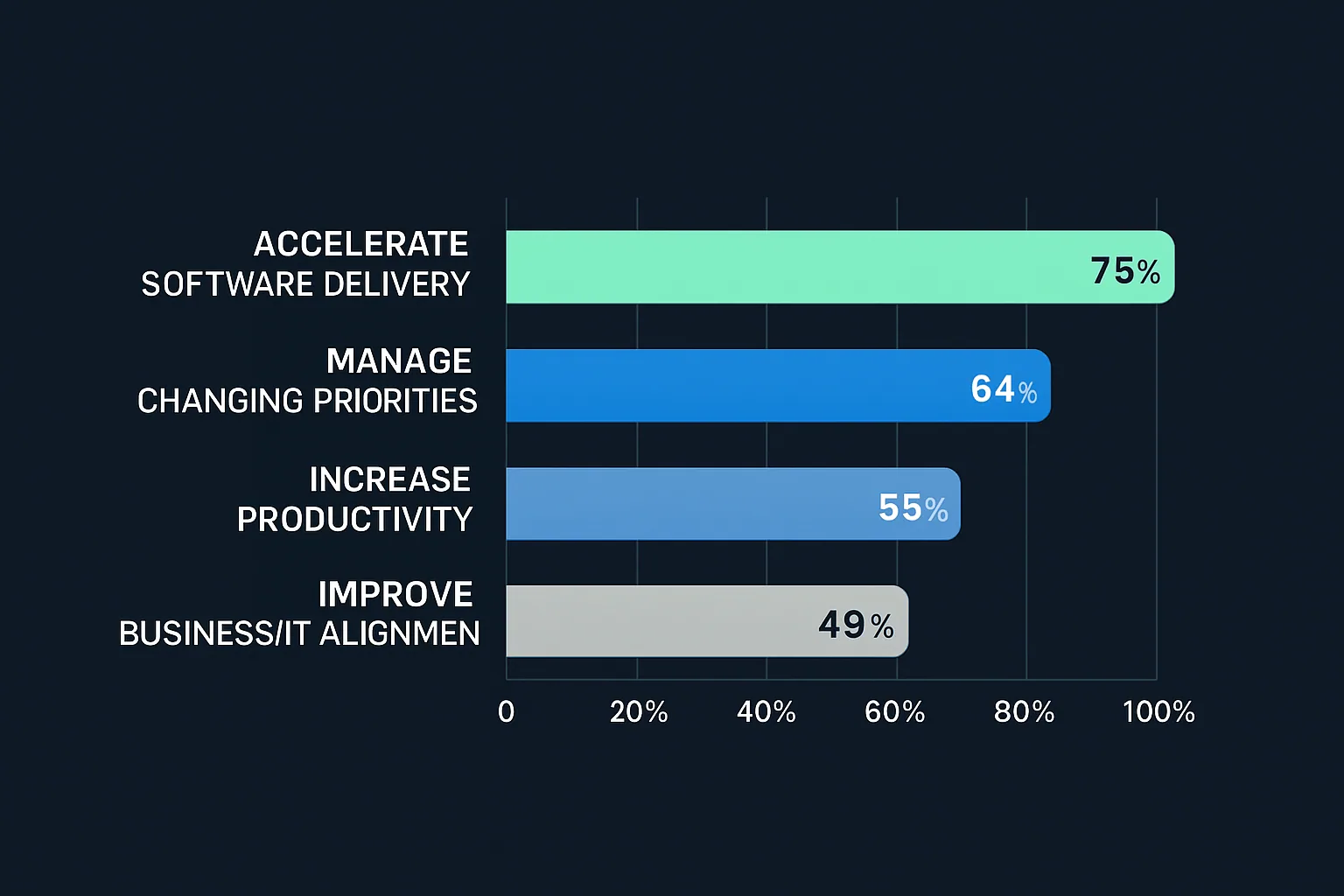
Ambysoft's 2013 Project Success Rates Survey found that agile has a 64% success rate, compared to just 49% for Waterfall.
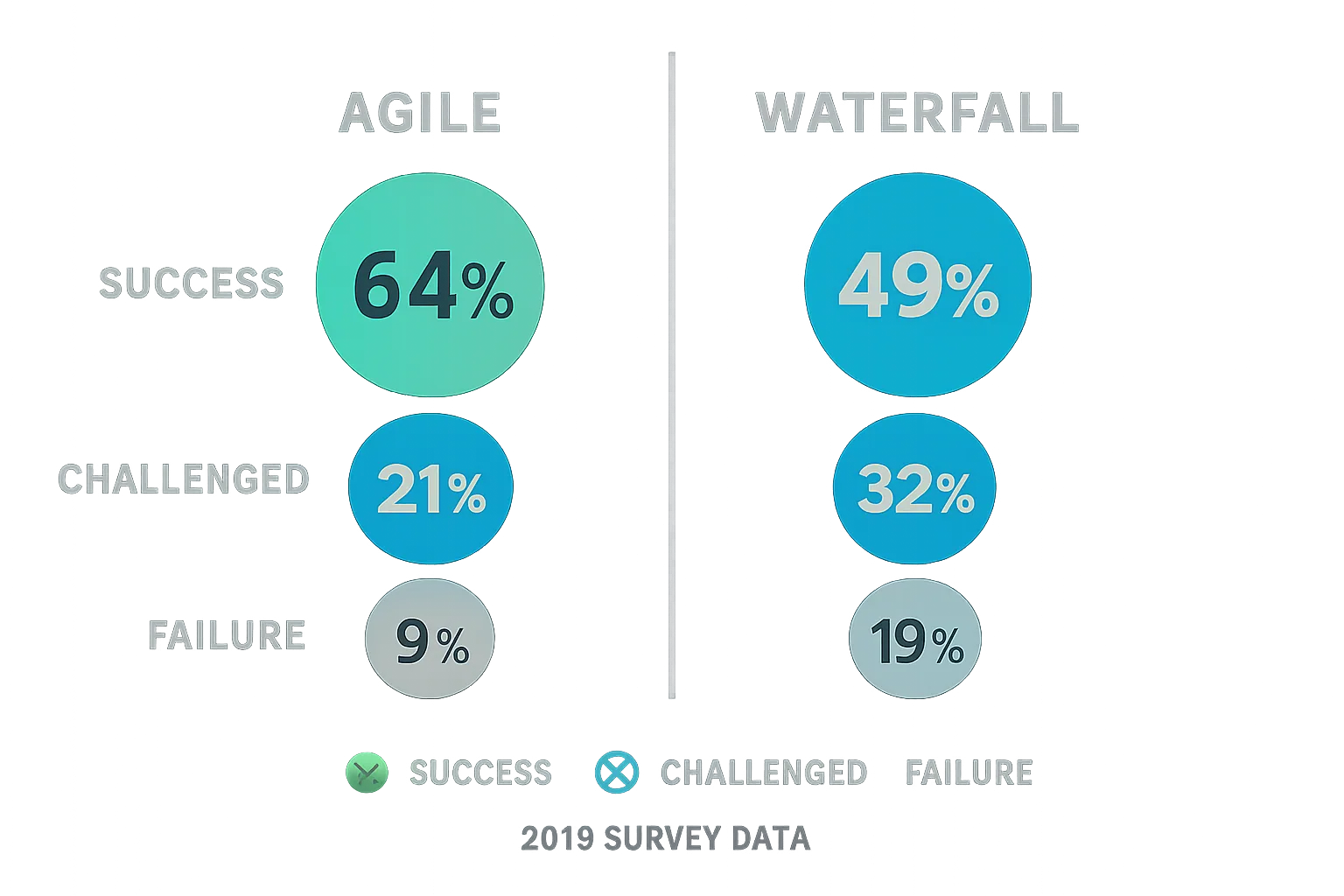
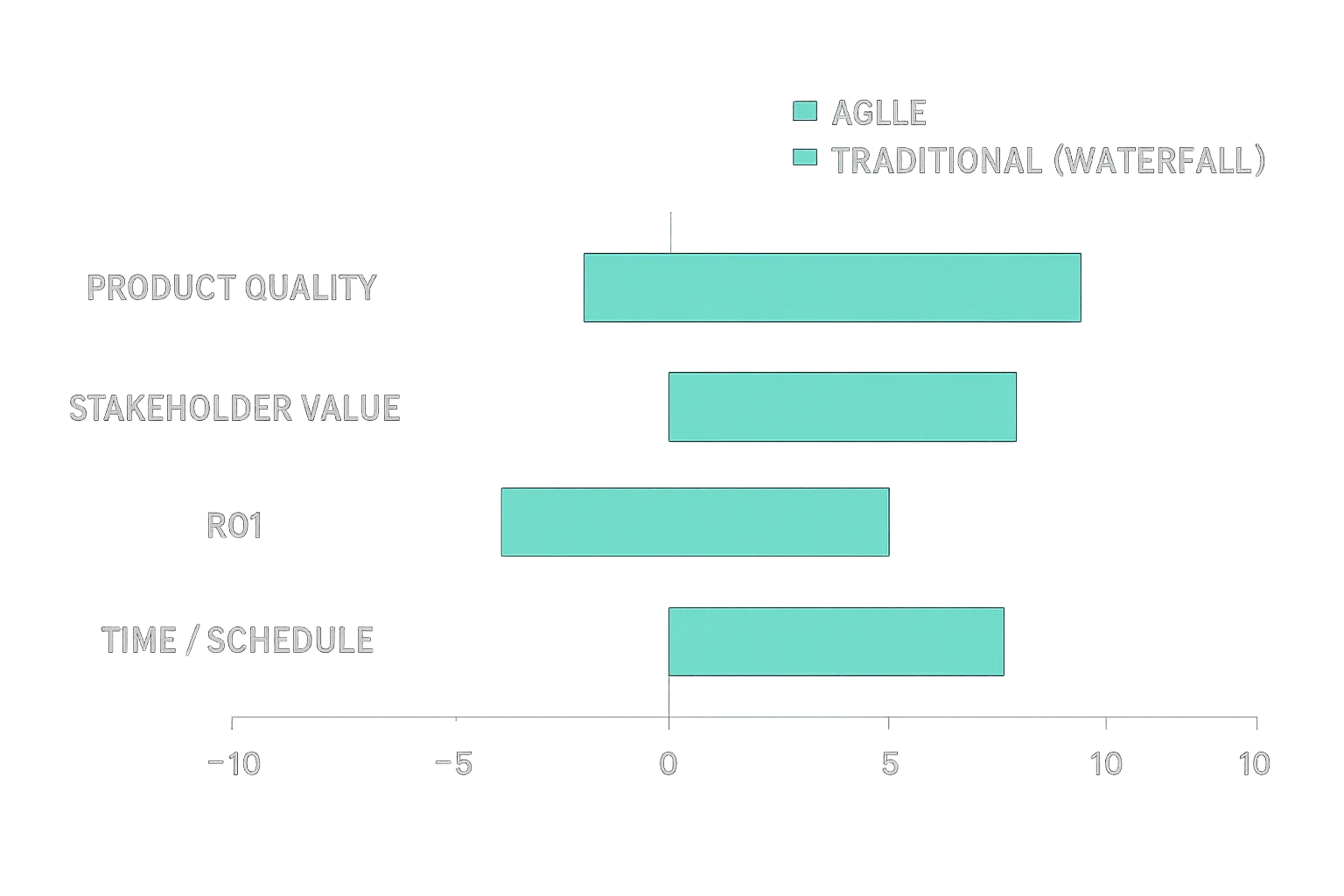
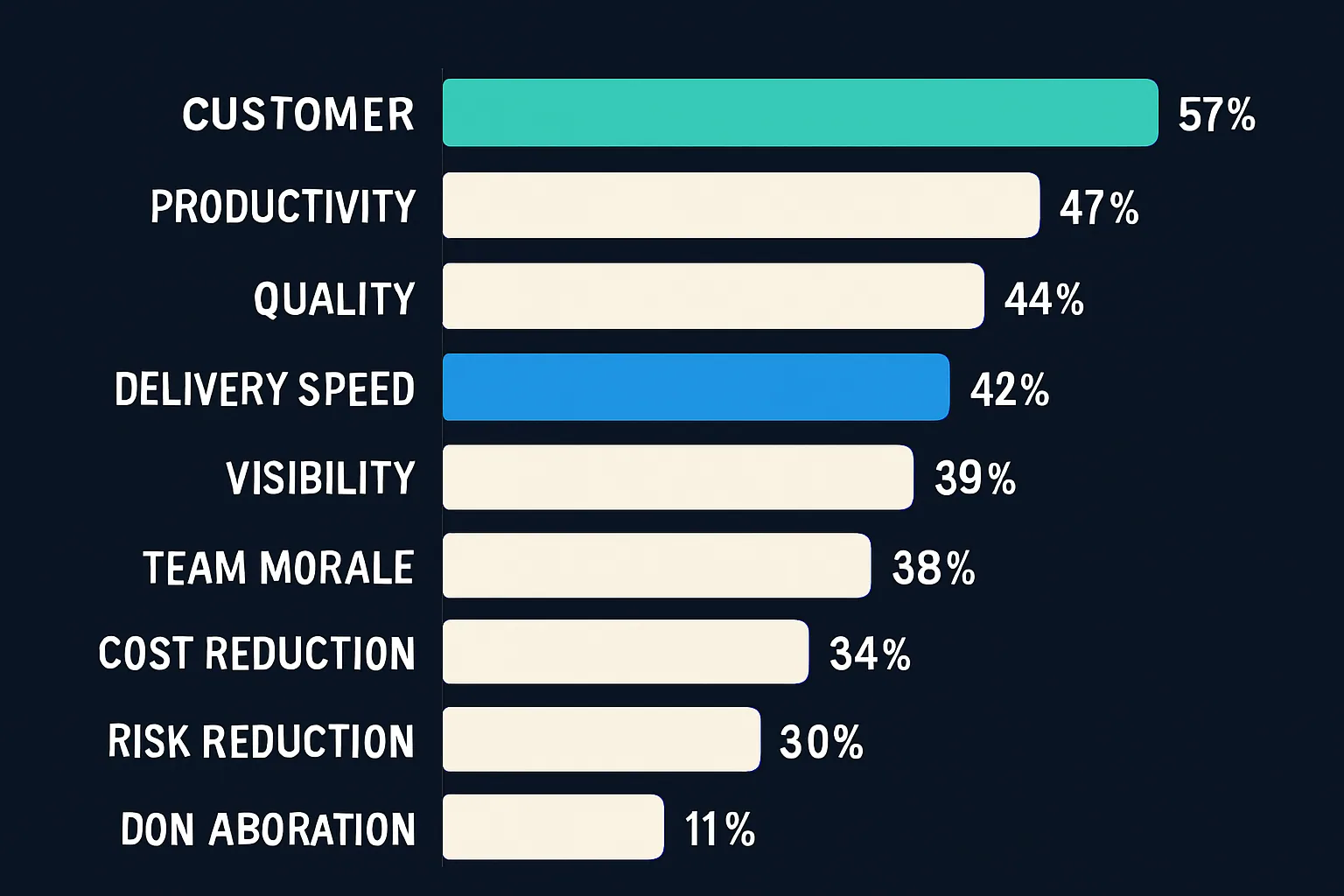
Ambysoft's survey also examined the main factors contributing to project success or failure:
The 2015 CHAOS Report from the Standish Group reached the same conclusion — agile produces a higher success rate than Waterfall:
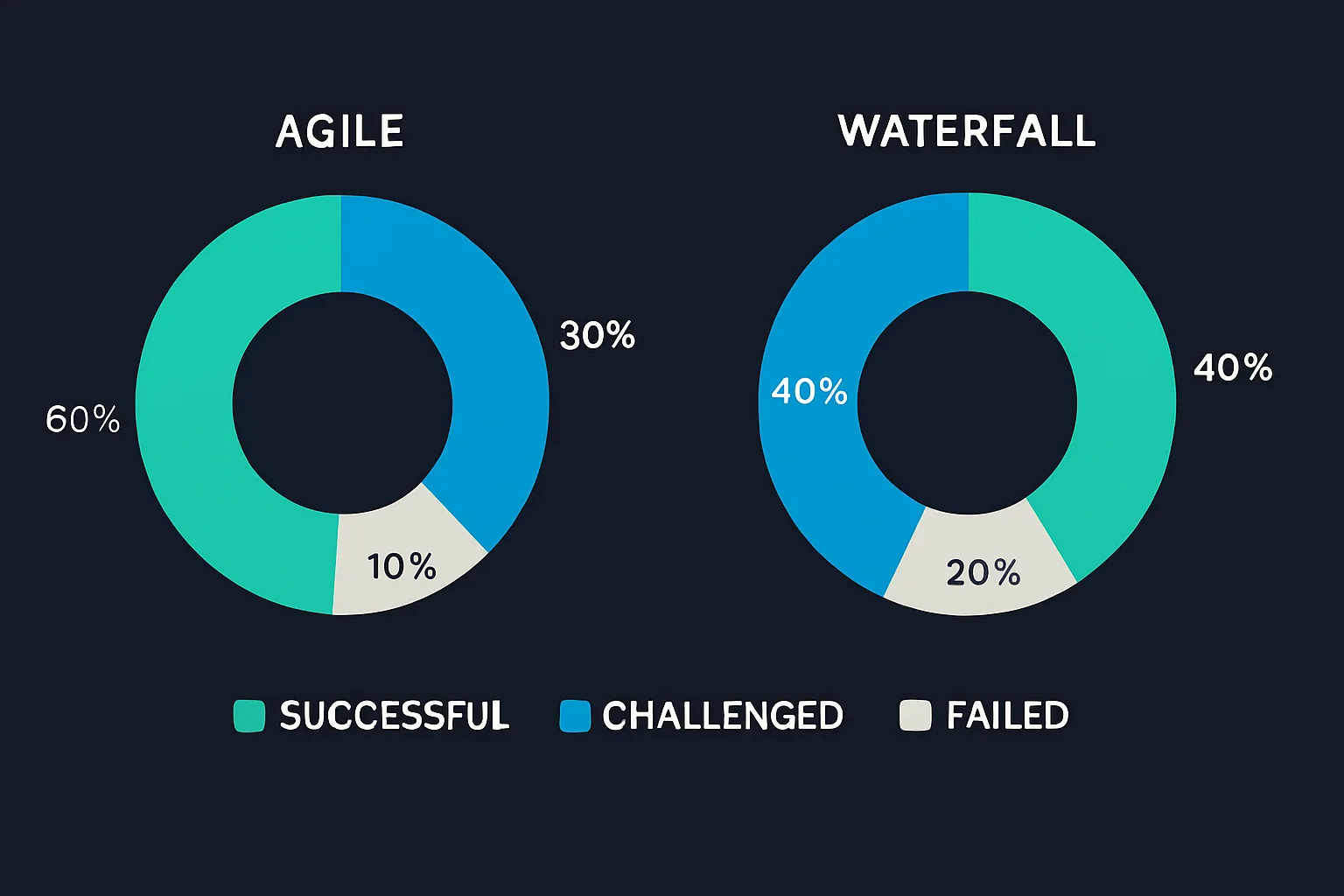
The Standish Group defined project outcomes based on how well three critical constraints were met — schedule, cost, and scope:
- Successful project: meets the assumed schedule, cost, and scope.
- Challenged project: meets two out of three constraints; one of schedule, cost, or scope is not met.
- Failed project: is cancelled before completion, or is completed but never used.
Across these criteria, agile consistently delivers more successful projects than Waterfall. That finding is reinforced by a 2017 study from PWC, which indicated that agile projects are 28% more successful than traditional projects.
The data makes a compelling case for agile, but the methodology also maps well to the realities of distributed development teams — a context where its communication and iteration principles provide particular structural advantages.
The studies above establish that agile outperforms Waterfall in aggregate success rates, but the underlying reasons are worth understanding in detail. Three areas in particular account for most of the difference.
1. The Software-Development Process
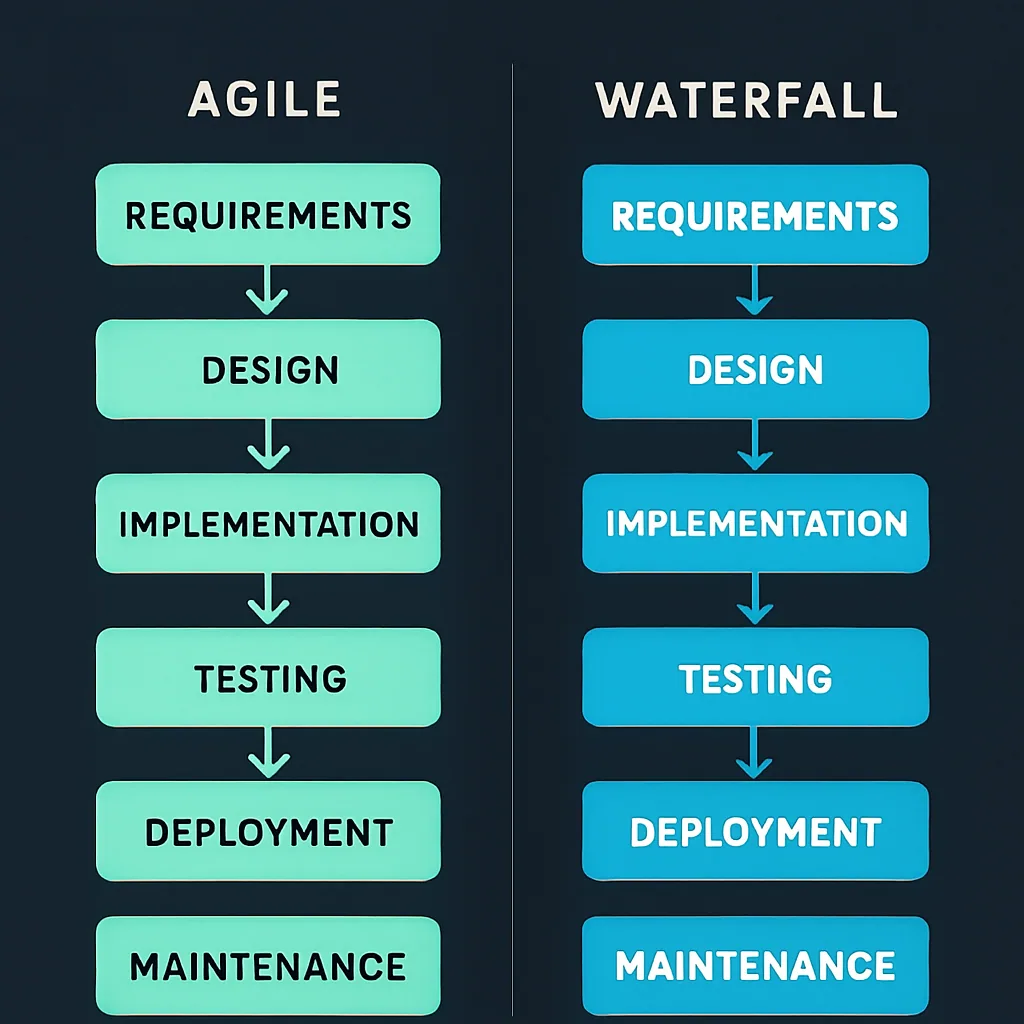
Both methodologies move through similar stages — requirements, design, development, testing, and deployment. The fundamental difference lies in how those stages relate to one another.
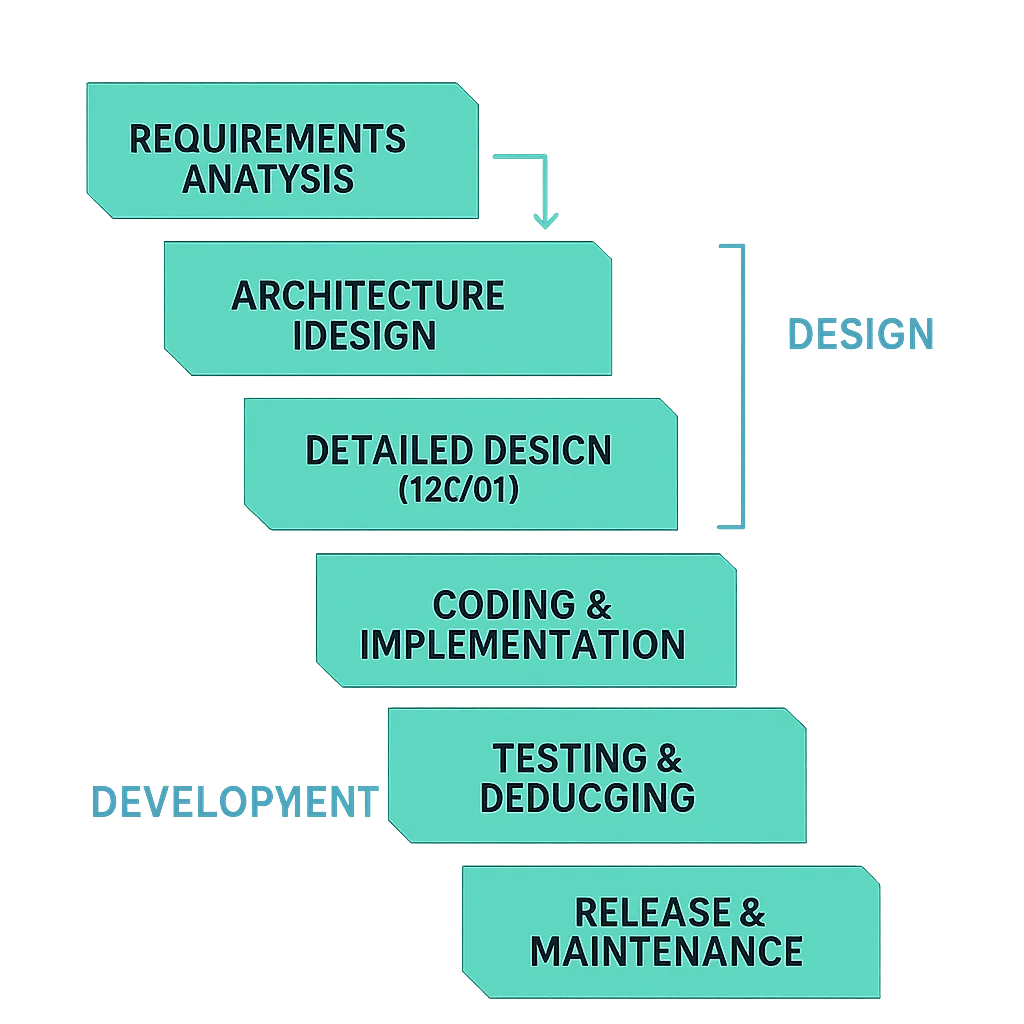
Waterfall
Waterfall treats each stage of the development process as a discrete, sequential unit. Work on any given stage begins only when the previous one is fully complete. In theory, this should produce a working application in a straightforward manner. In practice, software development rarely proceeds without obstacles — and a single undetected defect introduced early in the process can cascade into serious problems later, when it is far more costly to fix.
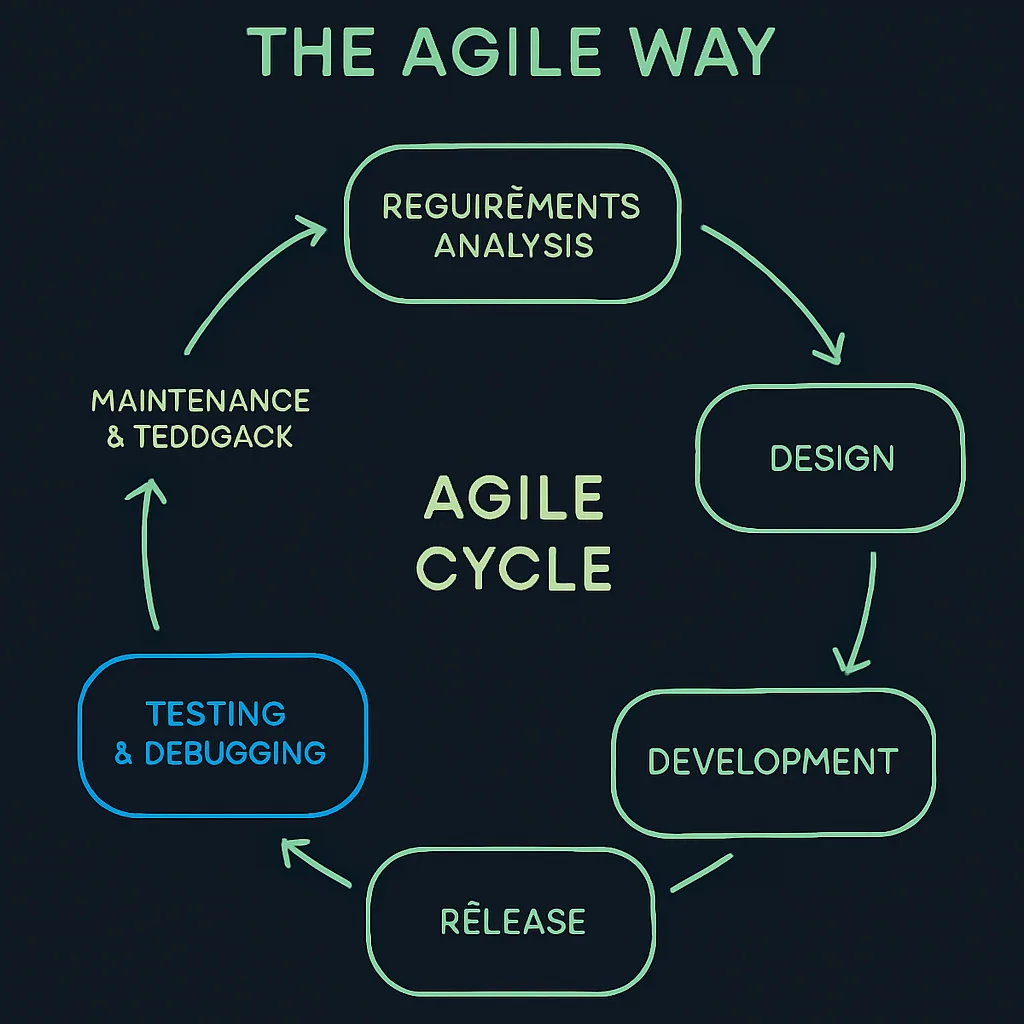
Agile
Agile's interconnected development phases allow developers and clients to access and test parts of the application much earlier in the process. Both parties can make decisions about how the rest of the application should evolve based on what's actually been built, rather than what was imagined at the outset. The result is an end product that genuinely reflects the design elements, features, and functions a working application requires.
2. Application Testing
Quality assurance and testing are as critical to an application's success as building its codebase. Bugs, performance issues, and security vulnerabilities need to be caught and resolved early, and repeatedly, throughout development.
Agile
Testing and QA are constant, ongoing activities in agile development. As each new working piece of the application is completed, it is put through a series of tests — including automated unit tests — to identify bugs and non-compliant code. Many teams also implement Continuous Integration (CI), which involves adding all developer working copies of the software to a shared mainline several times a day. This ensures new features integrate seamlessly with the rest of the application and maintains overall product quality.
Waterfall
In Waterfall, the testing phase is a completely separate stage, typically conducted only after the entire application has been built. Because this is the first time testing occurs, it is common for the codebase to carry a significant volume of bugs and structural problems. The result is either an extended testing phase, or — when clients are pressing for forward movement — a testing phase that gets abbreviated or rushed, leaving issues unresolved.
3. Value Delivery
Comparing agile and Waterfall purely through the lens of project success rates doesn't capture the full picture. There is genuine debate about what "success" even means: for some stakeholders it is on-time, on-budget delivery; for others it is about how quickly the project generates a return on investment. Value delivery provides a concrete, less ambiguous way to evaluate the two approaches.
Agile
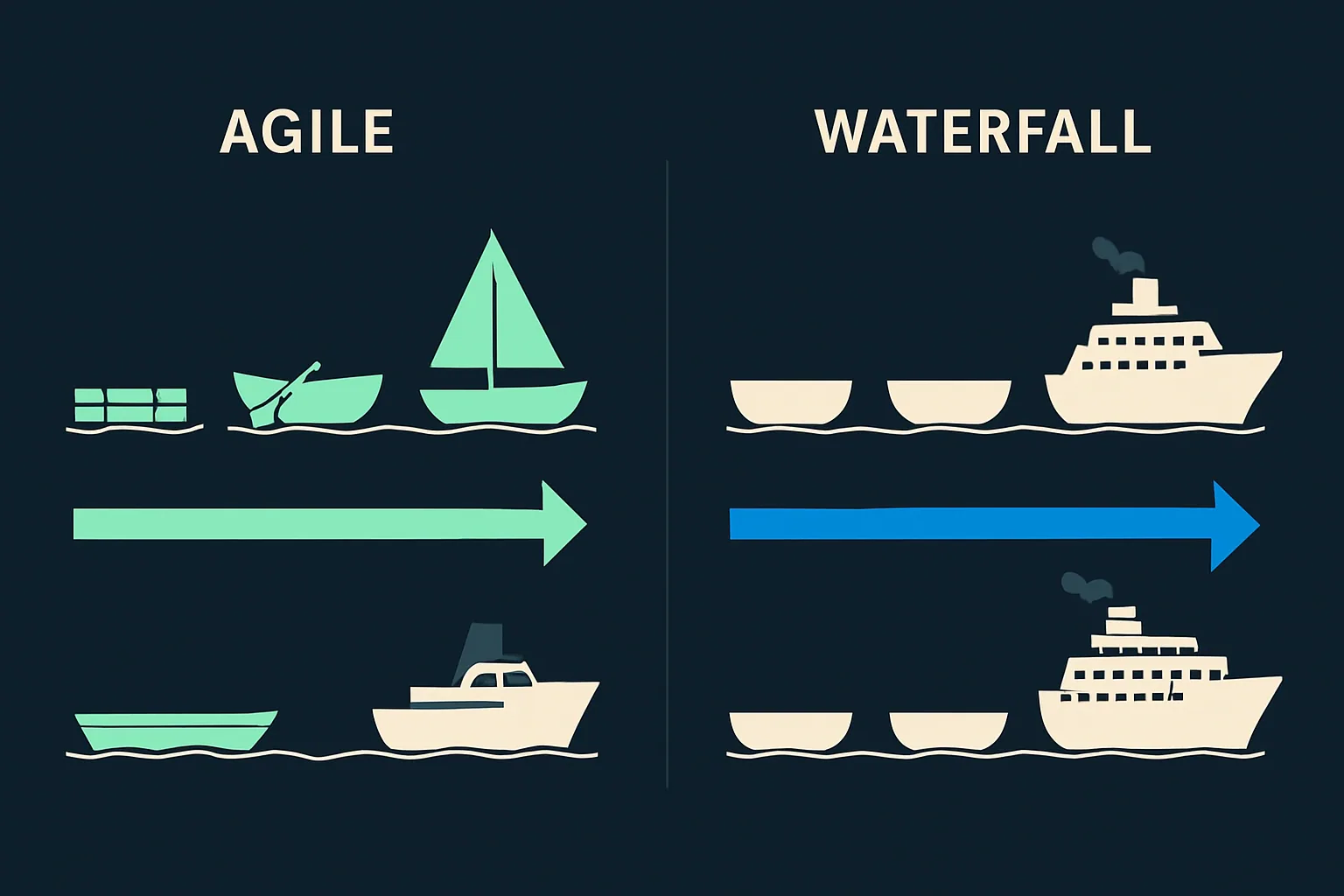
Agile adopts an incremental approach to building software, shifting focus from the software itself toward the business value behind it. Because value is delivered in increments, the product is workable at an early stage. This reduces the risk of complete project failure considerably — if a project is curtailed, there is something usable to show for the investment, rather than only a half-finished product.
When a Waterfall project runs out of budget or misses its deadline, the typical outcome is an unusable, partially built product.
There is still risk in agile development, but the development team and client have the controls in place to address problems as they arise and adjust scope and features accordingly — reducing the probability of building the wrong product entirely.
Waterfall
In Waterfall, value delivery comes only at the end of the development process. If the project exceeds its agreed budget — a common outcome in IT contracts — there may be no time or money remaining to deliver the value that was originally agreed upon with the client.
This is not to say that Waterfall is categorically flawed; it simply requires meticulous planning and realistic estimates, which are often difficult to produce at the early phases of a project. In software development, not everything can be fully planned in advance, and problems should be expected. Initial assumptions frequently change, or turn out to be unrealistic.
4. The Client-Developer Relationship
The relationship between client and development team is another factor that shapes project outcomes. Without a definitive shared plan, the final product can diverge from original expectations — though that divergence is not always negative. On the other hand, agile's lighter documentation standards can sometimes lengthen the onboarding process for new team members, and the inherent flexibility means time and cost estimates tend to be expressed as ranges rather than fixed figures, which some clients find less comfortable.
Agile
Full cooperation, complete transparency, and strong communication are prerequisites for agile to function well. The methodology's collaborative structure encourages clients and developers to work in tandem throughout the project, giving the client a greater sense of engagement and confidence in what is being built.
Waterfall
Waterfall works best when project constraints are well understood from the outset and the client has precise, stable requirements that are unlikely to change radically during development. The predictable timelines that come with the linear model also make it easier to produce project documentation and report progress to clients in structured, milestone-based terms.
Conclusion
The evidence from multiple independent sources — Ambysoft (2013), the Standish Group (2015 CHAOS Report), and PWC (2017) — points to agile delivering higher project success rates than Waterfall. Its iterative structure, integrated testing, incremental value delivery, and emphasis on client collaboration make it well suited to the realities of modern software development.
That said, Waterfall is not inherently broken. The shift toward agile was driven by the expectations of modern businesses, the nature of specific project types, and the accumulated experience of practitioners who found that rigid, front-loaded planning often fails to survive contact with real-world complexity. Some experts describe agile less as a formal methodology and more as a way of thinking — one that emerged because a genuine change was needed in how software projects were managed.
For most software development efforts, especially those where requirements are likely to evolve, agile offers a structurally sounder approach. Where requirements are fixed, constraints are well-defined, and documentation is paramount, Waterfall retains practical advantages. The right choice ultimately depends on the nature of the project and the working relationship between client and team.