The Anatomy of a Supply-Side Platform (SSP)
In the early days of online advertising, publishers relied on ad networks to sell their remnant inventory to advertisers. As publishers began working with more and more of these networks, it grew increasingly difficult to determine which one would move the most inventory at the best price.
That problem gave rise to a new category of AdTech platform: network optimizers. When real-time bidding (RTB) arrived in the late 2000s, those network optimizers evolved into what the industry now calls supply-side platforms (SSPs).
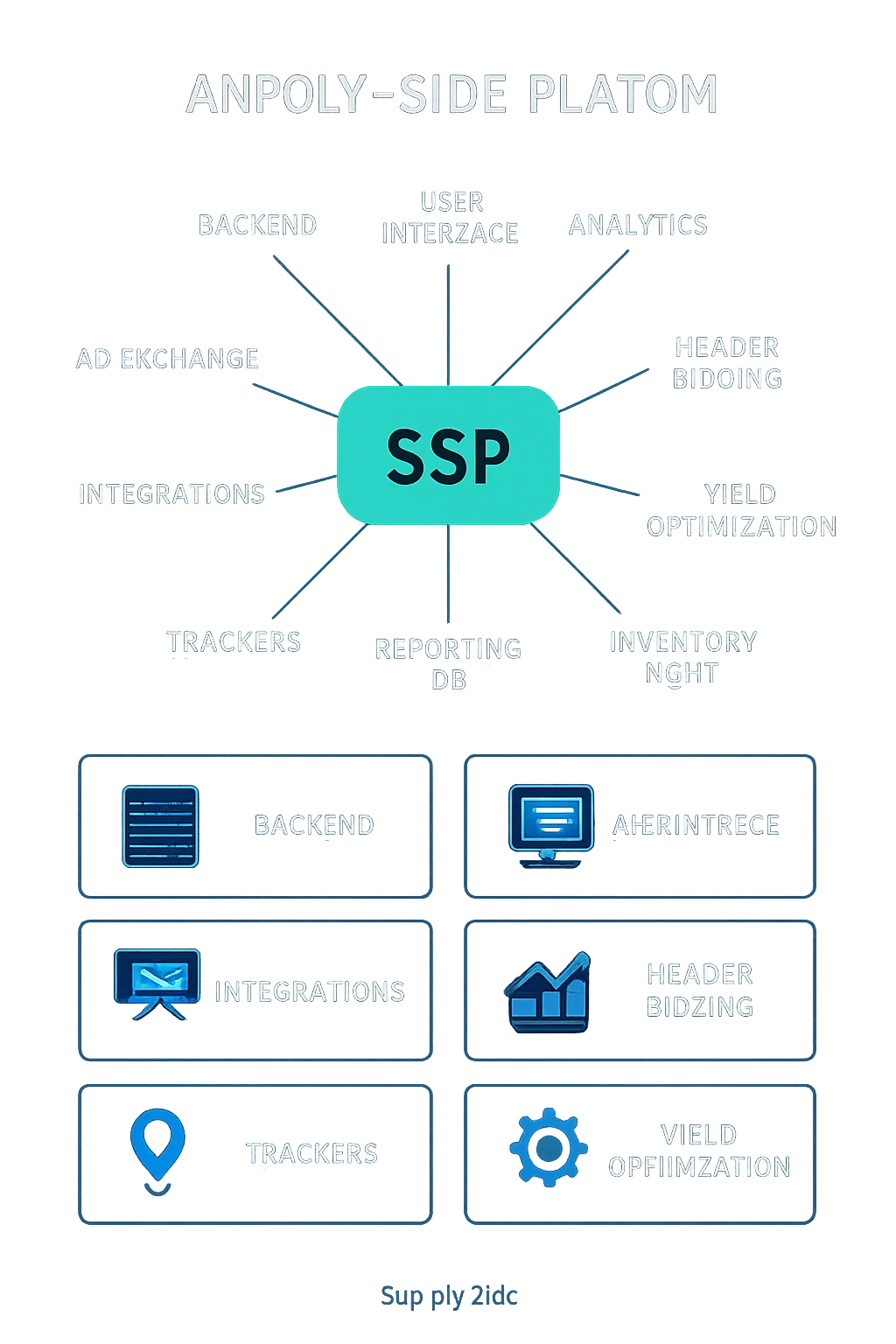
What follows is a component-by-component breakdown of how today's SSPs are structured — covering both the backend architecture and the publisher-facing features.
What Is a Supply-Side Platform (SSP)?
A supply-side platform (SSP) is an advertising technology (AdTech) platform that helps publishers monetize their websites and mobile apps by managing, selling, and optimizing their available inventory (i.e., ad space). SSPs are central participants in real-time bidding (RTB) media transactions, where publishers sell display, video, and native ad space to advertisers on an impression-by-impression basis.
Components of a Supply-Side Platform
Backend and Infrastructure
For an SSP to deliver its features and transact ad space at scale, its various backend components need to be hosted on a reliable infrastructure — Amazon Web Services being a common choice. That hosting layer is what enables all the technical processes powering the platform's core capabilities.
Integrations
SSPs integrate with other AdTech platforms to facilitate inventory selling — most notably ad servers, DSPs, and ad exchanges — and with data-management platforms (DMPs) to help publishers maximize revenue. These integrations are what make the SSP a connective hub within the broader programmatic ecosystem.
Ad Exchange
An ad exchange orchestrates the buying and selling of ads between advertisers and publishers. Many SSPs now incorporate ad-exchange functionality directly, meaning publishers can connect through a single SSP to advertisers via DSPs, without needing to route through separate, external ad exchanges.
Trackers
Trackers collect data about the publisher's website and its audience, then pass that data to other platform components — most importantly the user-profile database and the reporting database.
Reporting Database
The reporting database receives campaign and audience data from the trackers. This stored data is what powers the analytics and reporting features accessible to publishers through the platform's user interface.
Features of a Supply-Side Platform
User Interface
The user interface is the publisher-facing dashboard used to manage campaigns, view reports, handle billing, and access the SSP's other configuration options.
Analytics and Reporting
Once data flows in from the reporting database, publishers can generate and review reports on inventory performance — covering metrics such as fill rates, clicks, and impressions. These reports are the primary feedback loop publishers use to assess and adjust their monetization strategy.
Header Bidding
Many SSPs incorporate header-bidding functionality, which allows publishers to collect bids from multiple demand sources (such as DSPs) before their ad server is called. The header-bidding feature within an SSP gives publishers a centralized place to manage their header-bidding wrappers and configure demand partners.
Yield Optimization
The yield-optimization feature is designed to increase publisher revenue by improving fill rates, setting floor prices, and managing auction mechanics — including the distinction between first-price and second-price auction models.
Inventory and Campaign Management
This feature gives publishers control over the types of inventory they make available — display, video, native, and so on — as well as the ability to blacklist or whitelist specific advertisers, apply IAB content categories, and block certain ad types. It is the primary tool for enforcing quality standards and brand-safety requirements across a publisher's ad supply.