The Growth and Advantages of SaaS for Software Vendors
For a good part of the 19th century, factories and large buildings drew their electricity from generators installed in their own basements. Maintaining those generators demanded constant attention, and the power supply was frequently unreliable.
Then came the 1890s and the first public power plants. Factories and buildings could suddenly access electricity that was more efficient, cleaner, and cheaper than anything an on-site generator could produce. That shift had a profound and lasting impact on the electricity industry.
The software industry is living through an analogous transition today, driven by the rise of Software-as-a-Service (SaaS).
Software Delivery Methods
How software reaches users has changed dramatically over time, following the arc of broader technological progress.
Early on, vendors shipped software on floppy disks, then on CDs, and eventually offered direct downloads as internet adoption grew.
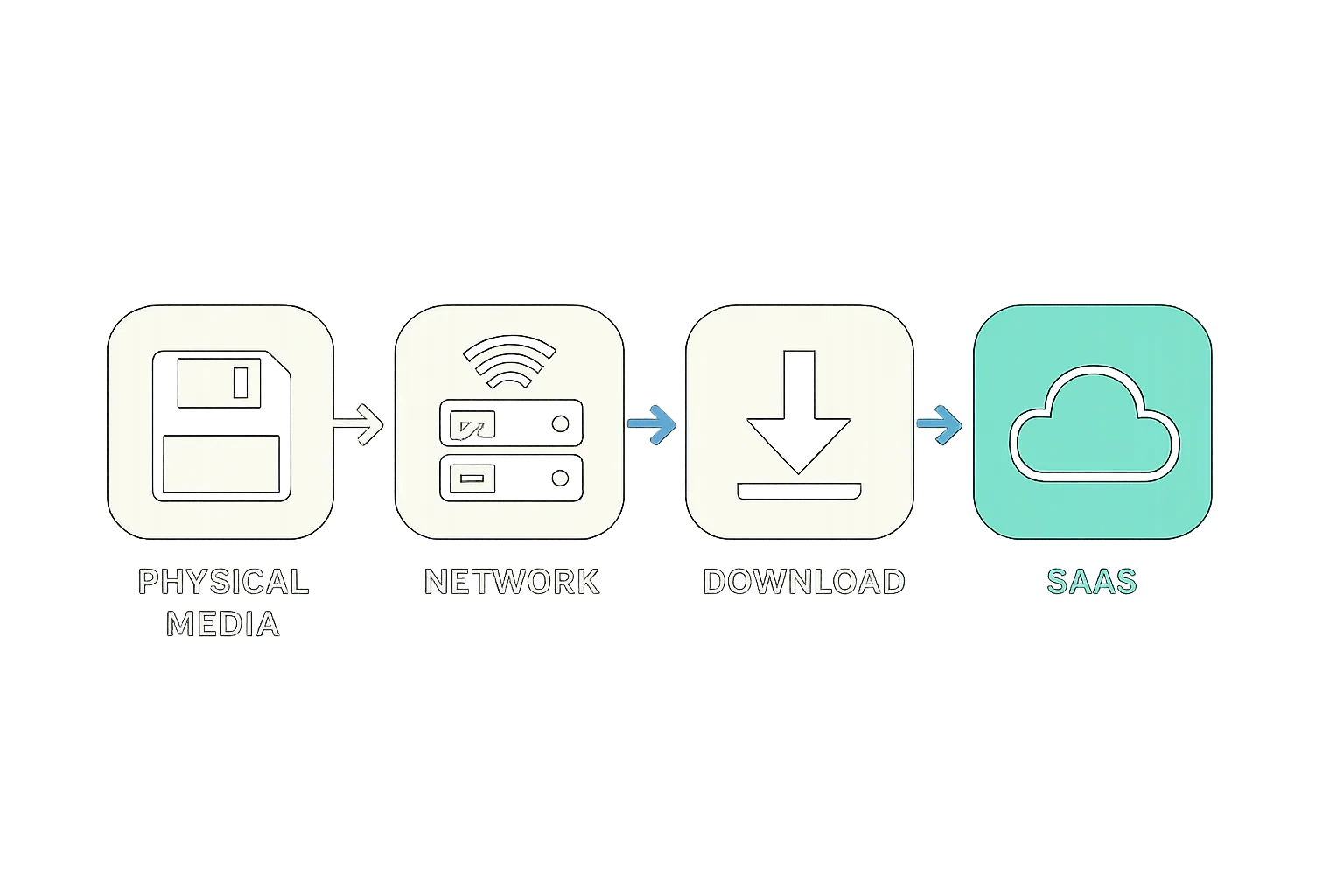
Downloads and even physical media still have their place for certain vendors, but SaaS has become an increasingly practical and attractive delivery model for both consumer and enterprise markets.
Growth of Cloud Computing and SaaS
Before examining how cloud computing and SaaS have grown, it is worth clearing up a common misconception: the two terms are not interchangeable.
What is cloud computing?
Cloud computing is a network of remote servers connected to the internet, used to store, manage, and process data.
What is Software-as-a-Service?
SaaS is a software licensing-and-delivery model where a user or company pays a subscription to access software. Rather than downloading or installing the software on a local machine or company server, the software lives on a remote server and is accessed through the internet.
SaaS is one component of cloud computing. The broader cloud computing landscape also includes platform-as-a-service (PaaS) and infrastructure-as-a-service (IaaS).
Here is a brief breakdown of how the three layers differ:
SaaS refers to the apps end-users interact with:
PaaS refers to the platforms and tools used to build those apps:
IaaS refers to the infrastructure that hosts the platforms used to build the apps:
The shift from software-as-a-product (SaaP) and on-premises deployments toward cloud-based SaaS has been accelerating steadily, and research consistently points to further growth as both consumers and enterprises embrace cloud delivery.
A report by the International Data Corporation (IDC) illustrates the trend clearly:
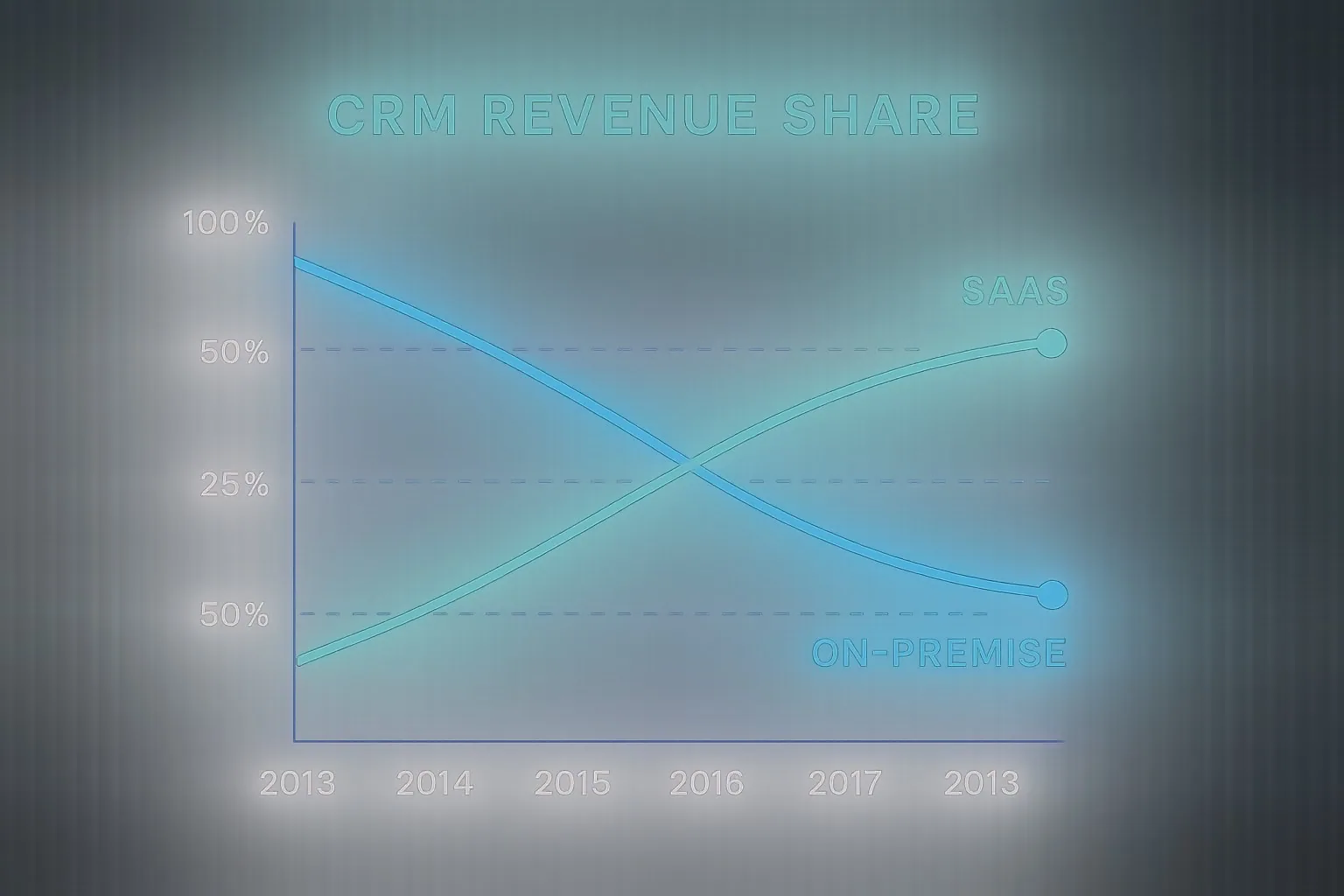
The same report projected that the enterprise-applications market would be predominantly SaaS-based and generate $50.8 billion in revenue by 2018.
A separate Cisco report charts the combined growth trajectory of SaaS, PaaS, and IaaS:
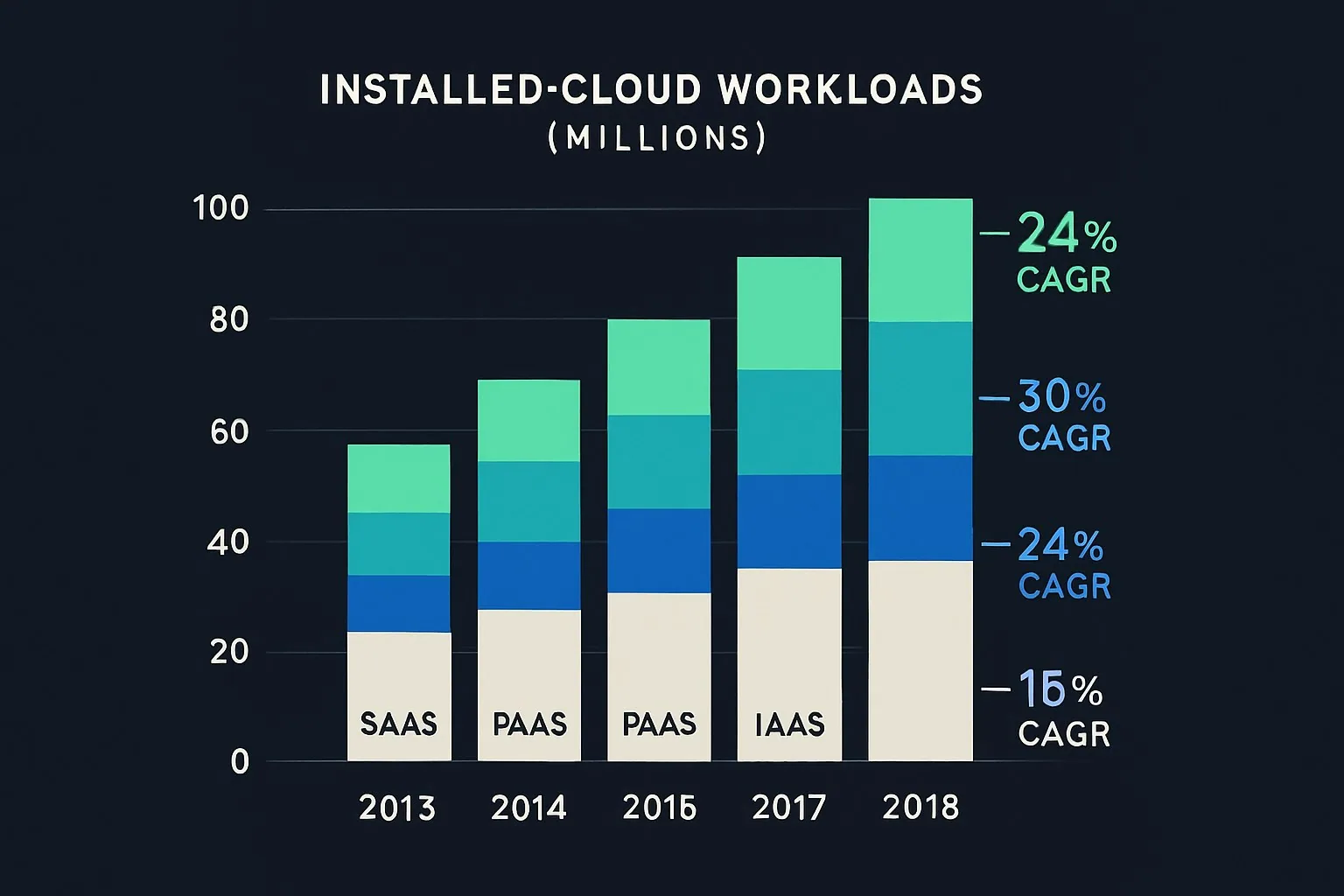
With this expansion in SaaS adoption, it is unsurprising that SaaS companies have been outpacing their software-as-a-product counterparts in growth. According to the Software Equity Group, public SaaS companies grew at 28% in 2014 versus 8% for Software-as-a-Product companies:
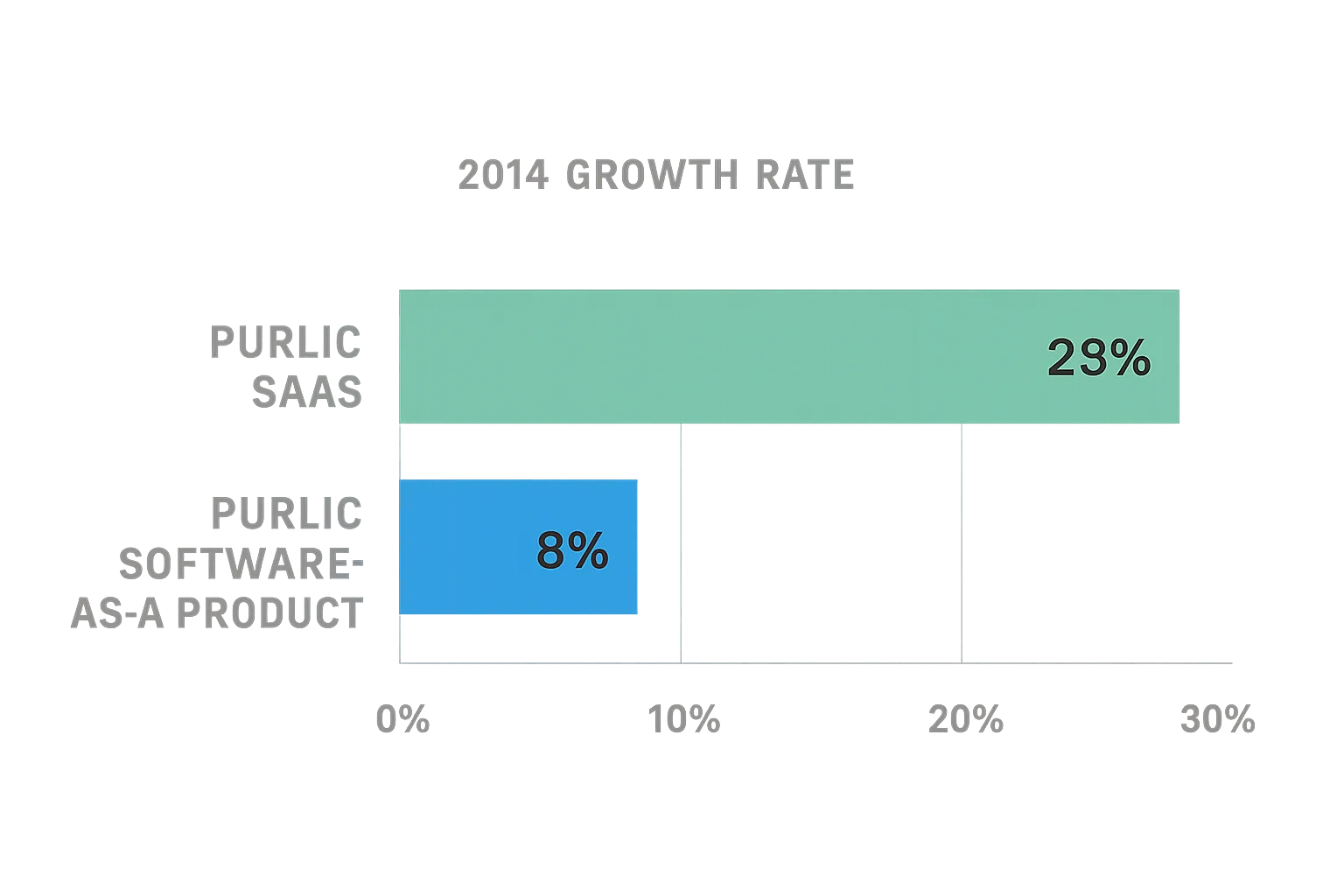
Source: The Software Equity Group.
Advantages of Using and Building SaaS
For Users
Consumers gain several meaningful benefits when choosing SaaS over on-premises software:
- Access to the software on any device, at any time, from anywhere — no manual downloads or upgrades required.
- Improved affordability through subscription pricing instead of a large upfront licence fee.
- Instant access to software upgrades and security fixes, delivered server-side to all customers simultaneously.
Enterprise customers also benefit compared to traditional on-premises deployments:
- Much faster deployment — typically days rather than months, since setup involves creating user accounts and training staff rather than procuring and installing physical servers.
- Higher reliability through the SaaS vendor's responsibility for availability, scalability, and distributed infrastructure.
- Platform-agnostic access via any modern web browser (Windows, macOS, Linux, iOS, Android, etc.).
- Reduced exposure to software piracy.
For Vendors Building SaaS
Most of the differences between building SaaS and building on-premises software come down to the delivery model, but the advantages for vendors are real:
- A centralized SaaS platform is easier and cheaper to maintain than the traditional desktop software model.
- Cloud-based delivery is significantly harder to pirate than packaged software, helping reduce revenue leakage.
- Upgrades and security patches can be pushed to every user at once from the server side, eliminating fragmented version management.
SaaS Generates Higher Revenue Over Time
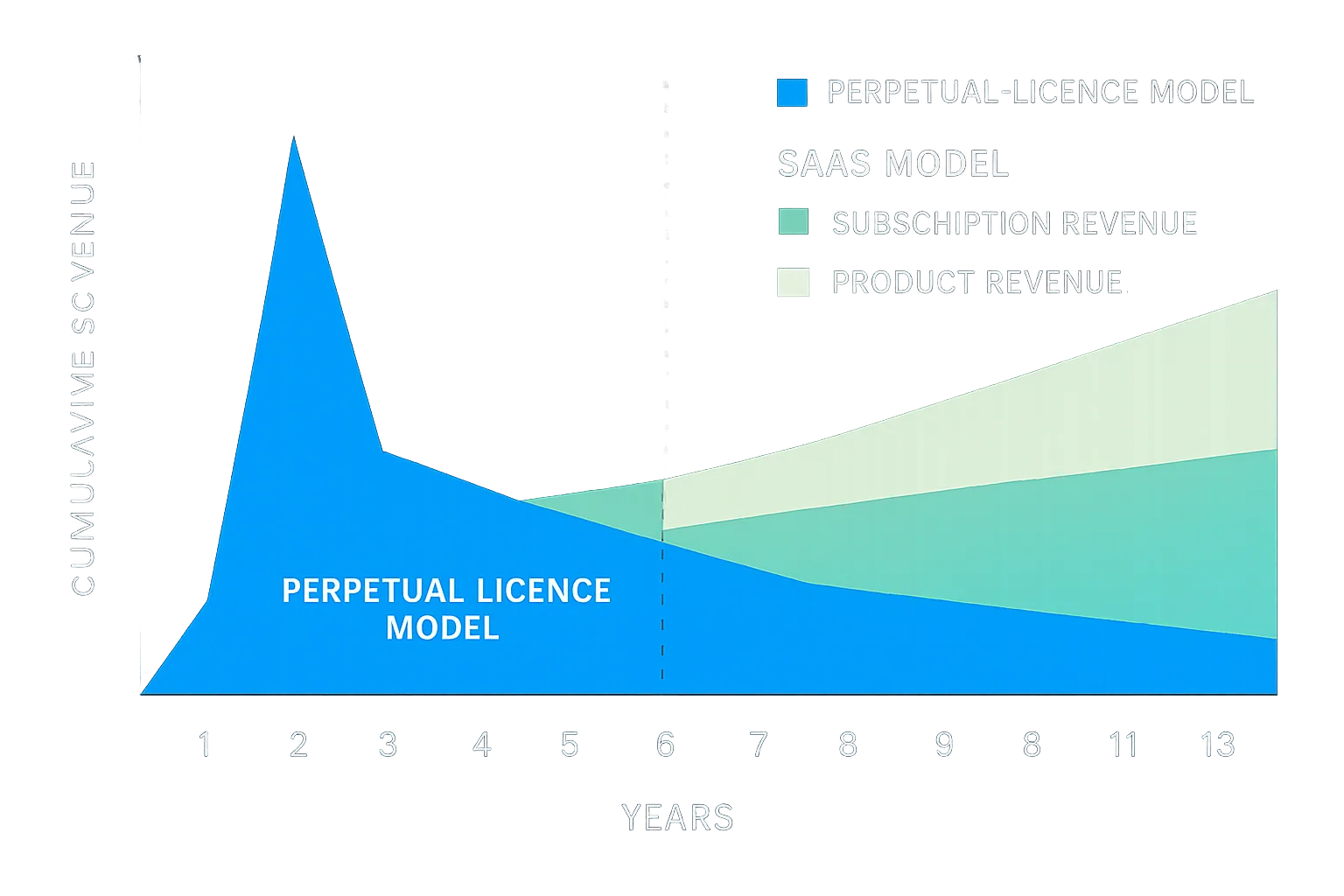
SaaS lets vendors offer lower upfront costs to customers, replacing one-time licence fees with subscription revenue. The initial revenue ramp is slower than a perpetual-licence model, but subscription revenue compounds over time and ultimately overtakes the upfront model in cumulative terms, as illustrated below:
Building SaaS the Right Way
Many software providers still approach development the traditional way: large projects, large budgets, and long development cycles. The problem is that both consumer and enterprise requirements change faster than those cycles can accommodate — by the time a product ships, the market has moved.
A more effective approach combines the SaaS delivery model with the iterative, user-validated development methods that successful startups have long practised.
Start with a Minimum Viable Product (MVP)
There has been a significant shift in how software solutions are built over the past decade.
Historically, software platforms were large IT projects demanding extensive resources, time, and capital. High project-failure rates and intensifying competition have pushed businesses — large and small — toward leaner, faster methods.
The most widely adopted of these is the Minimum Viable Product (MVP): the minimum set of features necessary to deliver genuine value to users, generate learning about user behaviour, and maximize return on investment relative to risk.
Building to an MVP delivers a range of practical benefits:
- A working version of the application reaches initial users sooner.
- Early feedback shapes subsequent features and priorities.
- Risk is minimized by testing whether the product actually solves the target problem.
- Assumptions are validated against real user data before significant capital is committed.
- Investors can evaluate a functional prototype rather than a slide deck.
MVPs are often associated with startups, but the same logic applies to established enterprises launching new software initiatives.
Keeping Projects Small Reduces Failure Rates
One of the most compelling arguments for the MVP approach is its relationship to project success.
Research from the Standish Group found a clear pattern: the smaller the project, the higher its success rate.
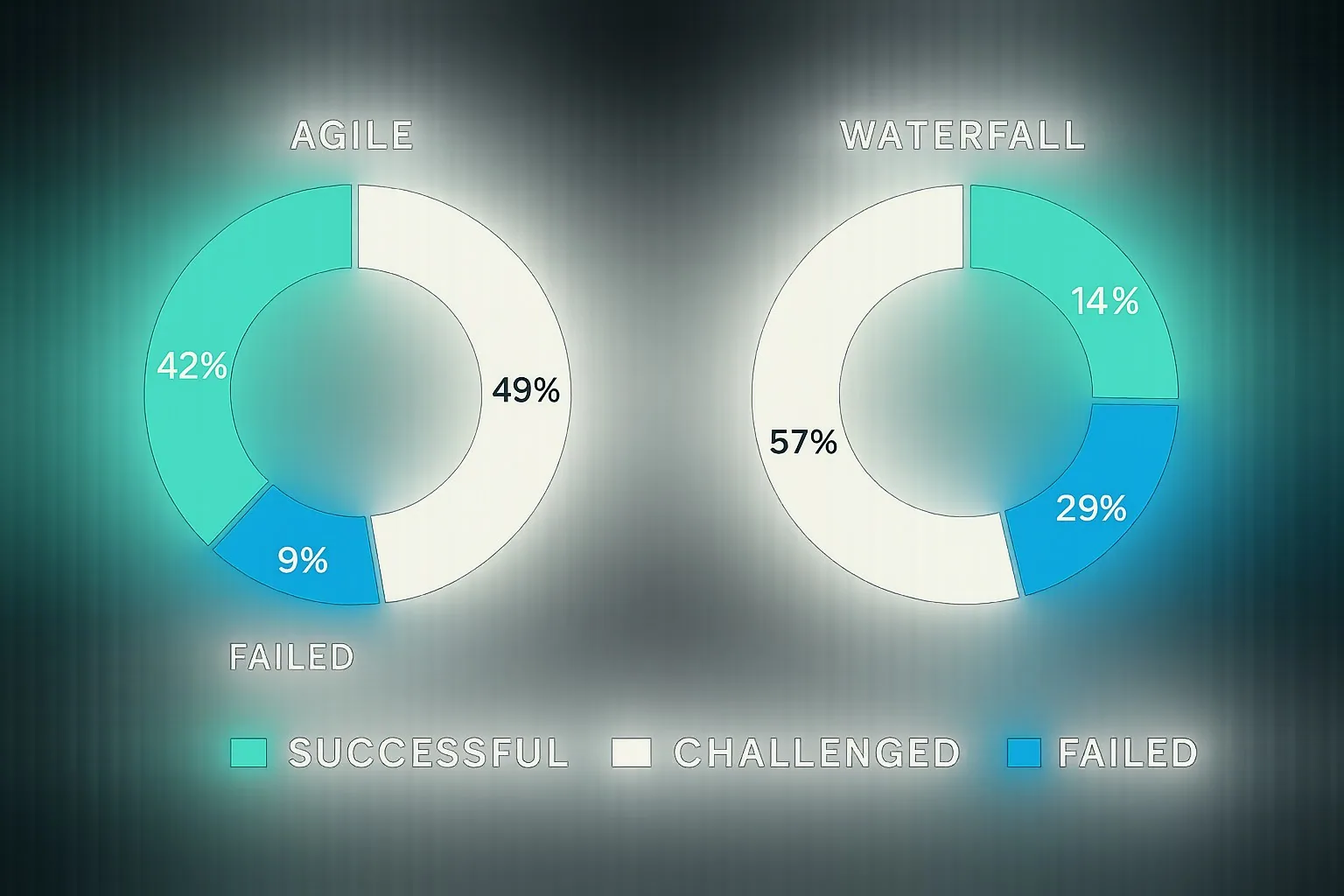
A 2012 Gartner user survey reinforces the same conclusion — the larger the IT project, the more likely it is to fail.

Two mechanisms explain this pattern:
Early prototyping and working releases. Designing prototypes and releasing early functional versions allows the development team to test performance, resolve usability issues, and squash bugs continuously — keeping the project moving at pace.
Early idea validation. In a small project, the team can validate core assumptions at the outset and adapt before significant investment has been made. In large, complex projects, validation tends to happen late in the cycle. By then it is rarely feasible to change scope or direction, and the result is budget overruns and extended timelines.
Learning From Users and Iterating
Smaller projects can be released to users much sooner, which gives vendors a stream of real-world feedback and behavioural data. That data feeds back into the product roadmap, allowing teams to iterate toward a final product that genuinely reflects what users need — rather than what was assumed at the outset.
Choosing an Agile Development Approach
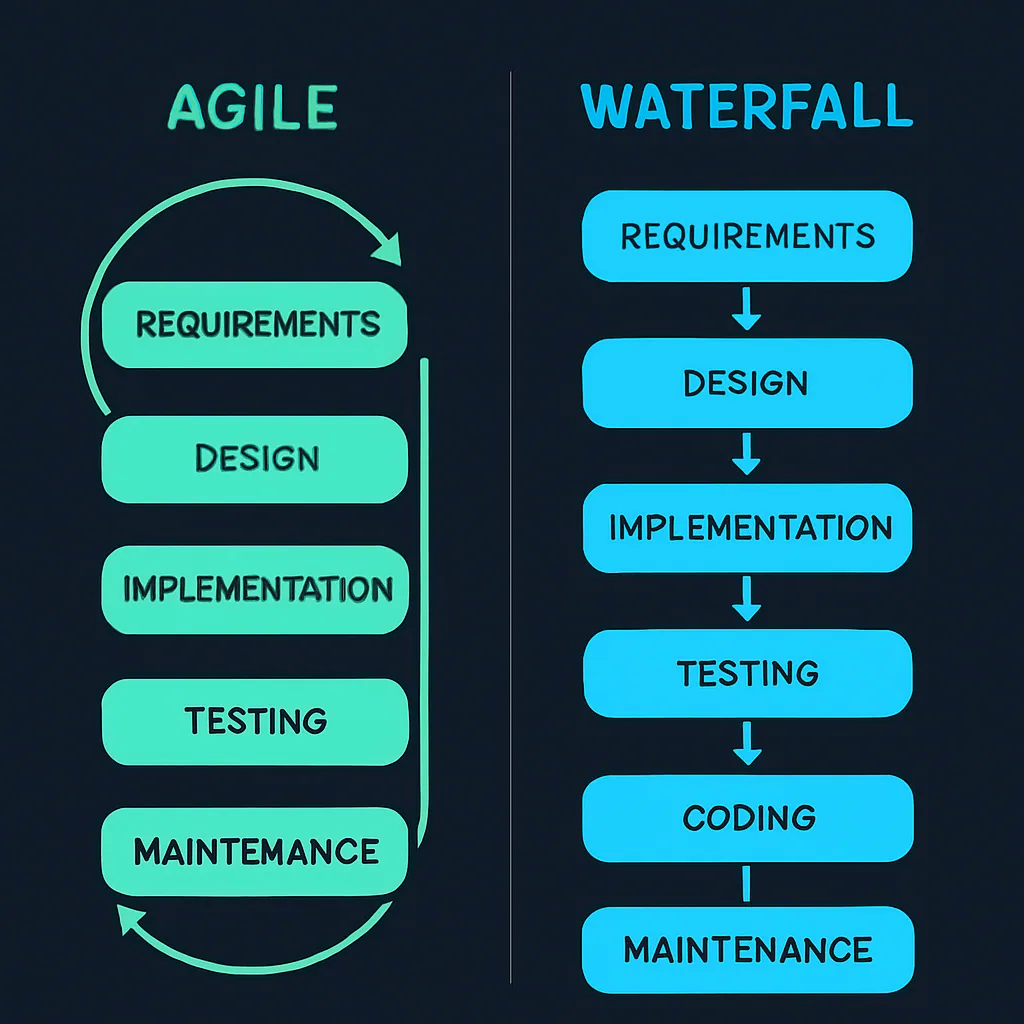
How a software project is managed shapes its outcome as much as the underlying technology choices. The two most common project-management methodologies for software development are agile and waterfall.
Agile
The agile approach centres on minimizing risk, optimizing development time, and getting a working product into users' hands as quickly as possible. It allows developers to anticipate and respond to issues as they emerge, adjusting the project's direction without abandoning work already done.
Agile has become the dominant methodology in modern software development, largely because of its emphasis on producing operational software in the shortest feasible timeframe.
Waterfall
The waterfall methodology dates back to the 1950s and was adapted from project-management practices used in manufacturing and construction — industries with fundamentally different constraints than software. It structures development as a sequence of discrete stages, each completed before the next begins, with no mechanism to revisit earlier stages once passed.
This linearity makes waterfall poorly suited to projects where requirements evolve — which is most software projects.
The performance difference between the two approaches in practice is substantial:
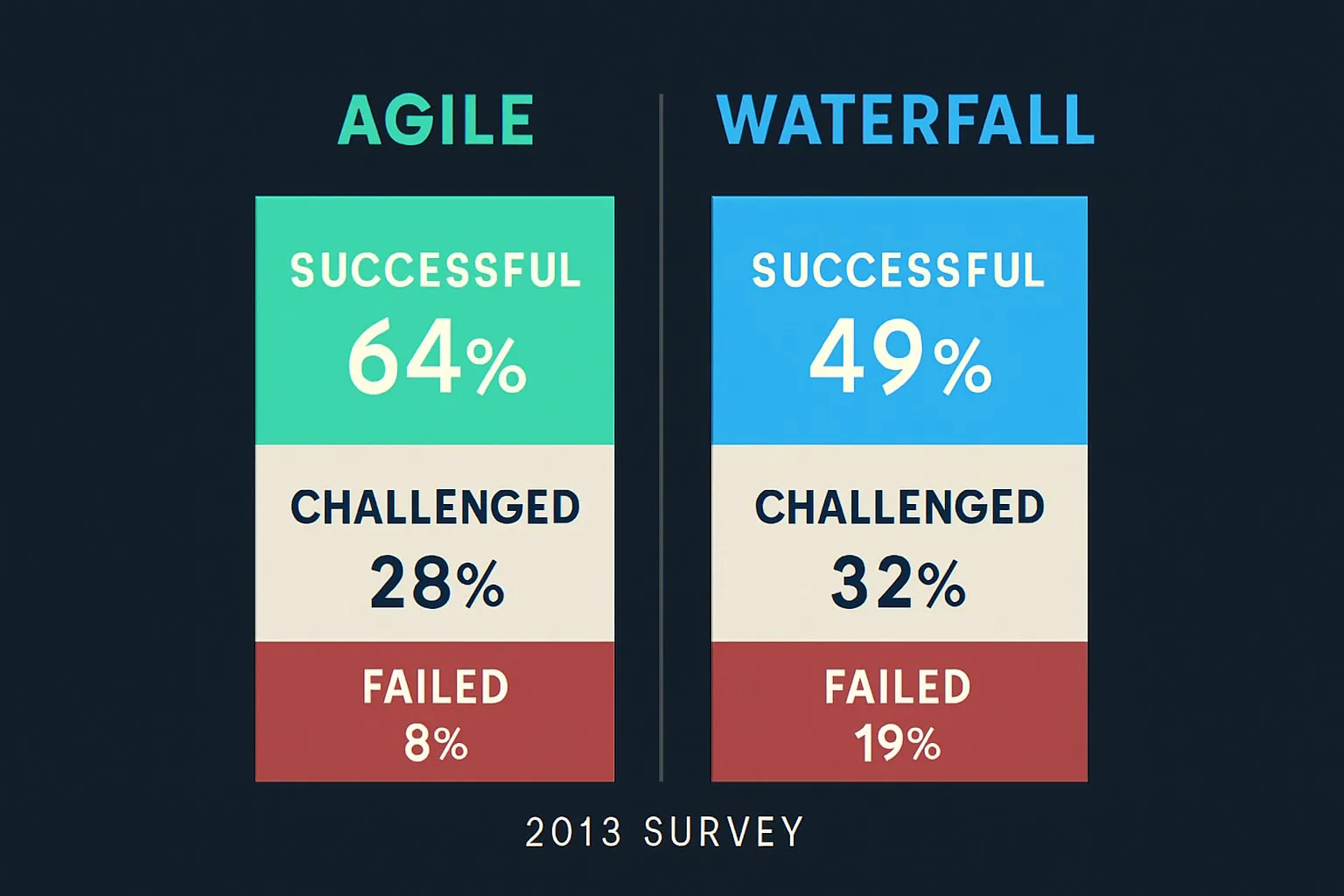
The main barrier to adopting these newer methods in large organizations is cultural. Executives accustomed to full-scale, multi-year IT programmes often struggle to embrace the iterative, incremental nature of agile and MVP-based development — even when the evidence for doing so is clear.
Adobe's Transition to SaaS: A Benchmark Case
Several major software vendors have either supplemented their existing offerings with SaaS or committed fully to cloud-based delivery. Microsoft provides a useful parallel: Microsoft Office 365 (SaaS) alongside Microsoft SharePoint 2013 (on-premises) illustrates the industry's transitional moment.
Adobe's move is arguably the most instructive example of a complete SaaS pivot.
In April 2012, Adobe launched Creative Cloud — a SaaS bundle of its most popular creative tools, including Photoshop, Illustrator, and others. This was a significant strategic shift for a company that had built its business on perpetual software licences.
Adobe continued offering its traditional Creative Suite package alongside Creative Cloud for a period, but in May 2013 it ceased new releases of the perpetual licence product entirely — signalling full commitment to SaaS-only delivery.
The business results speak for themselves:
4 million subscribers in just 2.5 years.
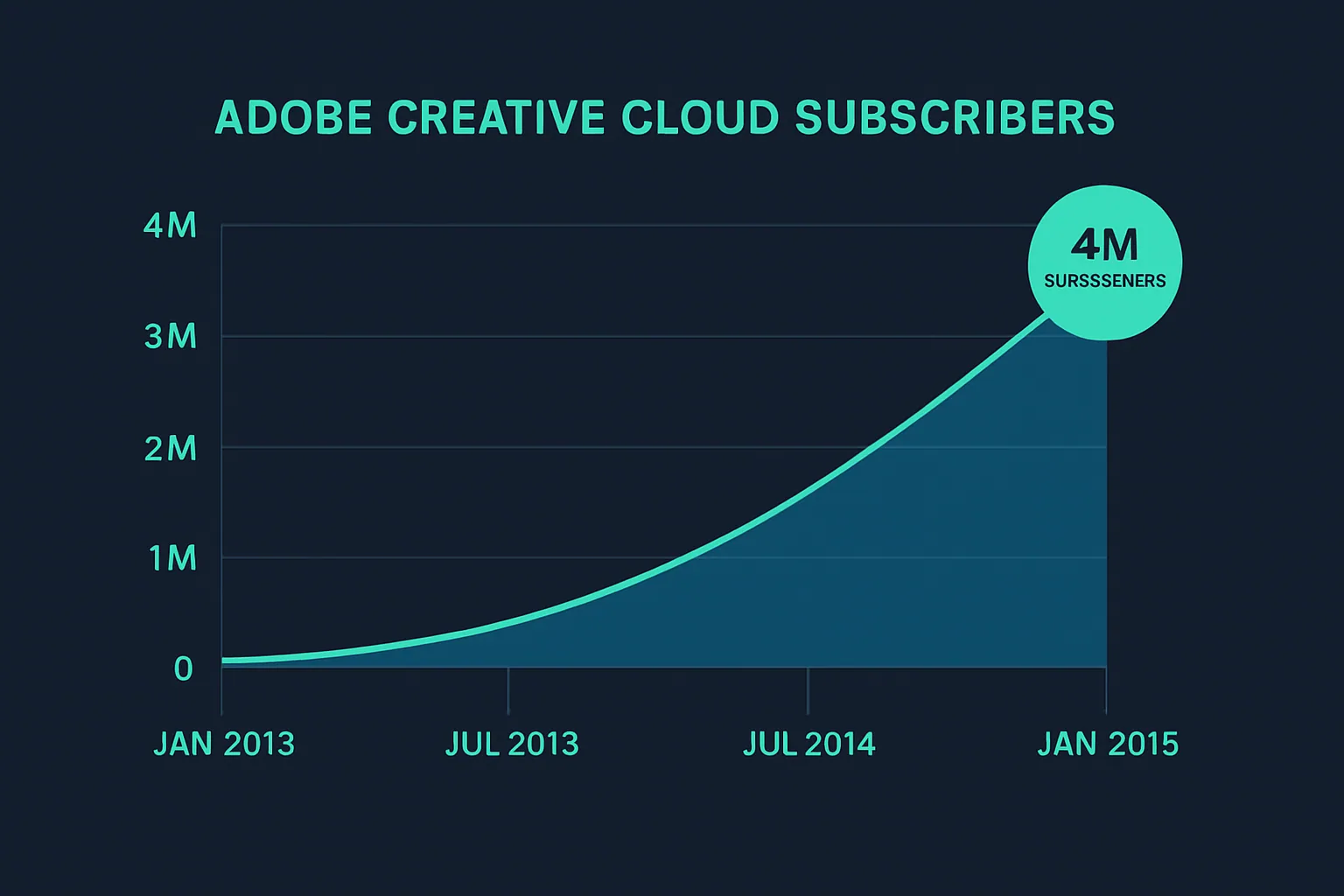
That rate of subscriber growth is remarkable even for a company of Adobe's scale.
Adobe's share price trajectory since the April 2012 launch of Creative Cloud reflects the market's assessment of the transition:
Adobe's experience has become a reference point for software vendors evaluating whether to introduce a cloud-hosted version of their product or move fully to SaaS. The growth in subscribers, revenue stability from recurring subscriptions, and share price performance collectively make a strong case for the model — and the combination of SaaS delivery, MVP-based development, and agile methodology remains the established approach for vendors building for today's enterprise market.