What Is Cross-Device Attribution and Why Is It So Difficult?
Accurate attribution has always been one of the harder problems in digital marketing. The core concept is straightforward enough — identify which events and touch points contributed to a conversion throughout a customer's journey, then assign each a percentage of credit for that conversion — but executing it reliably is a different matter.
Cross-channel attribution, the most common model, tracks the touch points a consumer encountered across different channels before converting (purchasing a product, downloading an asset, and so on). That model is manageable when done correctly. The challenge escalates sharply once consumers start interacting with a brand across different channels and on different devices.
That's where cross-device attribution enters the picture.
The Cross-Device Customer Journey
Not long ago, the online customer journey happened almost entirely on one type of device — desktops and laptops. Today's consumers move fluidly between smartphones, tablets, and computers, often within a single purchase decision.
A Google study found that a majority of multi-device consumers begin their purchase journey on a smartphone and then continue on a PC or tablet.
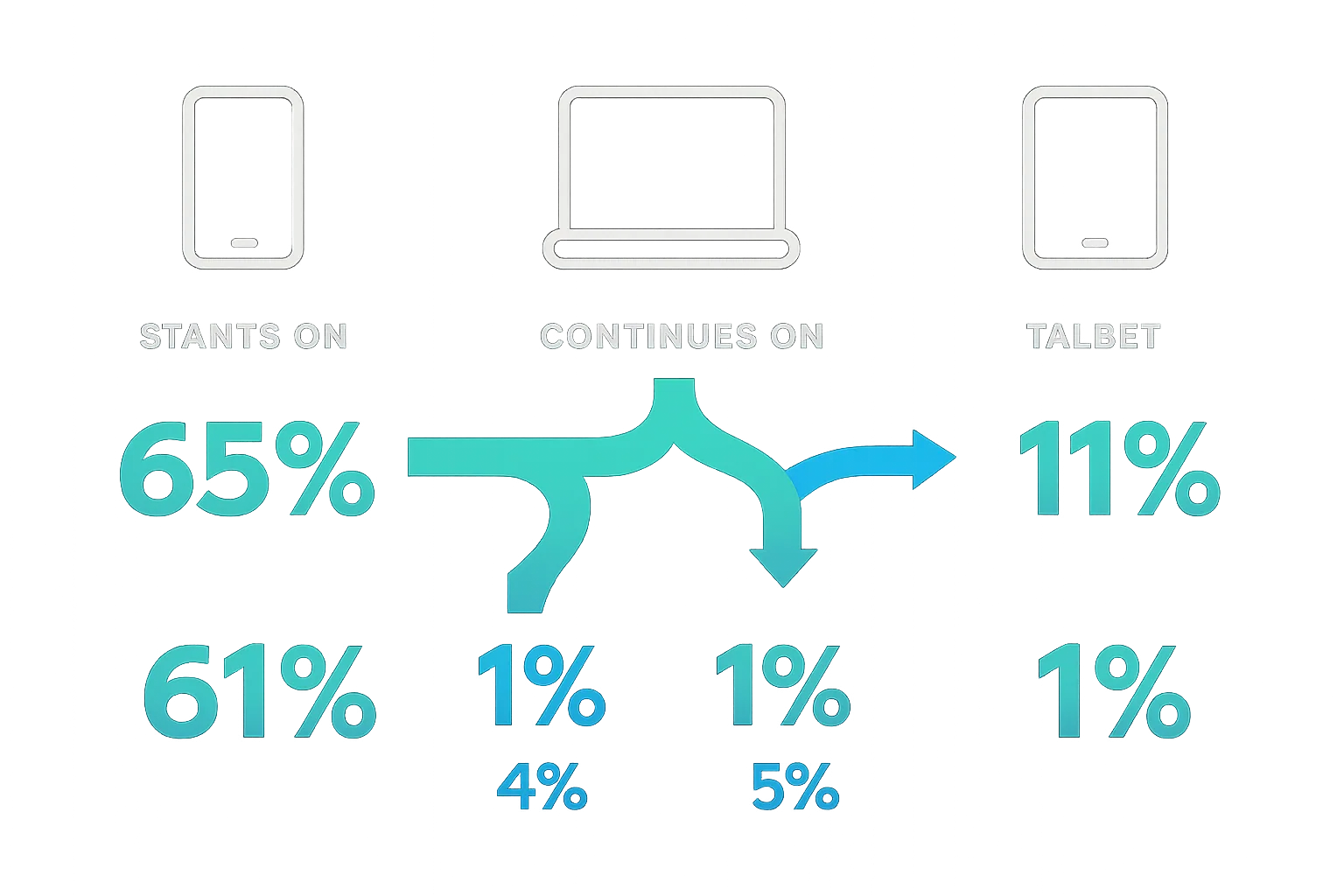
Research from GFK reinforces how widespread this behaviour has become:
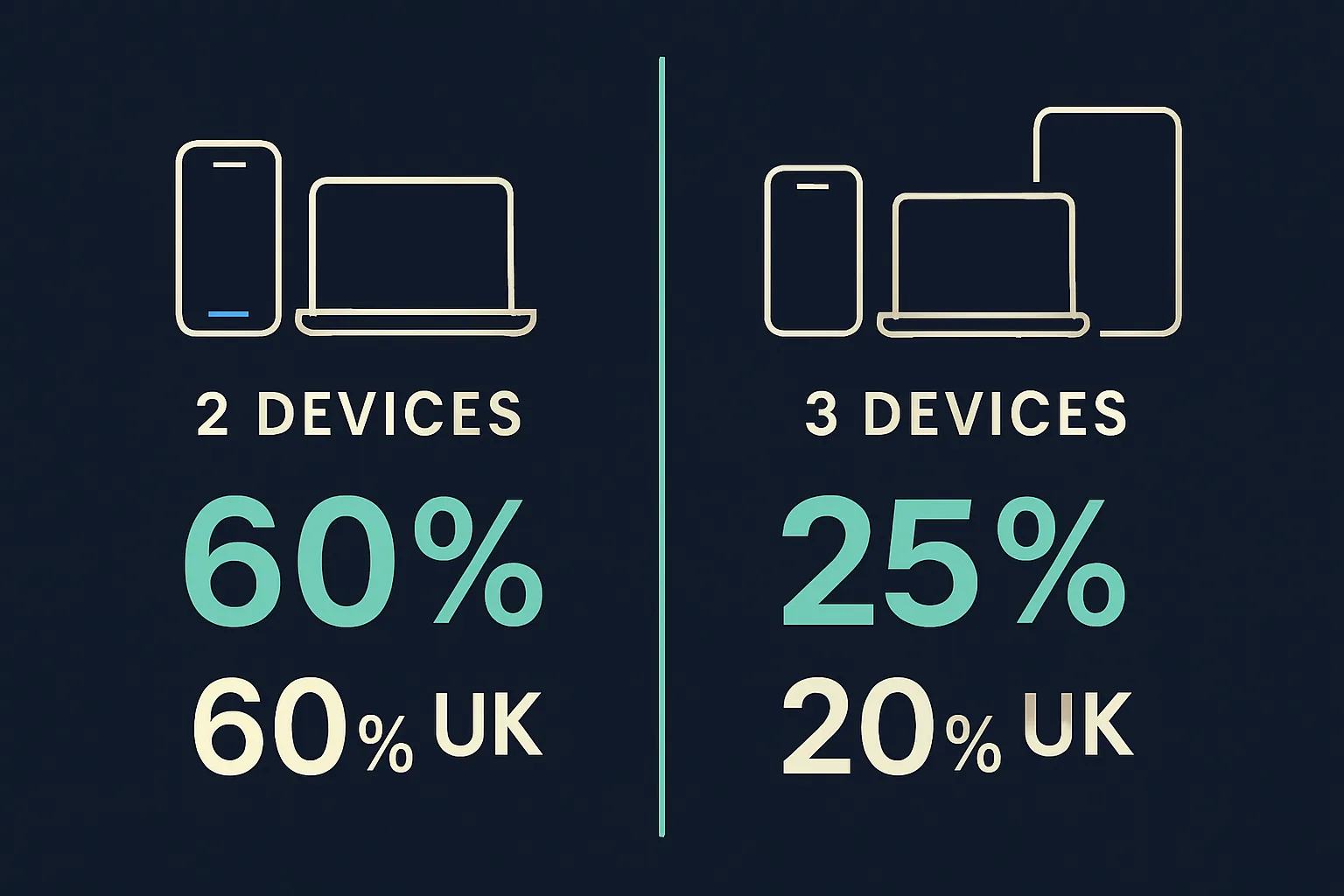
More than 60% of online adults in the U.S. and U.K. use at least two devices every day. A quarter (25%) of online Americans and a fifth (20%) of online Britons regularly use three.

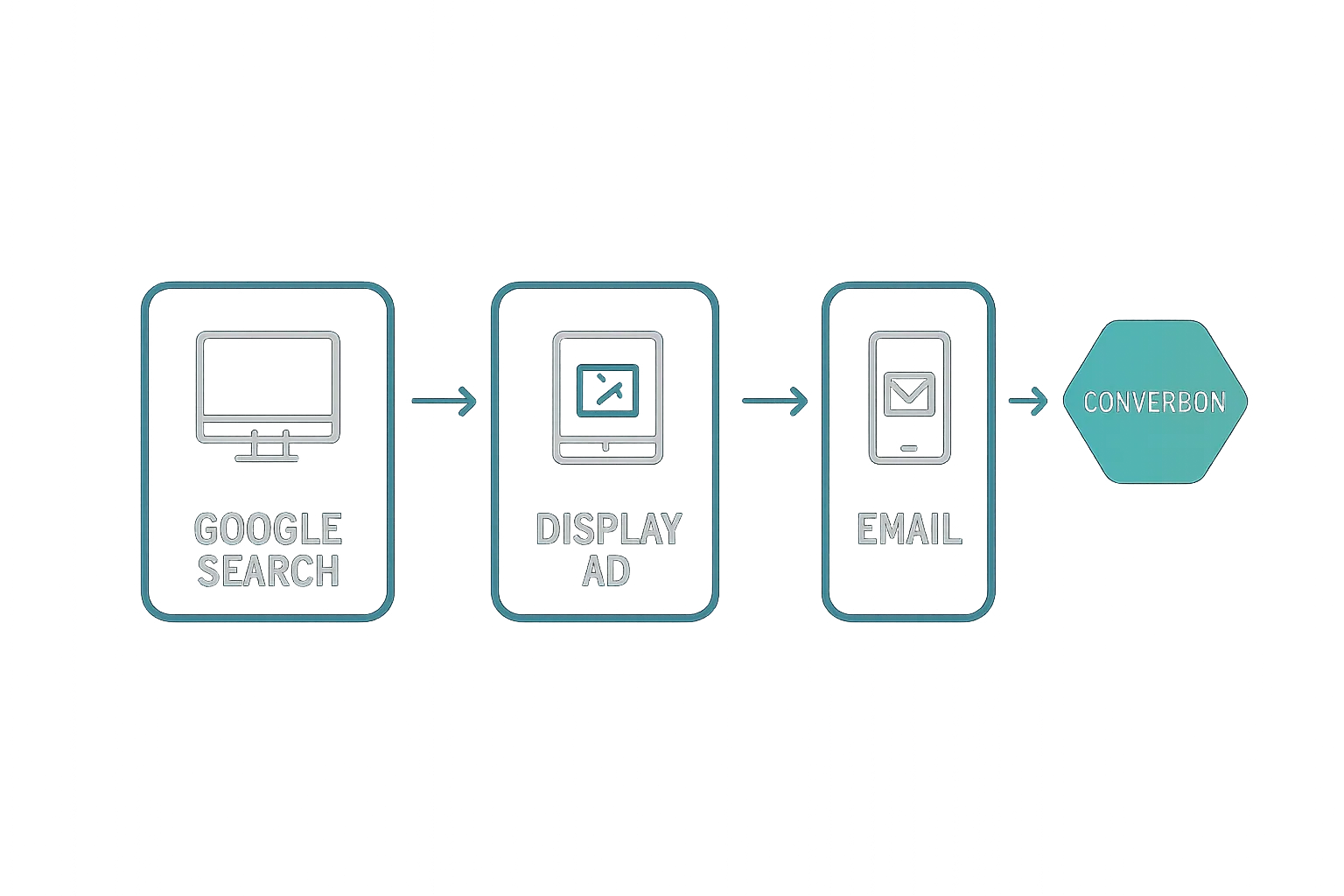
What Makes Cross-Device Attribution So Difficult?
Attribution has never been easy, and the rise of multi-device behaviour makes it substantially harder. The core problem is this: there is no reliable way to identify the same user across different devices.
Other attribution models — cross-channel, inter-channel — can deliver reasonably accurate results because they lean on cookies stored on a single device to identify and track a consumer, allowing marketers to stitch together the customer journey touch points on that device.
Cookies, however, do not travel between devices. The cookies on a laptop cannot be transferred to a smartphone or tablet, and vice versa. Each device category also has its own identification method — desktop users can be tracked via cookies and device fingerprints, while smartphone users are typically identified by a device's unique ID.
Given that cookies can't serve as a cross-device identifier, the industry has settled on two principal approaches: deterministic matching and probabilistic matching.
What Is Deterministic Matching?
Deterministic matching identifies the same user across different devices by linking a shared unique identifier — most commonly an email address — across those devices.
Email addresses are particularly well-suited to this role because they are used not only for messaging but for account creation and login across websites and apps. Consider how Google handles this: a user who logs into their Gmail account on a smartphone, a desktop, and a tablet is identifiably the same person across all three devices, because they authenticate with the same credential on each.

This approach achieves roughly 80–90% accuracy. The limitation is that it's primarily available to large platforms — Google, Facebook, Amazon, and similarly scaled companies — because the method only works when a substantial portion of users actively log into services across multiple devices.
That said, more publishers and mid-sized platforms are beginning to encourage (through added value or expanded access) or require (by restricting certain features) users to create accounts and sign in across devices. This opens the approach to a broader set of players, though it remains most practical for large-scale sites such as major news outlets.
What Is Probabilistic Matching?
Where deterministic matching relies on a small set of confirmed unique identifiers, probabilistic matching uses a broader collection of data signals and statistical algorithms to estimate that the same person is behind different devices.
Data inputs commonly used in probabilistic matching include:
- IP addresses
- Device IDs
- Browser type
- Interests and web browsing history
- Location
- Language settings
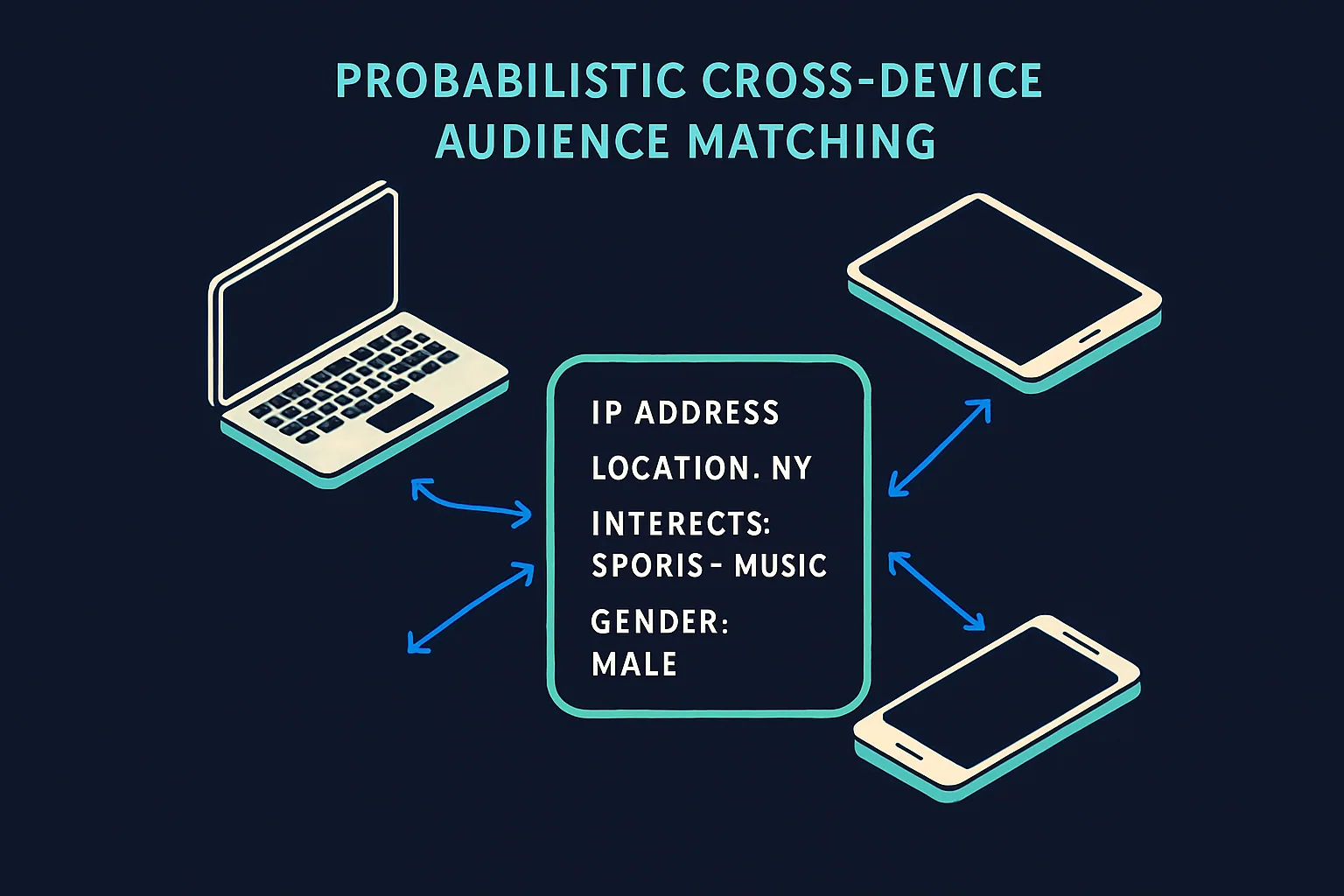
Probabilistic matching also uses known deterministic data sets to train its machine learning algorithms — in effect, teaching the model to recognize the behavioural signatures that suggest a single user operating across multiple devices.
Where Cross-Device Attribution Is Headed
In a multi-device, multi-channel environment spanning billions of consumers, perfect cross-device attribution is not a realistic target. The practical goal is continuous improvement.
Beyond the technical hurdles, privacy regulation is an increasingly significant constraint. Government bodies on both sides of the Atlantic are pushing to classify data such as IP addresses and device IDs as Personally Identifiable Information (PII) or Personal Data. The FTC in the United States and the European Union's Article 29 Data Protection Working Party are two prominent examples of this regulatory direction.
Companies relying on deterministic or probabilistic matching will need to stay current with evolving privacy laws to understand which data points can be collected freely, which require explicit consent, and which cannot be collected at all.
A growing number of marketing software vendors and analytics companies are actively working on improving cross-device identification. A key piece of the puzzle is data infrastructure — specifically, data management platforms (DMPs). A DMP allows marketers to import and combine offline and online first-, second-, and third-party data, enabling deeper insight into customer behaviour and, critically, the ability to identify users across devices to improve cross-device attribution and reporting.
Cross-device attribution will remain imperfect for the foreseeable future, but better data infrastructure, more sophisticated matching algorithms, and clearer regulatory frameworks will all gradually push accuracy higher.