Real-Time Bidding (RTB) vs. Programmatic Advertising: Understanding the Difference
Advertising technology has developed a language all its own. Pay-per-click, demand-side platform (DSP), ad exchange — the list goes on. Among all the jargon, two terms have become particular buzzwords: programmatic and real-time bidding (RTB). They're closely connected and frequently used interchangeably, but they are not the same thing.
To understand where they differ, it helps to trace both back to their origins in media buying.
The Evolution of Media Buying
Media buying — as it applies to digital advertising — is one of the most powerful tools in any modern marketer's arsenal. Without it, brands have no reliable mechanism for reaching potential customers at scale.
Historically, advertising relied on a system where agencies submitted written orders directly to publishers and negotiated over price, placement, size, and countless other details. The accelerated pace of the internet made that process unsustainable.
Manual Media Buying
Before programmatic, brands and agencies negotiated contracts with publishers directly, often face-to-face, and managed everything through spreadsheets. It was labour-intensive and slow.
Meanwhile, consumers began moving fluidly between desktops, smartphones, and tablets — across websites, social networks, and mobile apps. The fragmentation of digital channels made it increasingly difficult for advertisers to reach the right audiences without wasting significant budget.
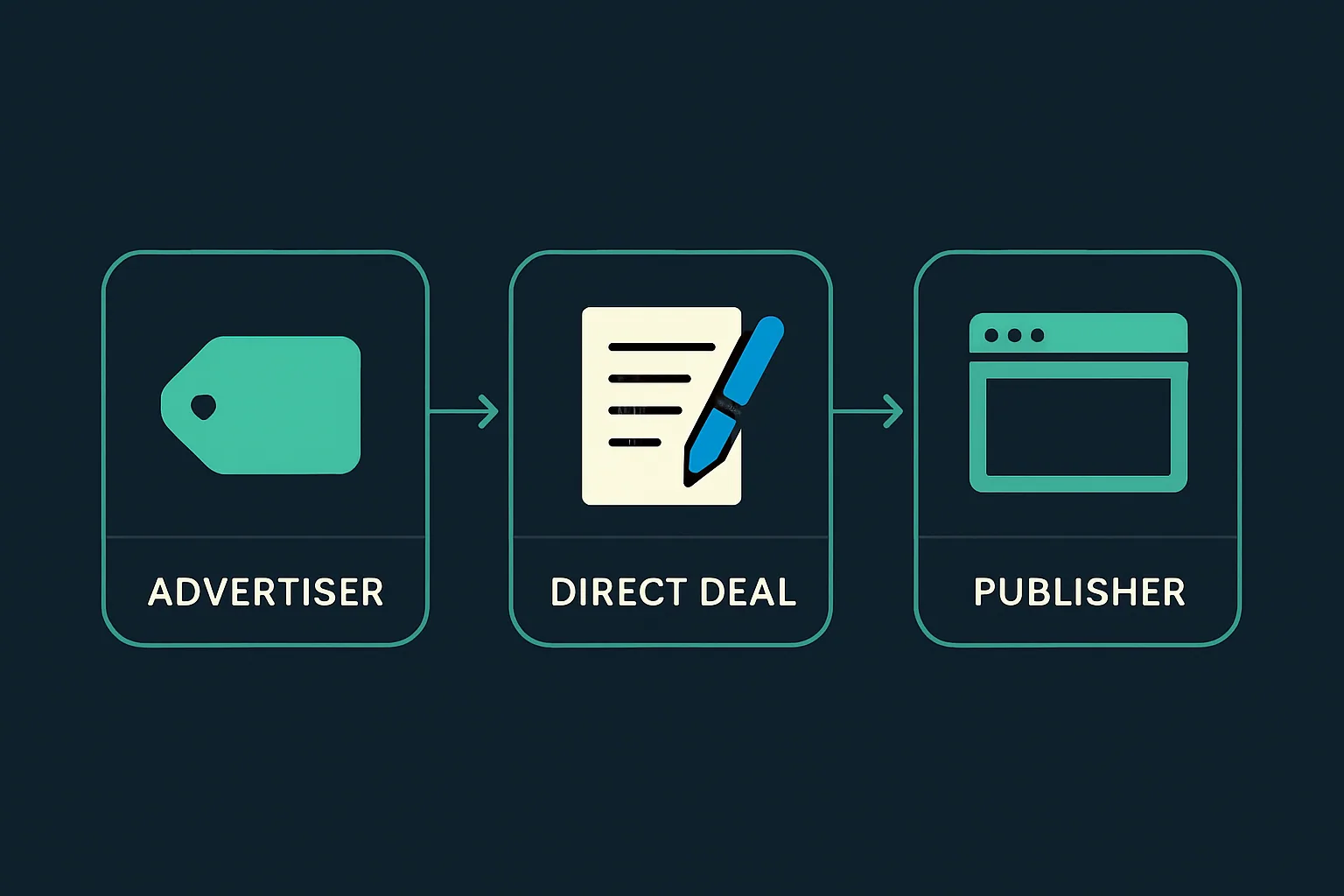
The answer to that fragmentation problem was programmatic.
Programmatic Media Buying
Programmatic media buying is the automated purchase of digital ad space — display ads, banners, video — using dedicated software and algorithms. Rather than requiring human negotiation at every step, the buying process is handled programmatically, making it faster, more scalable, and more data-driven.
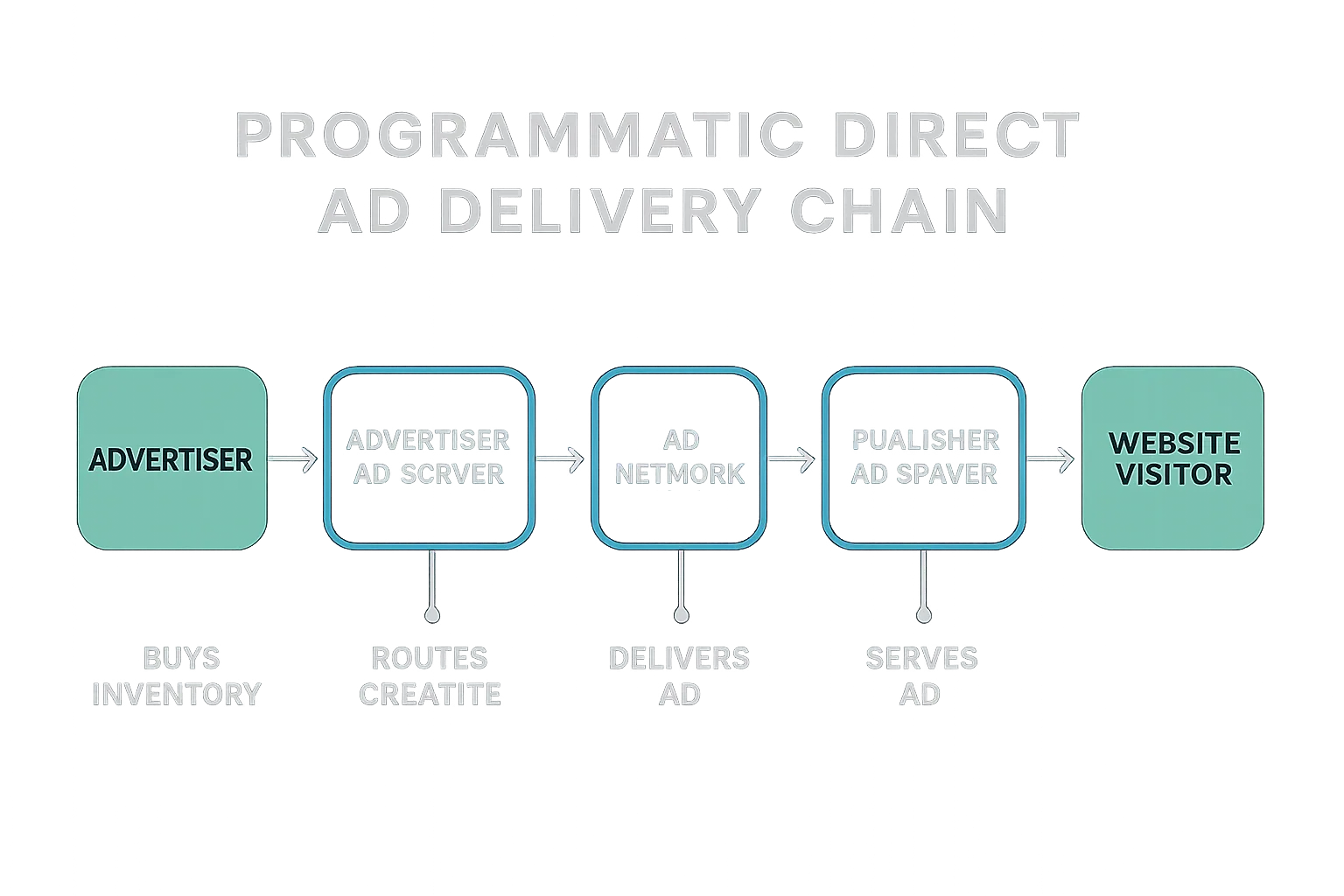
The image below illustrates how an advertiser can purchase ad space from a publisher programmatically:
There are several distinct models under the programmatic umbrella:
Programmatic direct operates on a one-to-one basis between an advertiser and a publisher. It resembles the early days of direct internet advertising, but with software layered on top to automate campaign delivery and reporting. The terms are still agreed upon by both parties in advance.
Real-time bidding (RTB) allows advertisers to purchase ad inventory on an impression-by-impression basis through open-market auctions. Any eligible advertiser can bid for and win ad space on a publisher's website as each impression becomes available. More detail on the RTB process is covered in the section below.
Private marketplace (PMP) is a form of RTB, but with restricted access. Instead of being open to all bidders, PMP inventory is made available only to selected advertisers. This model is typically used by premium publishers — such as Forbes and the Wall Street Journal — and large brands like Coca-Cola and Procter & Gamble.
Across all these models, automation has significantly improved efficiency for both buyers and sellers. That efficiency is especially valuable given the fragmentation caused by the ever-expanding number of digital channels and publishers.
Beyond efficiency, what makes programmatic genuinely powerful is its use of data. Targeting decisions can draw on customer behaviour, geography, time of day, and a wide range of other signals — enabling advertisers to allocate spend against specific audiences quickly and precisely.
How Real-Time Bidding (RTB) Works
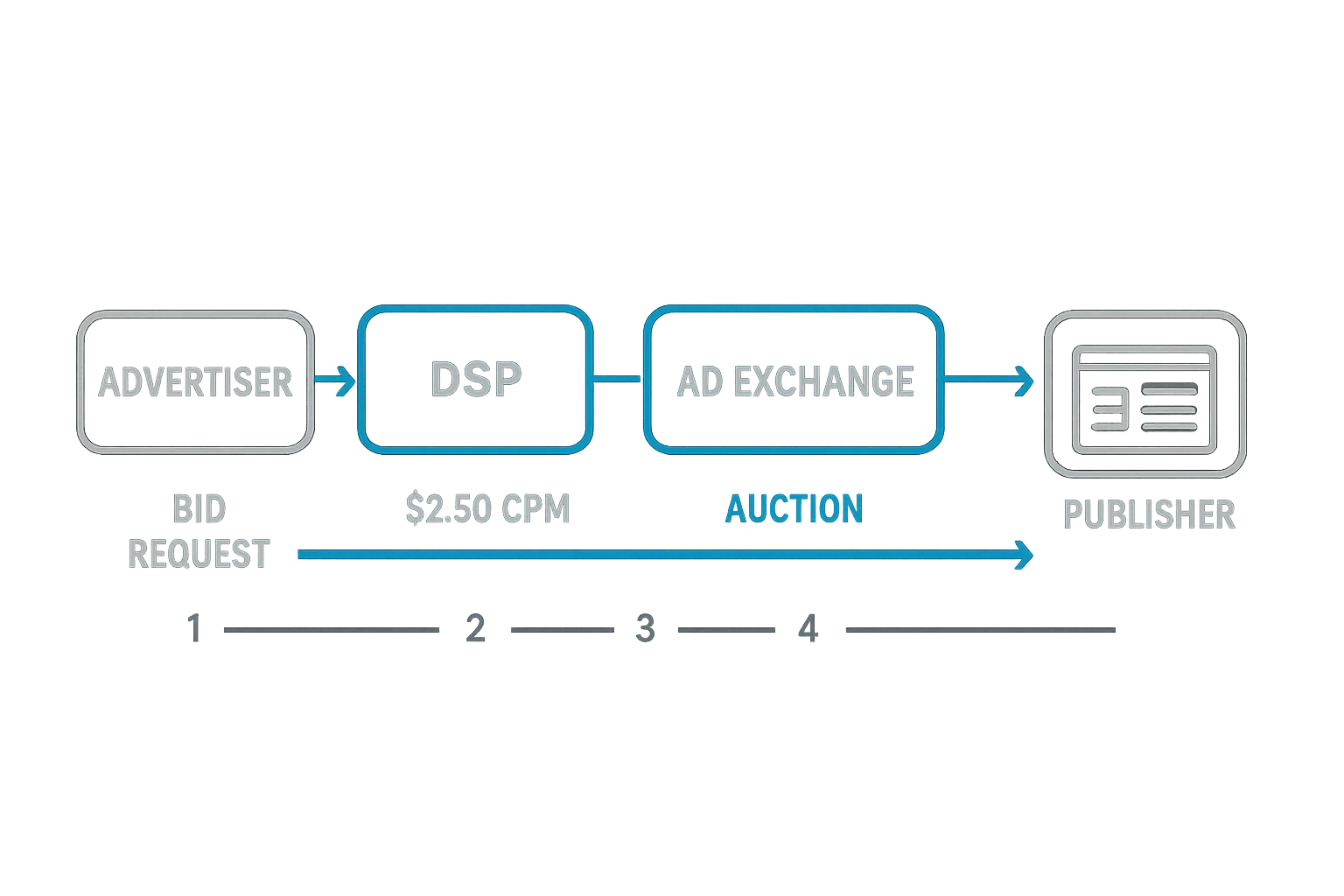
RTB is, at its core, an automated auction. Advertisers bid against one another through a demand-side platform (DSP) for inventory that publishers make available on the open market. The entire process unfolds in milliseconds — in the time it takes a webpage to load.
Here is what the RTB process looks like step by step:
- An advertiser or advertising agency sets up ad campaigns within a DSP.
- The DSP connects to an ad exchange (such as DoubleClick or AppNexus), which in turn connects to inventory sourced from ad networks and supply-side platforms (SSPs) like Rubicon Project and PubMatic.
- Each time ad space on a publisher's site becomes available, the publisher's SSP sends a bid request to the ad exchange. The exchange then runs an auction among the connected DSPs, which submit bids for the impression.
- The winning DSP's ad is passed to the publisher's page and displayed to the visitor.
RTB is estimated to account for over 90% of all programmatic buying, and for over a third of total digital ad spend overall.
Are RTB and Programmatic the Same Thing?
Short answer: no.
Long answer: RTB is one method within the broader programmatic framework. "Programmatic" on its own simply means that the buying process is automated — it's an umbrella term that covers multiple models, including RTB, private marketplace, and programmatic direct. All of these models are used to purchase inventory, but each works differently.
The chart below illustrates how these models relate to one another within the programmatic landscape:
| Media execution type | Programmatic – Real-time bidding (RTB): Public auctions | Programmatic – Real-time bidding (RTB): Private marketplaces (PMP / Deal ID) | Programmatic – Programmatic direct | Non-programmatic (direct campaigns) |
|---|---|---|---|---|
| Price | Auction | Auction and/or Deal ID terms | Pre-defined | Pre-defined |
| Direct Advertiser - Publisher relationship | No | Yes | Yes / Limited | Yes |
| Inventory volume | Non-guaranteed | Non-guaranteed | Guaranteed | Guaranteed |
| Inventory | All inventory that the publisher decides to put on a public auction | Premium inventory | All, including premium inventory. Bulk inventory (sometimes robust targeting is available) | All, including premium inventory. Bulk inventory with limited targeting. |
| Delivery | DSP / Over RTB pipes | DSP / Over RTB pipes with a Deal ID set | Programmatic direct platform integrated with the publisher's ad server. | Email/phone, manual ad tags entered in the publisher's ad server. |
Where Things Are Heading
Understanding how programmatic and RTB fit together matters increasingly as both continue to evolve. Given the rapid pace of AdTech development and the ongoing emphasis on efficiency in advertising spend, programmatic buying and RTB are expanding beyond digital display into new mediums — including connected TV and digital audio. The underlying mechanics remain the same; what changes is the inventory being bought and sold.