How the Digital Advertising Ecosystem Works: Publishers, Advertisers, and the Intermediaries Between Them
The digital advertising ecosystem can feel overwhelming at first glance, but its complexity is easier to navigate once you recognize what sits at its foundation: the relationship between the parties who want to sell ad space and the parties who want to buy it. Every platform, network, and protocol in the stack exists to facilitate — or optimize — that core exchange.
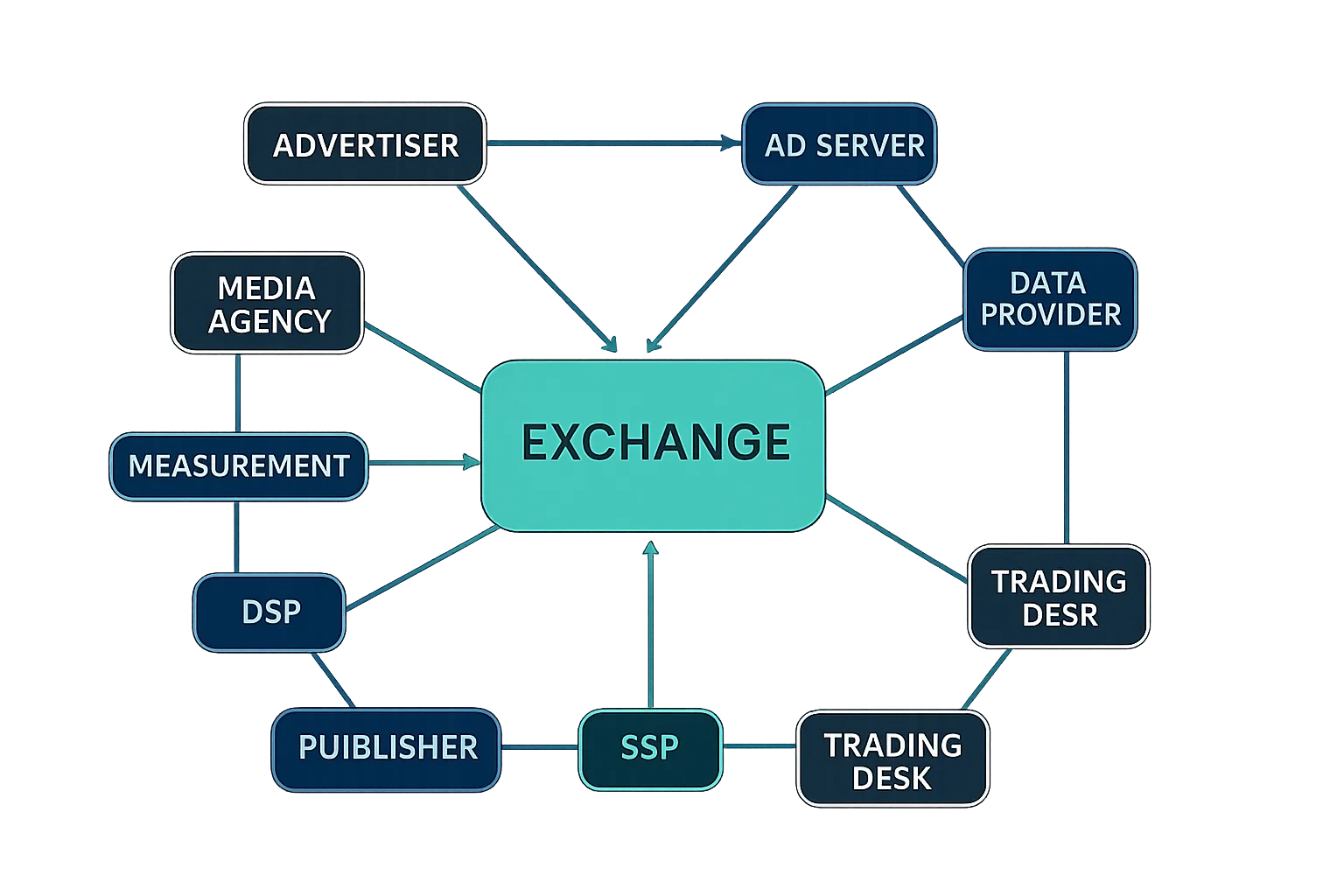
Advertiser and Publisher: A Maturing Relationship
At its core, the digital advertising ecosystem is built around one fundamental relationship — the one between advertisers and publishers.
Advertisers want to promote their goods or services, so they need to buy ad space across various channels. Publishers want to generate revenue by selling space on their website, blog, or mobile app to anyone willing to pay for it. This dynamic has existed for about as long as commerce itself.
Like most relationships, it has grown more complicated over time. Publishers moved to the internet, where an explosion in the number of webpages created a massive inventory of new places to serve ads. Meanwhile, the opportunity to reach customers online drew in a growing number of advertisers as well.
The two sides became increasingly separated by both space and time. By space, because a company in one country can now target audiences in distant markets it could never have reached through traditional media. By time, because the speed of the internet — with rapidly changing content and the constant need for marketing agility — has made the kind of direct, ongoing advertiser-publisher relationships that once characterized the industry difficult to maintain at scale.
Intermediaries: Agencies, Networks, and Platforms
Within the advertiser-publisher relationship, several other players have emerged to fill the gap. Some, like ad agencies, have been around since long before digital advertising became dominant. Others, like ad exchanges and demand- and supply-side platforms (DSPs and SSPs), are more recent arrivals. What they all share is a common purpose: facilitating the connection between advertisers and publishers in a way that benefits both sides.
Ad Agencies and Trading Desks
For a long time, ad agencies served as trusted intermediaries — helping brands shape campaigns, design creative, and negotiate directly with publisher sales teams. Before programmatic buying automated much of this process, these were largely hands-on, relationship-driven engagements.
As digital advertising became more automated, many brands chose to rely less heavily on agencies, or to bypass them entirely for certain buying activities. Agencies, in turn, adapted by embracing automated buying tools, including DSPs. By around 2007–2008, some agencies had begun building internal trading desks — dedicated units that could purchase digital inventory in bulk and package it for clients based on audience data.
Ad Networks
If an agency trading desk acts as a close ally for advertisers, an ad network functions more like a neutral go-between for both sides of the market.
An ad network — examples include Google AdSense, Adblade, and Advertising.com — operates by purchasing large volumes of inventory from publishers, aggregating it by audience segment and channel, and reselling it to advertisers or agency trading desks.
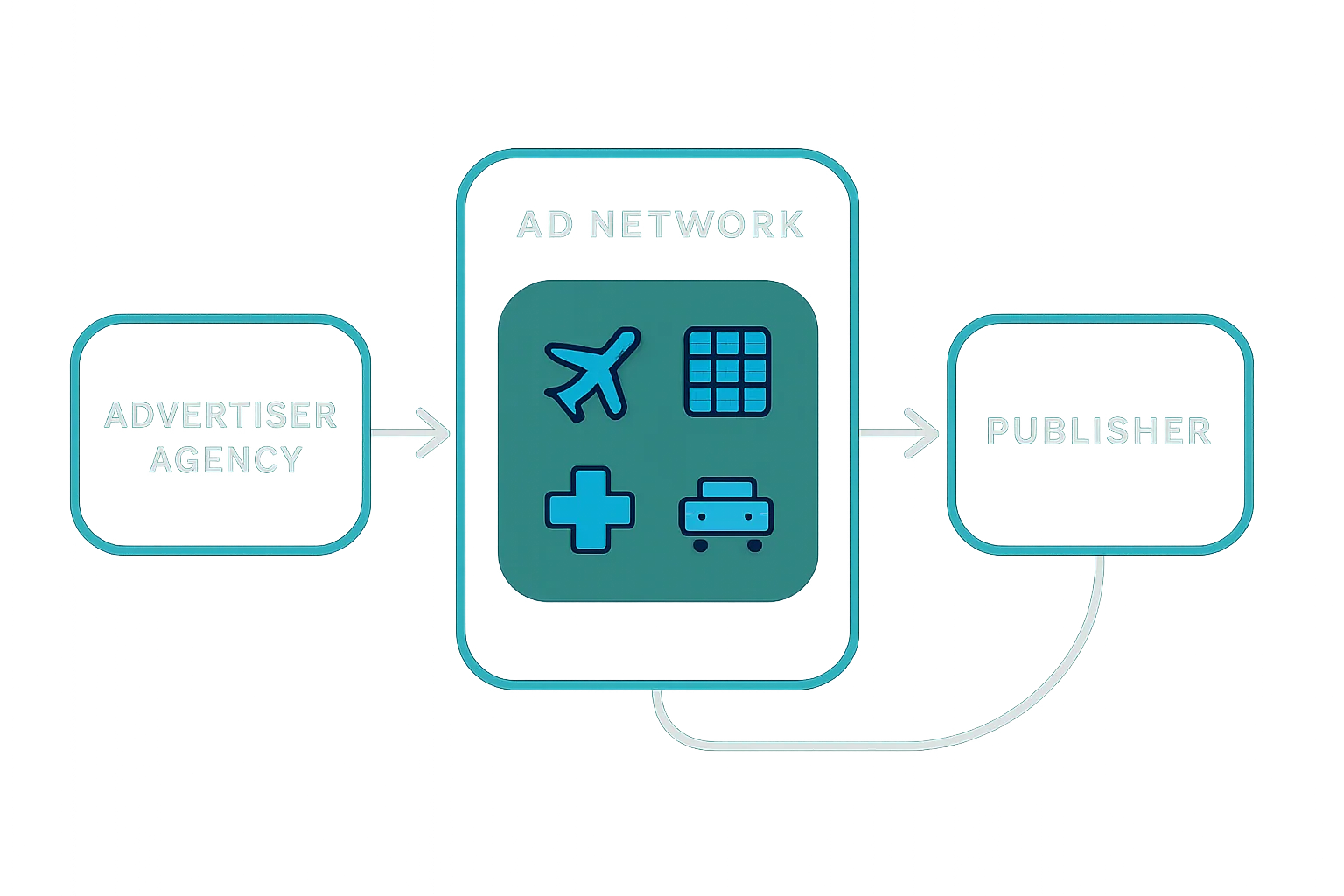
Without ad networks, advertisers and their agencies would need to evaluate ad inventory across hundreds of thousands of digital publishers on their own — a task that would be practically impossible at any meaningful scale.
Tensions do occasionally arise in this part of the ecosystem. Because ad networks and agency trading desks both aggregate inventory, they can end up competing directly for advertisers' business. Publishers, however, tend to work with both, depending on whether they are looking to move premium or non-premium inventory.
Ad Exchanges and Marketplaces
For a relationship to function, the two parties need a place to meet. In programmatic advertising, that place is typically an ad exchange.
An ad exchange is a dynamic technology platform that allows publishers to sell ad impressions to the highest bidder in real time, acting as a central meeting point for advertisers and publishers. Inventory is aggregated, segmented, and sold on an audience basis, bringing together buyers and sellers across a wide range of channels — connections that, in many cases, would never happen through direct outreach.

The vast majority of transactions on ad exchanges occur through real-time bidding (RTB), where ad space is sold on an impression-by-impression basis. This granular approach is what enables highly targeted ad serving.
Beyond open exchanges — where any qualified advertiser can bid — there are also private deals and private marketplaces. Premium publishers such as Forbes, The Wall Street Journal, and Yahoo often use these mechanisms to make their highest-value inventory available exclusively to select advertisers. Some non-elite publishers take a similar approach with their prime placements (top-of-homepage positions, for example), offering them on a guaranteed basis to buyers they trust and have established relationships with.
Demand-Side Platforms (DSPs) and Supply-Side Platforms (SSPs)
Two additional pieces of technology play a significant role in how inventory actually moves through this ecosystem — and each takes a distinct side.
-
A DSP (demand-side platform) works on behalf of advertisers and/or their agencies. It connects them to multiple ad exchanges and networks, enabling them to bid on inventory that matches their target audiences. During a real-time auction on an ad exchange, a DSP functions much like a stockbroker, placing bids as impressions become available. Without a DSP, advertisers would miss many of the opportunities to reach users at the moments and places where retargeted or prospecting ads are most likely to convert.
-
An SSP (supply-side platform) works on behalf of publishers. While not strictly required, SSPs have become the standard tool for publishers looking to aggregate their inventory and push it to ad exchanges and networks efficiently. For a high-traffic site generating thousands or even millions of impressions per day, an SSP provides better visibility into what inventory is available, delivers audience insights, and helps maximize yield from that inventory.
Programmatic: Open and Direct
Beyond understanding the individual players, it is worth distinguishing between the two main modes of programmatic trading.
A large share of digital advertising inventory is bought and sold programmatically, often on an impression-by-impression basis through real-time bidding auctions. Advertiser and publisher come together almost instantaneously — a transient connection that may or may not be repeated.
Some publishers prefer a more deliberate arrangement. Rather than exposing their inventory to the open market, they sell directly to buyers they trust or have worked with previously. This model is known as programmatic direct (sometimes called automated guaranteed). Open ad exchanges are removed from the equation, but publishers in this model may still use their SSP to aggregate and segment inventory, and may route deals through a network or a closed exchange. Evidence from market data suggests an increasing number of publishers are moving in this direction.
Together, these two modes — open programmatic and programmatic direct — represent the spectrum of how inventory changes hands in today's digital advertising market. Understanding where each intermediary sits on that spectrum, and whose interests it serves, is the foundation for navigating the ecosystem effectively.