What Is Gambling Advertising?
Gambling is often framed as entertainment — the thrill of chance, the possibility of a windfall. At its core, it means risking a sum of money for the possibility of winning a larger one. Despite a well-documented downside in addiction and financial harm, gambling is big business, and the advertising that supports it has grown substantially alongside the expansion of online platforms and mobile access.
Key Points
- Gambling advertising promotes various gambling activities offered by casinos, lotteries, bookmakers, and other entities that offer the chance to win money, prizes, or cryptocurrencies.
- Gambling ads appear across a wide range of channels and formats: video, audio, print, digital publications, OOH/DOOH, social media, in-app, and in-game.
- The goal of gambling ads is to encourage people to try gambling or increase their gambling activity.
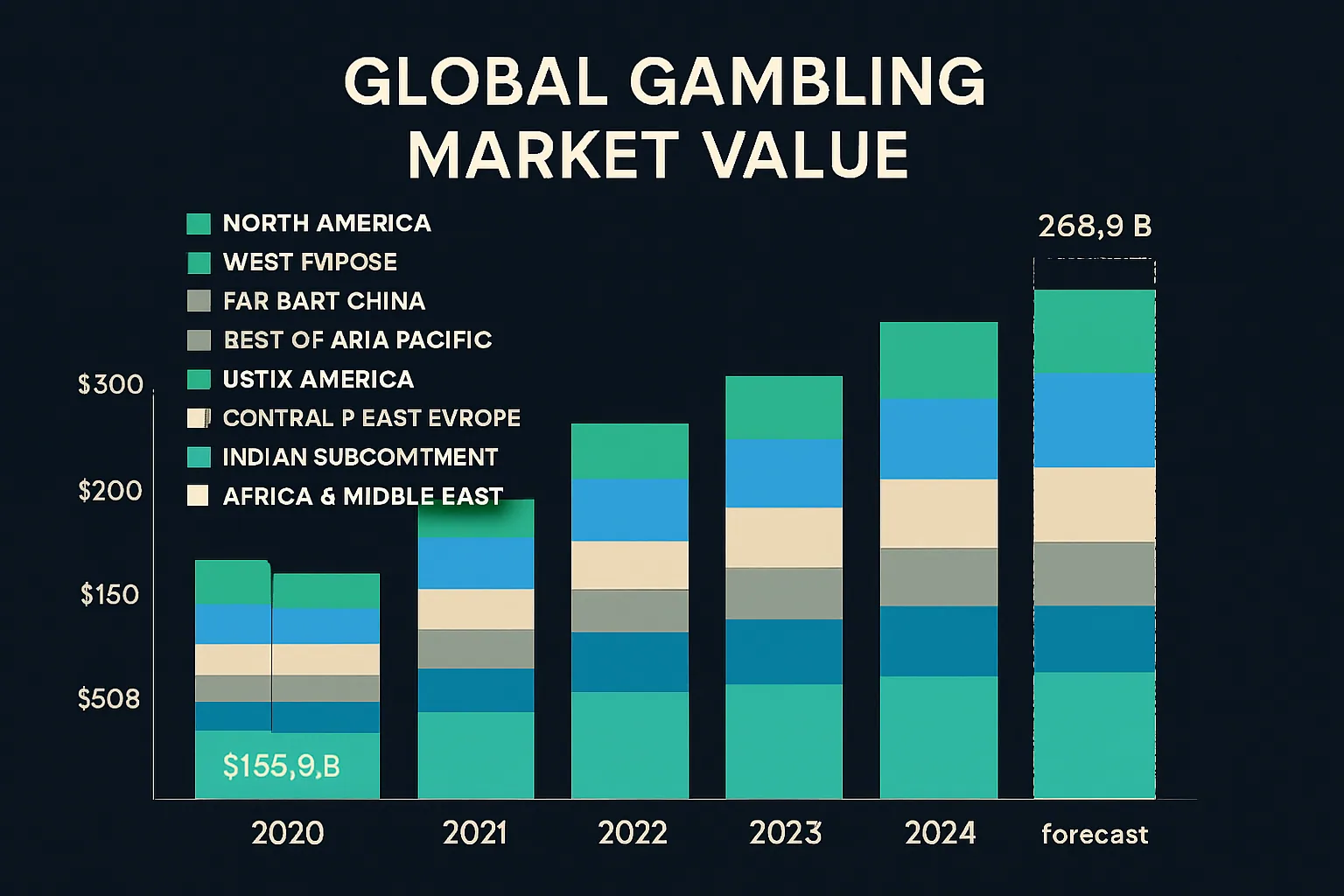
- The global gambling market is expected to grow from $465 billion in 2020 to $674 billion in 2025 at a CAGR of 7.7%.
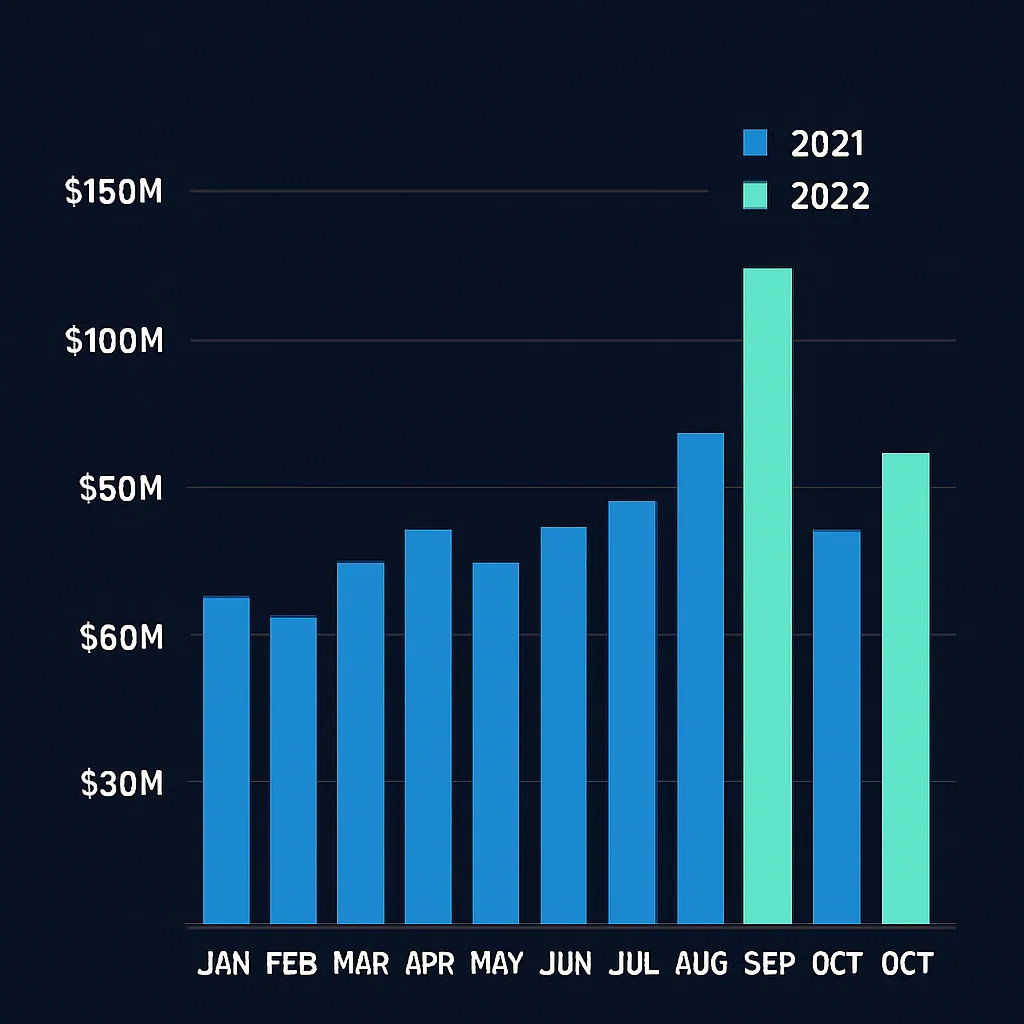
- More than 440 gambling advertisers invested $738 million across digital, print, and TV ads in 2022 — a 22% year-over-year increase.
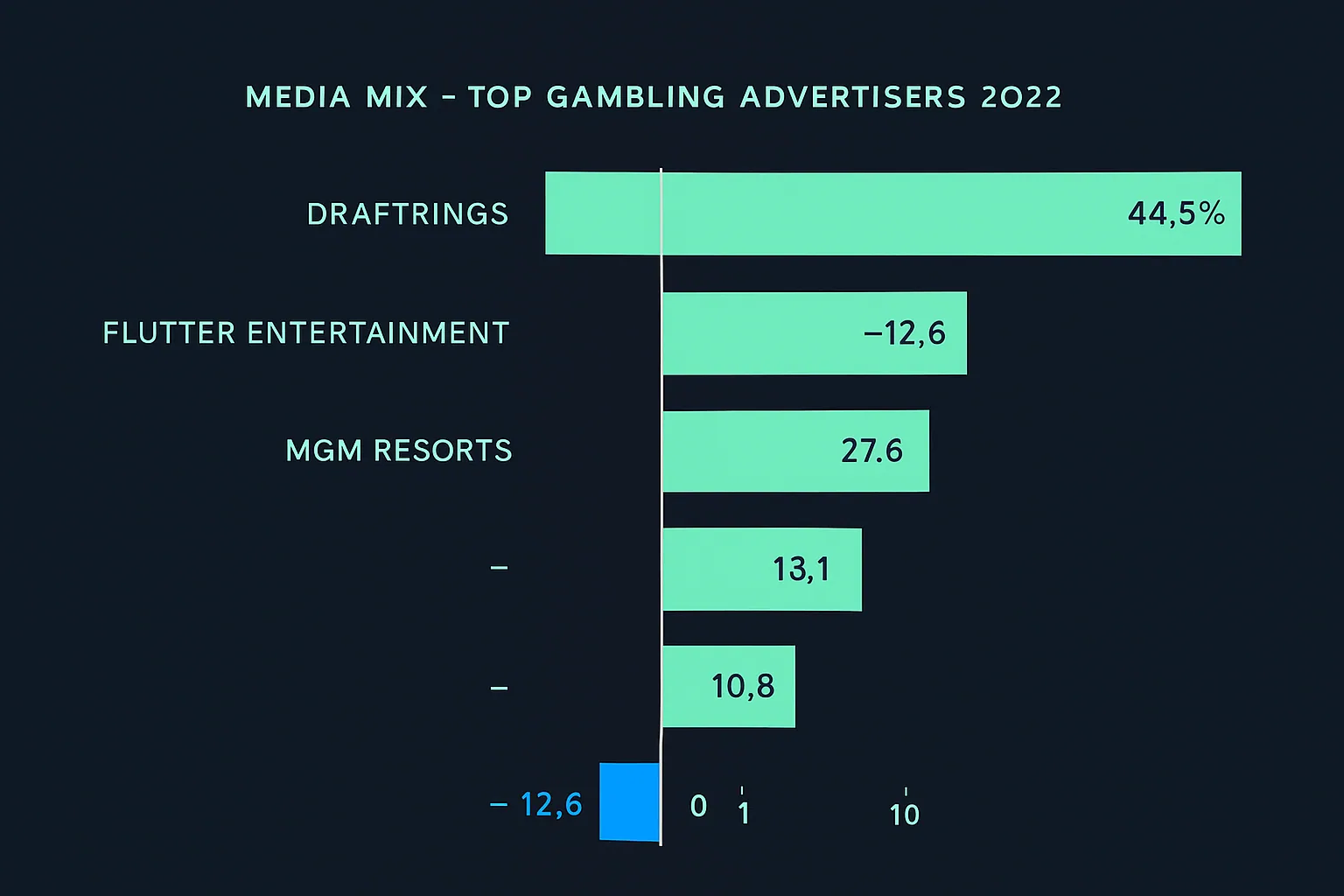
- DraftKings, Flutter Entertainment, and MGM Resorts International were the top three gambling advertisers in 2022, spending a combined $460 million.
- Most countries either prohibit gambling advertising outright or impose significant restrictions on it.
What Is Gambling Advertising?
Gambling advertising promotes various gambling activities offered by casinos, lotteries, bookmakers, and other entities. These activities give participants the opportunity to place bets in hopes of winning money, prizes, or — more recently — cryptocurrencies such as Bitcoin, Ethereum, and Litecoin.
Gambling advertising was once closely associated with live sporting events — signage at stadiums, spots during televised matches — but it has since expanded across a broad set of channels:
- Video advertising: Television, YouTube, and other streaming video apps
- Audio channels: Radio and podcast advertising
- Newspapers
- Print and digital publications
- Out-of-home (OOH) and digital out-of-home (DOOH) advertising
- Social media
- In-app and in-game placements
The primary goal of gambling ads is to encourage people to try gambling or to gamble more frequently. Prominent sportsbooks — or bookmakers — such as DraftKings, Caesars, and FanDuel spend millions of dollars in marketing to expand their reach and grow their customer bases.
Beyond sports betting, gambling advertising also covers:
- Online casinos and poker games
- Politics betting
- UFC and other combat sports betting
- Virtual sports betting
- eSports betting
The Global Gambling and Gambling Advertising Industries
According to The Business Research Company, the global gambling market reached a value of nearly $465 billion in 2020, having grown at a CAGR of 2.1% since 2015. It is expected to rise to $674 billion by 2025 at a CAGR of 7.7%, then continue to $895 billion by 2030 at a CAGR of 5.8%.
According to MediaRada's analysis of Gambling Advertising in 2022, more than 440 gambling advertisers collectively invested $738 million across digital, print, and TV ads — representing a 22% year-over-year increase.
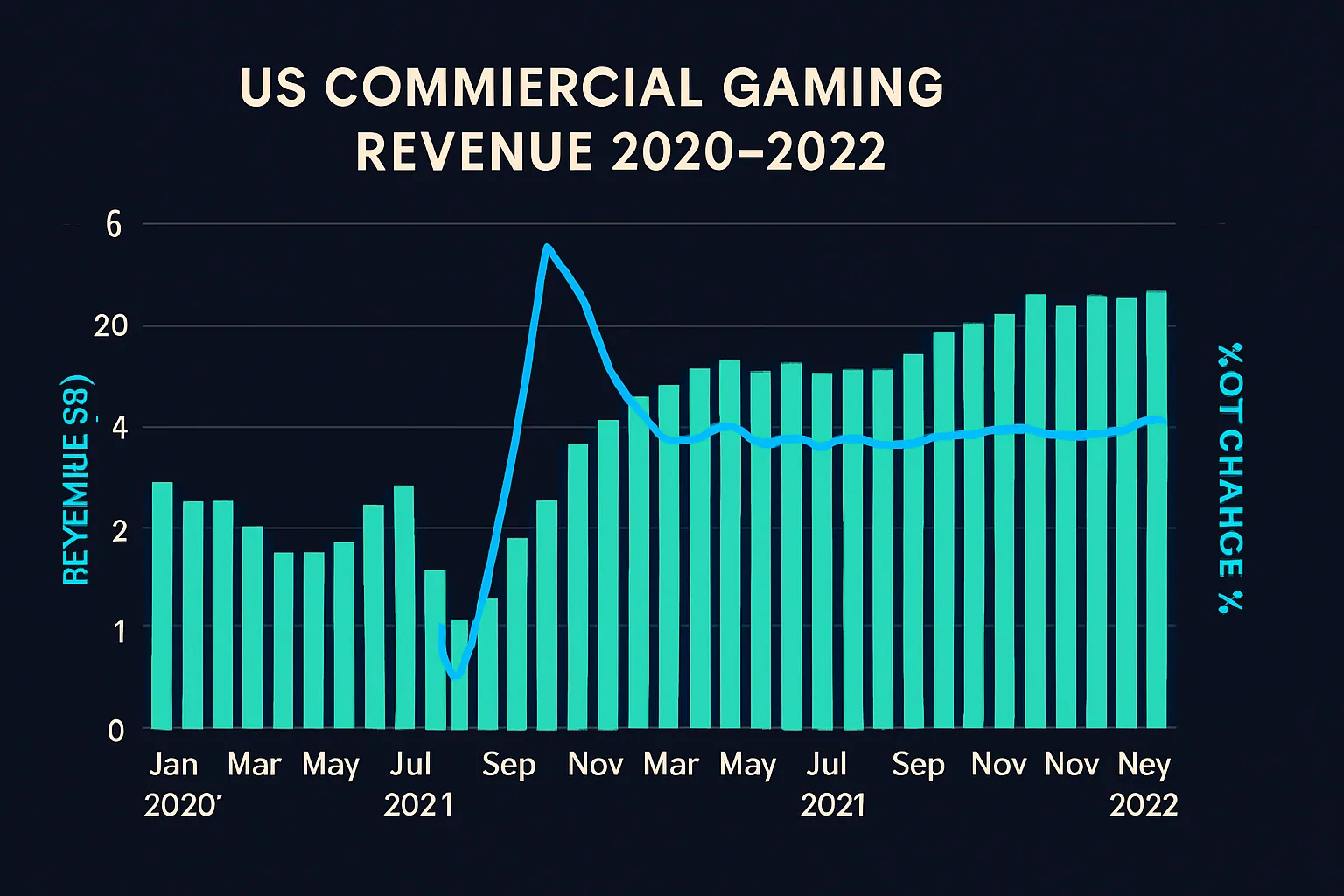
According to the American Gaming Association, US commercial gaming revenue from casinos and mobile gaming apps for the first 11 months of 2022 exceeded $53.04 billion, surpassing the record set in 2021.
Global Online Gambling Market (2022 to 2028)
The global online gambling market reached $79.8 billion in 2022 and is expected to grow at a rate of 8.5% annually through 2028, reaching US$133.9 billion.

Key Factors Driving Recent Growth
Several converging forces have accelerated the online gambling market:
The smartphone era — Improvements in internet accessibility have directly fuelled growth in online gambling. In most countries, mobile users now account for 80% of all users in the online gambling industry, with mobile clearly displacing desktop as the dominant access point.
New technologies — blockchain, IoT, and virtual reality — Blockchain and cryptocurrency adoption have introduced greater transparency and anonymity for deposits and payouts, while virtual reality has created more immersive player experiences.
Evolving online gambling laws — Many countries and regions have loosened restrictions on gambling over the past five years, introducing regulatory frameworks that aim to be ethical and safe rather than outright prohibitive.
The COVID-19 pandemic — Physical casino closures during lockdowns drove a surge in demand for online alternatives, accelerating adoption across demographics that might otherwise have stuck to in-person gambling.
Diversification of advertising channels — Gambling advertising has expanded into numerous digital channels, increasing brand awareness and enabling operators to reach new audiences they couldn't access through traditional media alone.
According to Revenuelab.biz, Australians spend more on gambling than any other population globally. Approximately 80% of the Australian population participates in some form of gambling, and people spend an average of US$1,000 per year. Gambling is considered a widespread national issue in Australia, though it remains legal for those 18 and over and is heavily regulated.
Top Gambling Advertisers in 2022
More than 400 gambling companies invested in advertising in 2022, but three stood apart: DraftKings, Flutter Entertainment, and MGM Resorts International. Combined, these three companies spent over $460 million on advertising.
DraftKings
DraftKings allocated 42% of its advertising budget to digital channels — including social media, digital display, and podcasts — while directing 56% toward a mix of mobile, native, online video, and OTT campaigns.
While many advertisers grew cautious about spending after the Super Bowl period, DraftKings maintained aggressive investment levels. The company also incorporated an NFT dimension into its marketing strategy through a campaign featuring Kevin Hart, allowing players to build weekly lineups based on NFTs of athletes they own.
Flutter Entertainment
Flutter Entertainment directed 95% of its advertising budget toward TV, with the remaining 5% spread across display, podcast, social media, online video, OTT, and mobile channels.
MGM (BetMGM)
MGM split its budget fairly evenly between traditional and digital formats: 50% went to digital advertising, 45% to TV, and 5% to print. The digital portion covered a mix of social media, display, and OTT formats including mobile, native, podcasts, and online video.
How Gambling Companies Advertise Their Products
Gambling companies draw on a wide range of advertising formats and channels to reach their target audiences. The following are representative examples from across the industry.
'It's Who You Play With' — William Hill TV Ad
'World's Favourite Betting Brand' — Bet365 TV Ad
DraftKings — OOH Screens
OOH gambling ad by DraftKings
Source: OOHtoday
A DOOH Ad From MGM Resorts
MGM gambling ad DOOH
Image: New York Times
Gambling Ads in Facebook Feeds
Gambling advertising example in a Facebook feed
Source: Twitter
Examples of Gambling Ads on Facebook Reels
Gambling advertising examples on Facebook Reels
Source: Casinoplay
Laws and Regulations on Gambling Advertising
The regulatory environment for gambling advertising varies considerably by region. Below is a summary of the current framework across key markets.
Europe
European countries have broadly legalized gambling businesses and associated advertising, but nearly all have attached legal and governmental restrictions. The legislative landscape falls into three broad categories:
- Permission with restrictions — Gambling and gambling advertising are allowed subject to defined conditions.
- Partial ban — More stringent requirements limit who can be targeted or when ads can run.
- Total ban — No gambling activities or advertising are permitted at all.
Partial Bans
Russia and Ukraine both operate partial bans that require gambling ads to air only within specific time windows.
Scandinavia
- Norway and Sweden allow gambling advertising but prohibit targeting minors.
- Iceland and Finland ban advertising aimed at minors and also prohibit using television and audiovisual services as advertising mediums.
- Denmark permits gambling advertising provided the ads do not directly invite people to gamble or visit a gambling venue.
The Baltic Countries
- Estonia partially bans gambling ads from containing any invitation to participate in gambling or visit gambling establishments.
- Lithuania prohibits gambling advertising except for ads that identify the company's name, trademark, and legal form. Lotteries are exempt from these restrictions.
Other European Countries
- Belarus partially bans gambling advertising on TV during daytime hours, and prohibits it in or near educational institutions, healthcare and cultural facilities, sports venues, and mass media.
- Poland restricts advertising for betting, casinos, and gambling establishments. Advertising for cylindrical games, card games, dice games, and gambling machines is prohibited.
- Germany partially bans gambling advertising on TV and online, but authorities may grant permission to operators of lotteries, sports betting, and horse-race betting to advertise on those platforms. Advertising of sports betting before and during live TV broadcasts of sporting events is generally prohibited.
- The Czech Republic partially bans advertising in a way that, in practice, prohibits offering or promoting gambling activities.
- Slovakia limits gambling advertising to within 200 metres of the gambling establishment.
- The Netherlands and Belgium restrict gambling advertising to certain hours — broadly, between 7 p.m. and 6 a.m. Outside of those hours, advertising is permitted.
- Ireland partially prohibits gambling advertising; lottery ads are subject to potential prohibition, and the area is primarily governed by general consumer protection regulations rather than gambling-specific legislation.
The United Kingdom takes a comparatively liberal approach. Gambling advertising has been legal — including on television — since the Gambling Act of 2007. The principal restriction is that gambling ads must not be targeted at minors.
Total Bans
- Moldova completely bans gambling advertising.
- Latvia has a general ban on gambling ads outside of gambling establishments and restricts internet advertising. However, the country does licence 13 operators to offer gaming to players within the country.
The United States
Gambling is legal under US federal law, but individual states have significant latitude to regulate or prohibit gambling and gambling advertising within their own borders, leading to considerable variation across the country.
As an illustration, DraftKings and FanDuel are permitted to advertise in New York because they are classified as fantasy leagues — a game of skill — rather than gambling per se.
Across the US, gambling companies must generally adhere to the following advertising rules:
- Advertising may not target minors or audiences under the age of 21 in connection with sports wagering, gaming, or related activities.
- Ads must not feature individuals listed as "sports pool participants," including players, coaches, trainers, league employees, or others in positions of authority over sporting outcomes.
- Ads must not be false, deceptive, or misleading.
- Every ad must clearly display a problem-gambling hotline number.
Nevada stands as the one US state that explicitly permits casino advertising. However, all such advertising must not bring the gaming industry into disrepute — casinos must conduct their advertising and public-relations activities in a manner consistent with dignity, good taste, and inoffensiveness.
Asia and Oceania
Thailand
Thailand's gambling act divides gambling into three categories: activities that are outright prohibited; regulated lucky draws; and certain forms of gambling in which public participation, advertising, and promotion are permitted.
Japan
Most forms of gambling are prohibited in Japan, with one significant exception: land-based betting on horse races, bicycle races, motorcycle races, and motorboat races is permitted. Gambling advertising is prohibited in Japan except at passenger terminal facilities in airports and ports.
China
Gambling is illegal in China, and gambling advertising is banned. That said, authorities appear to be re-evaluating their approach to online gambling, and policy changes remain possible.
Australia
Betting product advertisements are not permitted during TV programs rated G or lower between 6 a.m. and 8:30 a.m. and between 4 p.m. and 7 p.m., nor during programs directed at children between 5 a.m. and 8:30 p.m.
The gambling advertising landscape is shaped by the tension between a rapidly growing commercial market and regulatory frameworks that vary from permissive to prohibitive. Understanding both the market dynamics and the jurisdiction-by-jurisdiction legal environment is essential for any operator, publisher, or platform looking to participate in this space responsibly.