The Benefits of In-Game Advertising: Formats, Data, and Why It Works
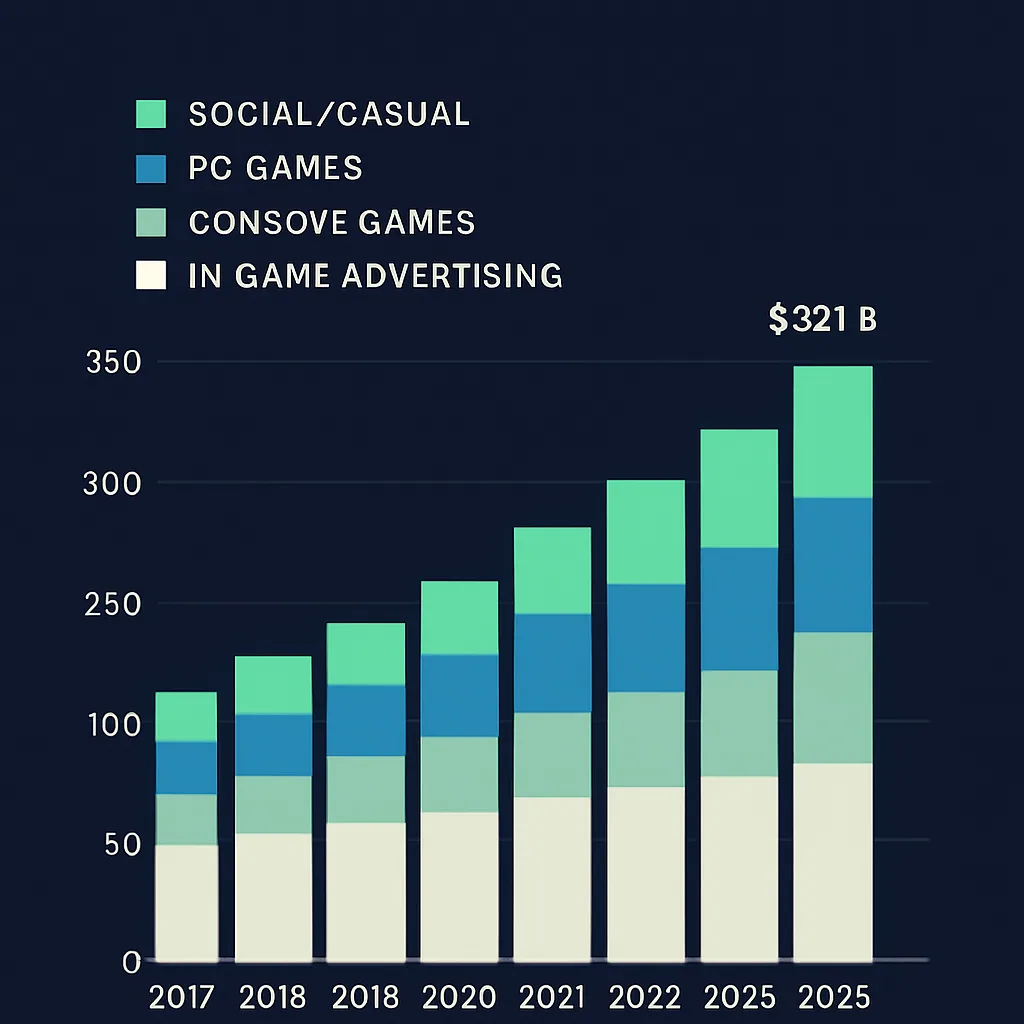
The video game industry is booming, and it's expected to be worth $321 billion globally by 2026. Gaming is among the fastest-growing sectors of the economy, with over 3 billion gamers active worldwide — an audience too large for most advertisers to ignore.
Brands have been searching for ways to reach their target audiences without disrupting the user experience, and in-game advertising is proving to be an effective channel for doing exactly that. By blending ad content directly into games, advertisers can deliver non-interruptive, seamless experiences that leave users with a positive and lasting impression of a brand.
Why Brands Should Consider In-Game Advertising
Investing in in-game advertising gives brands the opportunity to:
- Reach diverse audiences — gaming spans demographics far broader than many advertisers assume, allowing brands to get their message in front of specific and varied audience segments.
- Build brand awareness — being present across multiple channels increases the likelihood of a brand message resonating.
- Differentiate from competitors — activating a channel where competitors haven't yet established a presence creates a first-mover advantage.
- Engage audiences more deeply — playing a game demands focus and attention. An ad blended into that environment benefits from the same heightened engagement.
- Access precise data — in-game environments yield specific user data that enables more relevant, personalized messaging.
- Explore different ad formats — a variety of in-game formats helps reduce ad fatigue and supports non-intrusive ad delivery.
The Core Benefits of In-Game Advertising
The in-game advertising industry has substantial momentum. According to research from Admix, 92% of media buyers intend to run in-game advertising campaigns by 2025 — a signal that the channel is moving from experimental to mainstream.
The benefits break down differently depending on whether you're looking at users or brands.
For users: Game developers can deliver an undisrupted gaming experience by showing native, in-game ads — on virtual billboards, for example — rather than resorting to the intrusive, disruptive formats common in web display advertising.
For brands: The primary advantage is that advertisers can increase brand awareness and engagement by presenting ads in a natural, organic way that doesn't interrupt gameplay.
A study conducted by broadband provider TalkTalk produced some of the most compelling performance data available on the channel:
- Purchase intent increased — there was a 12% uplift in sales after users were exposed to in-game ads.
- Longer attention spans — the average gamer's attention span equated to 29 minutes, a significant result compared to the 17.5 minutes per thousand impressions measured for online advertising (web display and mobile display combined).
- Higher dwell time — users' average dwell time on in-game ads was 13% higher than the industry average of 1.6 for online advertising.
- Greater ad receptivity — 96% of study participants viewed the in-game ads, and 84% felt the ads were suitable for the gaming environment.
How the Pandemic Accelerated Gaming's Growth
The COVID-19 pandemic and its accompanying lockdowns accelerated the gaming industry's trajectory considerably, as restrictions on in-person gatherings pushed people toward digital entertainment and social connection.
According to Nielsen research, 82% of global consumers played video games or watched video content during the height of COVID-19 lockdowns. People were looking for ways to entertain themselves and maintain social ties from home, and gaming filled both roles.
The gaming industry is forecast to sustain this elevated growth rate. A PwC report projects the sector could be worth $321 billion by 2026.
In-Game Ad Formats (IGA)
Most in-game advertising examples appear inside mobile games on iOS and Android, but the formats also apply to games played on computers and consoles such as Xbox and PlayStation.
There are three broad categories of in-game advertising: static ads, dynamic ads, and gamevertising.
Static Ads
Static ads are hardcoded into a game and appear as stationary elements — virtual billboards, posters, and banners being the most common. Once implemented, they cannot be changed after the fact. They're straightforward to produce but lack the flexibility of dynamic formats.
Dynamic Ads
Dynamic ads require an active internet connection, which allows the ad content to be updated as the player progresses through the game. They offer advertisers considerable flexibility, are easy to scale, and can be used to geo-target opted-in users. Unlike static ads, dynamic placements can be refreshed in real-time without any changes to the game itself.
Dynamic ad formats include several distinct types:
- Interstitial ads are rich, interactive ads that cover the entire screen during natural pauses in gameplay, such as breaks between levels.
- Native banners resemble web banner ads but blend seamlessly into the background or signage inside the game, creating an unobtrusive ad experience.
- Contextual ads are served based on the user's state at the time of delivery. Advertisers supply a list of topics and keywords; an algorithm then matches that list against the game's content, keywords, topics, and images to determine the most relevant placement.
- Rewarded ads give users in-game currency, extra playing time, additional levels, or similar benefits in exchange for watching a full-screen ad for 15–30 seconds.
- Playable ads are interactive video ads that let users preview a gaming app — essentially a short, playable demo — before deciding whether to download it.
Gamevertising
Gamevertising takes a different approach entirely: an entire game is built specifically to promote a company, product, or service. Rather than placing ads within an existing game, branded elements are woven throughout the experience, with the game itself serving as the promotional vehicle.
Zero-Party Data and First-Party Data in In-Game Advertising
Any information that game developers and marketers collect directly from their gaming audience qualifies as either zero-party or first-party data — and in-game environments generate both in abundance.
In many cases, the data collection process begins before a user plays a single round of the game, starting at account setup and login. At this stage, users are typically asked to share:
- Preferences regarding the content displayed during gameplay.
- Willingness to receive in-game tips and tutorials.
- Willingness to receive discount codes or coupons from partner companies.
This information is collected to improve the user experience and can be activated at the right moment — for instance, when a player is stuck on a level or needs guidance. It can also inform what message is shown on an interactive banner. Because it reflects explicitly stated user preferences, this qualifies as zero-party data.
First-party data, by contrast, is information users share when creating an account and engaging with the game over time. Common examples include:
- Email addresses
- Age
- IP address and geolocation
- Purchase history of add-ons and in-game items
Access to both zero-party and first-party data gives gaming companies a significant opportunity to build technology that can analyze, categorize, and segment these data assets — and ultimately monetize them effectively.
Gaming is fundamentally different from traditional advertising channels because it is interactive and live. That distinction gives brands a meaningful advantage when designing campaigns that people are genuinely motivated to engage with. A user's perception of in-game ads is markedly different from how they perceive banner ads on a website; in-game advertising carries far less of the negative connotation that has come to define much of traditional digital advertising.