The 4 Types of Online Attribution Every Marketer Should Understand
Attribution remains one of the most persistent and demanding challenges in online marketing. This guide breaks down the four main types of attribution that the AdTech and MarTech industry is actively working to solve — cross-device, online-offline, inter-channel, and intra-channel — explaining how each works, why it matters, and what techniques are available to measure it.
Online marketing and web analytics have grown so complex since attribution was first introduced that it presents a dual burden: marketers must continuously update their skills and mental models, while the AdTech industry must build technology capable of handling multi-channel measurement at scale.
So what makes attribution such a persistent headache?
In general, attribution in a marketing context covers three overlapping areas: multi-channel attribution, conversion attribution, and multi-touch attribution. These areas collectively raise questions like:
- What touchpoints did a customer encounter with a brand throughout their customer journey before converting?
- When a conversion occurs — a purchase, a download, a sign-up — how much credit belongs to each channel and touchpoint involved?
- Which channel contributed most? Was it a mobile ad on Facebook? A TV spot? An email campaign? A conversation with a salesperson in a physical store?
- How do multiple channels interact and collectively influence a conversion?
Answering those questions is, fundamentally, what attribution is for.
The Core Problem With Traditional Attribution
The central tension is straightforward:
Traditional attribution models focus on single channels, but consumers use multiple channels and devices.

Properly attributing conversions becomes genuinely difficult when consumers are exposed to ads and marketing material across social, search, display, email, and other channels — and when they switch between a laptop, a tablet, and a smartphone during a single purchase journey.
Accurate attribution, though, runs deeper than just cross-device and cross-channel measurement. There are several distinct types of attribution, each addressing a different dimension of the problem.
The 4 Main Types of Attribution

1. Cross-Device Attribution
Attribution was never straightforward, and the rise of multi-device usage has compounded the difficulty significantly.

Cross-device attribution aims to measure and assign credit to the various touchpoints a customer had with a brand across different devices — a laptop, a tablet, a smartphone — before they converted.
The challenge is substantial. Research has shown that 40% of online adults start an activity on one device and complete it on another. That figure alone illustrates how much conversion credit gets lost or misassigned when measurement is siloed by device.
Methods like deterministic and probabilistic matching can identify a single user across different devices with anywhere from 70% to 90% accuracy, but both approaches carry their own limitations and failure modes. Deterministic matching requires a login or verified identifier; probabilistic matching uses statistical inference and is inherently imperfect.
As multi-device behaviour continues to normalize, cross-device attribution will remain a central preoccupation for marketers, analytics vendors, and AdTech platforms alike.
2. Online-to-Offline and Offline-to-Online Attribution
This is arguably the oldest attribution problem in digital marketing. It emerged as soon as brick-and-mortar businesses began establishing an online presence and needed to understand how their physical and digital channels influenced each other.

The questions that drive online-offline attribution include:
- How many online sales and conversions can be attributed to outdoor advertising such as billboards or leaflets?
- How many online conversions stem from TV or radio campaigns?
- How many online conversions can be traced back to in-store conversations between sales staff and prospective customers?
These are not easy questions to answer, but they are critical for any company operating across both physical and digital channels.
There is currently no single technological solution that provides accurate, comprehensive online-offline attribution. Instead, practitioners rely on a set of established workarounds and practical techniques.
Online-Offline Attribution Techniques
1. Vanity URLs These are unique, purpose-built URLs used solely to drive traffic from a single offline medium — such as a TV commercial — to a website. They are typically tied to a specific campaign, making it straightforward to attribute resulting web traffic.
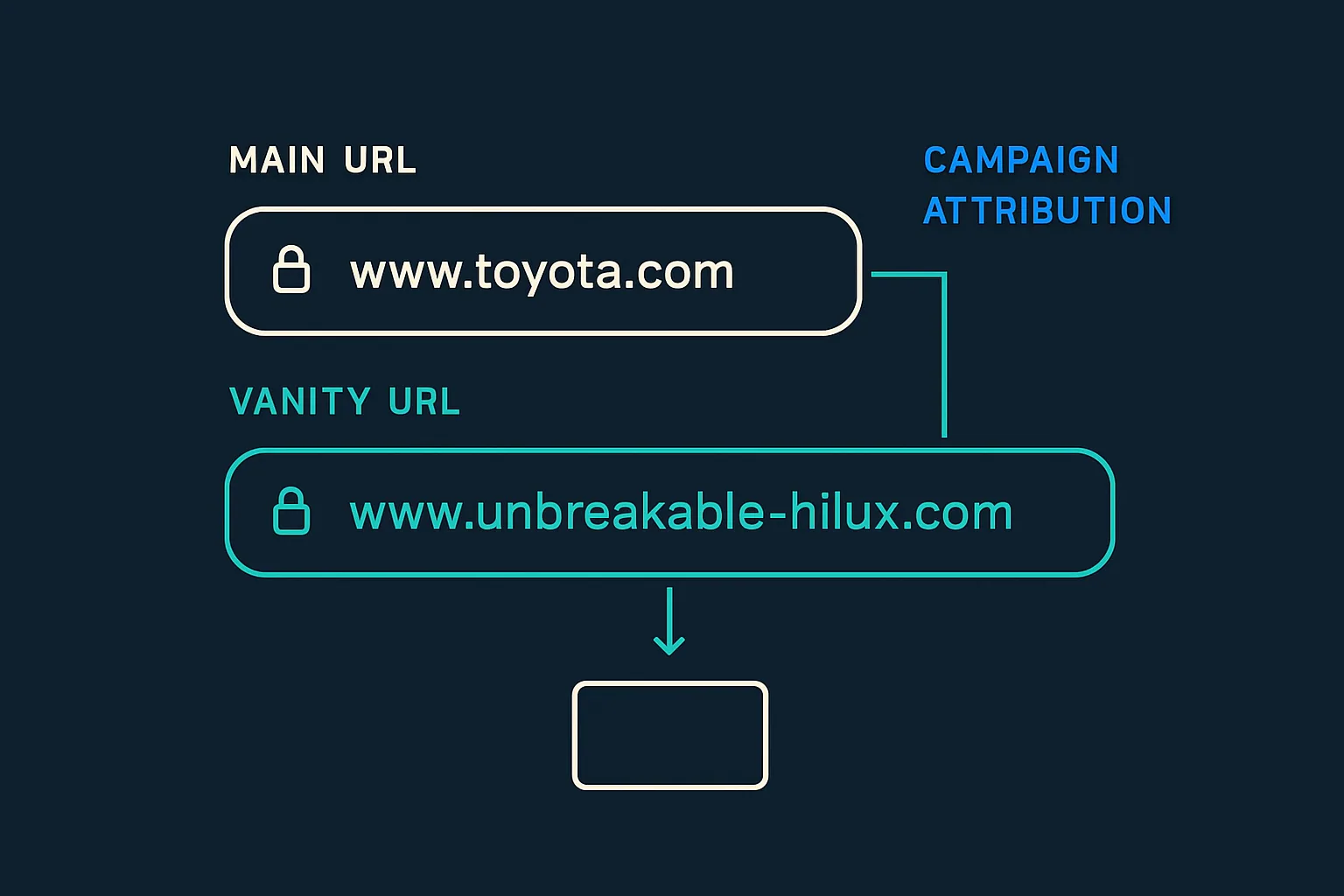
2. Time-limited attribution windows This technique uses a defined time window to attribute website visits to a specific offline campaign. For example, if a TV ad airs at 7:00 pm, all website visits recorded between 7:00 pm and 8:00 pm can be attributed to that campaign.

3. Online and point-of-sale (POS) surveys A straightforward and time-tested approach: asking customers directly how they discovered the brand, either via an online survey during a purchase flow or at the point of sale in a physical store. It is simple to implement and often effective, though it is limited by survey completion rates.
Online and point of sale (POS) surveys for online-offline attribution
4. Unique redeemable coupons and offer codes Coupons and promotional codes have long been used to attract customers, but they also serve as attribution instruments. If a customer receives a discount code via an email campaign and redeems it in a physical store, that transaction can be accurately attributed to the original online campaign.
Using unique redeemable coupons/offer codes for online-offline attribution
5. Postal codes Collecting a customer's postal code during the checkout or shipping stage of an e-commerce transaction allows marketers to measure the geographic distribution of offline campaigns — direct mail, leaflets, billboards — and to retarget those customers with location-based display advertising.
Postal Codes for online-offline attribution
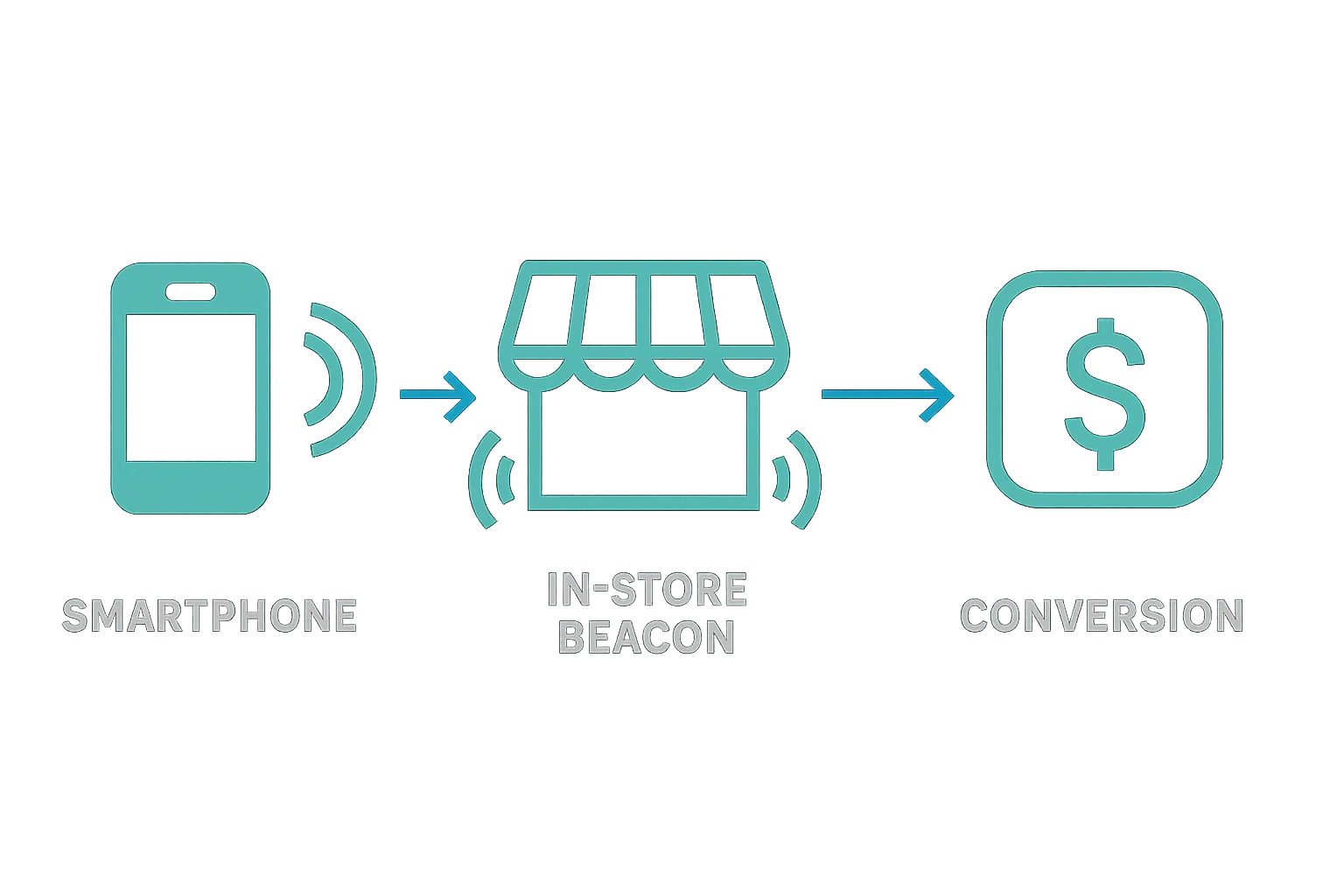
6. Beacons One of the newer techniques available, beacon-based attribution uses Bluetooth technology to link online marketing campaigns to offline purchases. An in-store beacon identifies a customer's smartphone — typically via the retailer's app installed on the device — enabling attribution between the digital campaign that reached the customer and the physical purchase they subsequently made.
3. Inter-Channel Attribution

Not long ago, the default practice was to attribute every online conversion to the last known referral source or traffic channel. It was simple, operationally easy, and — as marketers eventually discovered — deeply misleading.
Inter-channel attribution addresses this gap by measuring how different online channels — social media, paid search, display advertising, email, and so on — each contribute to a conversion. Rather than awarding all credit to the final touchpoint, inter-channel models attempt to distribute credit across every channel that played a role in the customer journey.
4. Intra-Channel Attribution
Intra-channel attribution narrows the lens further, focusing on attributing conversions within a single channel.

This is useful when a marketer wants to understand how different components of the same channel contribute to outcomes. A common example is search: how do paid search and organic search each influence conversions, and which deserves more investment?
Google AdWords was the first platform to offer intra-channel attribution reporting, giving advertisers visibility into how different AdWords campaigns influence each other in the lead-up to a conversion.
From Channel-Level to Multi-Touch Attribution
Both inter- and intra-channel attribution provide useful isolated insights, but they share a fundamental limitation: neither captures the full complexity of the modern customer journey. A single customer can be influenced simultaneously by Facebook, paid search, organic SEO, and email — and channel-level models are structurally unable to account for that overlap.
This is the gap that multi-touch attribution (also called multi-interaction attribution) was designed to fill. Multi-touch models attempt to measure and assign conversion credit to individual touchpoints, online channels, and even individual ad clicks — producing a more complete and accurate picture of what actually drives a conversion.
As of today, most web analytics and marketing platforms still default to the last-click attribution model — assigning 100% of conversion credit to the final touchpoint before conversion. However, an increasing number of tools are offering alternative multi-touch attribution models, reflecting growing recognition that last-click alone fails to represent how consumers actually make decisions.
Understanding the distinctions between these four types of attribution is a prerequisite for choosing the right model, investing in the right tooling, and making defensible decisions about marketing spend across channels.