What Is Programmatic Audio Advertising and How Does It Work?
In 1993, an innocuous banner ad appeared on Wired.com — the modest beginning of display advertising. Programmatic technology arose shortly after to automate the buying and selling of that growing inventory, and there was no turning back. The model for automated media buying swept the industry and became the standard approach for online display, video, search, social, advanced TV, and out-of-home advertising.
More recently, the same programmatic logic has been advancing into audio. Podcasts, digital radio, and music-streaming services are attracting serious attention from the ad tech ecosystem, and a number of major platforms are already live with programmatic audio offerings.
The Rise of Programmatic Audio
Several large players are either testing or actively implementing programmatic audio. Announcements from Spotify, SoundCloud, TuneIn, Pandora, and Google have signalled a meaningful shift in how audio inventory is sold and bought.
The interest tracks broader industry dynamics: the ongoing automation of ad processes, the decline of traditional non-digital media, and the parallel rise of streaming equivalents. The advertising industry follows audiences, and audiences are increasingly spending time in podcast apps and music-streaming services.
What Is Programmatic Audio Advertising?
Programmatic is an umbrella term covering all processes that enable the purchase of impressions through automated systems, minimizing the human involvement and manual insertion orders that characterize traditional media buying. It has been central to online advertising for decades and is now extending into new channels: audio, out-of-home, and even traditional print.
Programmatic audio is the use of technology to automate the selling and insertion of ads in audio content — podcasts, digital radio, and music-streaming services.
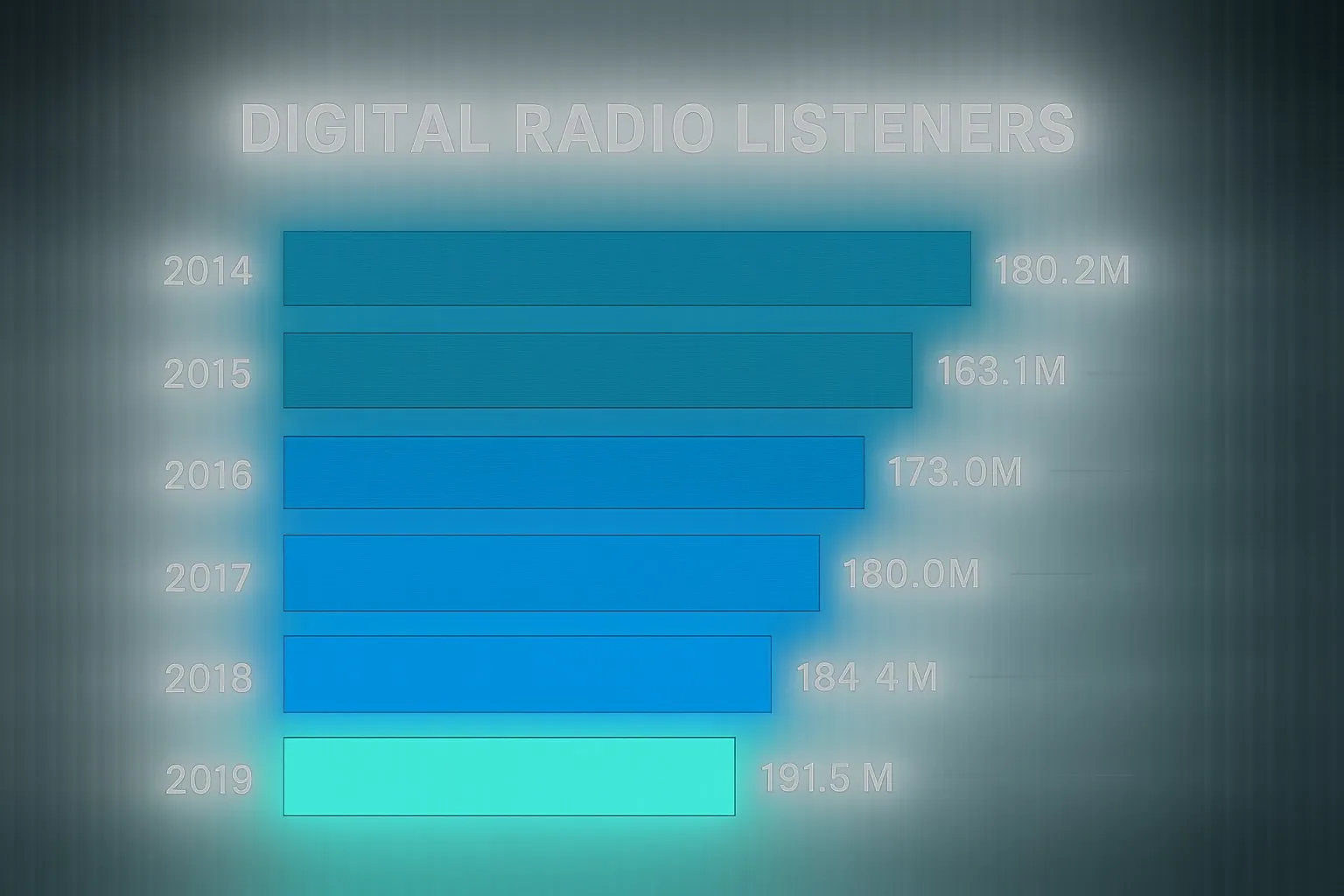
Given programmatic's track record in display and video, the potential for audio is significant. What has historically held it back is a combination of limited publisher interest and the absence of robust technology standards. The pattern mirrors what happened with programmatic TV: declining interest in traditional television drove the shift to programmatic buying on OTT devices. Similarly, the decline of traditional radio is now accelerating adoption of online and digital-radio broadcasting with the targeting and measurement capabilities that come alongside it.
How Does Programmatic Audio Advertising Work?
Unlike display and video, programmatic audio spent many years without solid delivery specifications — the kind of foundational standards needed to attract advertisers and publishers at scale. The IAB addressed this directly by proposing its Digital Audio Ad Serving Template (DAAST) in 2014.
In November 2018, DAAST was folded into VAST 4.1, the IAB's widely adopted standard for video ad serving. In the updated version of VAST, the "Ad" element gained an "adType" attribute allowing an ad to be designated as audio-only. The document also replaced the term "video player" with "media player" throughout, reflecting the broader scope, and added specific instructions for handling VAST elements and attributes in audio ad scenarios.
Broader adoption of frameworks like VAST (and the now-deprecated DAAST) matters commercially because it gives ad servers and publishers a common language for ad delivery — the prerequisite for scaling any programmatic channel.
VAST, among other things, defines a framework for placing linear ads (audio ads that appear before, after, or during a break in the main content) inside audio players. This framework accommodates several complementary ad formats:
Companion ads: Accompanying display units — typically banners carrying the brand's logo and a CTA — shown within the audio player while the audio ad plays.
A SmartWater companion ad displayed in place of the original album art. Image: Spotify.
Ad pods: Slots within the content stream that can hold one or more audio ads in sequence.
Skippable ads: As with video, audio ads can be configured as skippable under certain conditions.
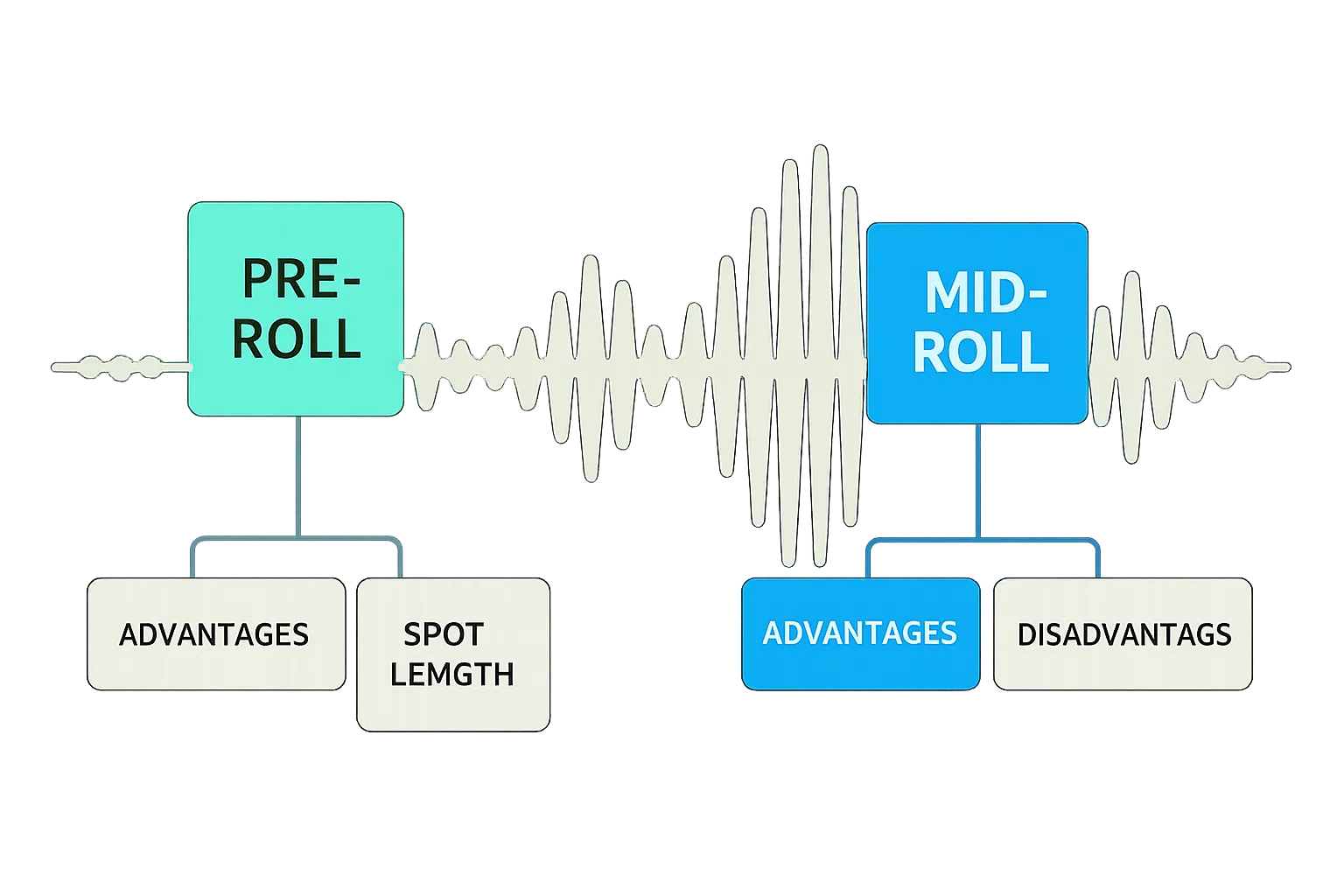
Audio ads are delivered as pre-roll (before the content begins) or mid-roll (during a content break), each with distinct engagement characteristics.
Which Platforms Are Offering Programmatic Audio Ads?
Google announced in June 2018 that it would offer programmatic audio ads across Spotify, SoundCloud, TuneIn, and Google Play Music, with buying available through DoubleClick Bid Manager.
Rubicon Project identified significant potential in programmatic audio and made substantial investment in the channel during 2018. As media buyers build confidence and improve their understanding of audio measurement and tracking, the expectation is that audio will become a standard line item in programmatic media plans.
SoundCloud announced a global programmatic partnership with AppNexus, making its audio and video inventory available through AppNexus's marketplace.
Pandora launched a private audio marketplace enabling programmatic direct buys against its music and podcast inventory.
BBC partnered with podcast platform Acast to introduce programmatic audio ads — notable given the BBC's status as a public broadcaster in the UK, where ads cannot appear. Acast automatically detects when a listener is in the UK and delivers ad-free audio accordingly. For international listeners, Acast dynamically inserts ads based on location, device type, content context, and time of day, layered with third-party demographic data. The programmatic, pre-recorded insertion model also resolves the editorial constraint that BBC journalists cannot personally read or endorse advertising copy.
Benefits of Programmatic Audio Advertising
The full potential of programmatic audio hasn't yet been realized, but the advantages — rooted in the inherent characteristics of the audio medium — are already evident.
1. The Growing Popularity of Music-Streaming Services
The audience for music-streaming services has grown steadily. Spotify alone has approximately 100 million users worldwide, of which roughly 83 million are paying subscribers and approximately 17 million use the ad-supported free tier. While the addressable ad-supported audience is proportionally smaller than in display, audio advertising offers a more premium dynamic: listeners are physically unable to consume other media simultaneously while an audio ad plays, resulting in meaningfully higher engagement than passive display formats.
2. Mobile as the Primary Driver
75.8% of U.S. digital audio listening occurs on mobile devices, with only 24.2% on desktop. In the UK, 38% of audio listening happens on devices other than traditional radios. Users of mobile devices spend approximately 25% of their time listening to music, podcasts, and other audio content.
Because an increasing share of audio consumption happens through apps that require a user login, programmatic audio is inherently a people-based marketing channel — reducing dependence on cookies, a meaningful advantage in a post-GDPR, privacy-first environment. Platforms like Spotify pair their first-party people-based insights with traditional device-level data, enabling cross-device targeting with real audience continuity.
3. Intimate Brand–Listener Connection
Between 70% and 90% of audio listeners use headphones, creating a direct and intimate channel between brand message and listener. This proximity not only ensures the message is heard, but makes personalization particularly effective. Research by A Million Ads found that listeners exposed to a personalized audio ad were 2.4 times more likely to convert than those who heard a generic version of the same ad.
4. Affluent, Well-Educated Audience
Podcast listeners skew toward higher education levels and household incomes above $100k, making them a high-value segment for advertisers focused on premium targeting.
5. Distraction-Free Environment
Podcasts reach listeners in contexts where no other media can — commuting, exercising, doing household tasks. Because of the nature of the content, podcast audiences are typically more focused than display-ad audiences and frequently consume audio in low-distraction settings, at home or during leisure time.
6. Resistance to Ad Blocking
Audio ads served within streaming apps and podcast players cannot be blocked by the ad-blocking software that suppresses display ads in web browsers. Listeners on mobile apps have no mechanism to install an ad blocker or skip to another tab. This is a practical and durable advantage for audio advertisers compared to display.
Early Challenges of Programmatic Audio Advertising
Programmatic audio has moved through a difficult early phase. Several of the initial growing pains have been addressed as the technology matures; others remain works in progress.
Undersupply and Under-Demand
The most constraining issue for programmatic audio's development has been the lack of scale. Supply of programmatic audio inventory currently exceeds advertiser demand, which leads to underselling and underpricing. This imbalance also makes real-time bidding (RTB) auctions impractical for audio in most cases — the established approach at this stage is guaranteed or programmatic direct buys, which bypass the auction dynamic until demand catches up with supply.
Incompatible Technology
The existing infrastructure for digital ad buying — ad servers, ad exchanges, and the nomenclature built around them — was designed for display and video. Terms like ad view, viewability, impressions, and cost per click do not translate cleanly to audio contexts. Delivery frameworks like VAST help, but they don't resolve every operational incompatibility.
For streaming platforms, building out audio advertising technology is a significant investment. The ad tech stack required to serve, target, measure, and report on audio ads is largely separate from what these platforms have already built for display, and for smaller players the return on that investment may not be immediately clear.
The Future of Programmatic Audio
As podcast consumption continues to grow, institutional confidence in the medium is building. A study by the IAB and PriceWaterhouseCoopers found that programmatic audio ad revenues in podcasts exceeded $220 million in 2017 — an 85% increase over 2016.
The always-connected, mobile-first lifestyle, combined with the sustained popularity of fitness and on-the-go content consumption, creates structural tailwinds for audio. The channel's inherent advantages — engagement, personalization potential, ad-block resistance, and an affluent audience — position it well as the underlying technology standards mature and more inventory enters the market. Reaching the full potential of programmatic audio won't happen overnight, but the opportunity is real and the infrastructure to support it is steadily coming into place.