Rapid Prototyping, MVP Development, and Agile: A Practical Framework for Building MarTech Solutions
The MarTech landscape has expanded dramatically over the past decade. chiefmartec's annual Marketing Technology Landscape Supergraphic makes the scale of that growth impossible to ignore.
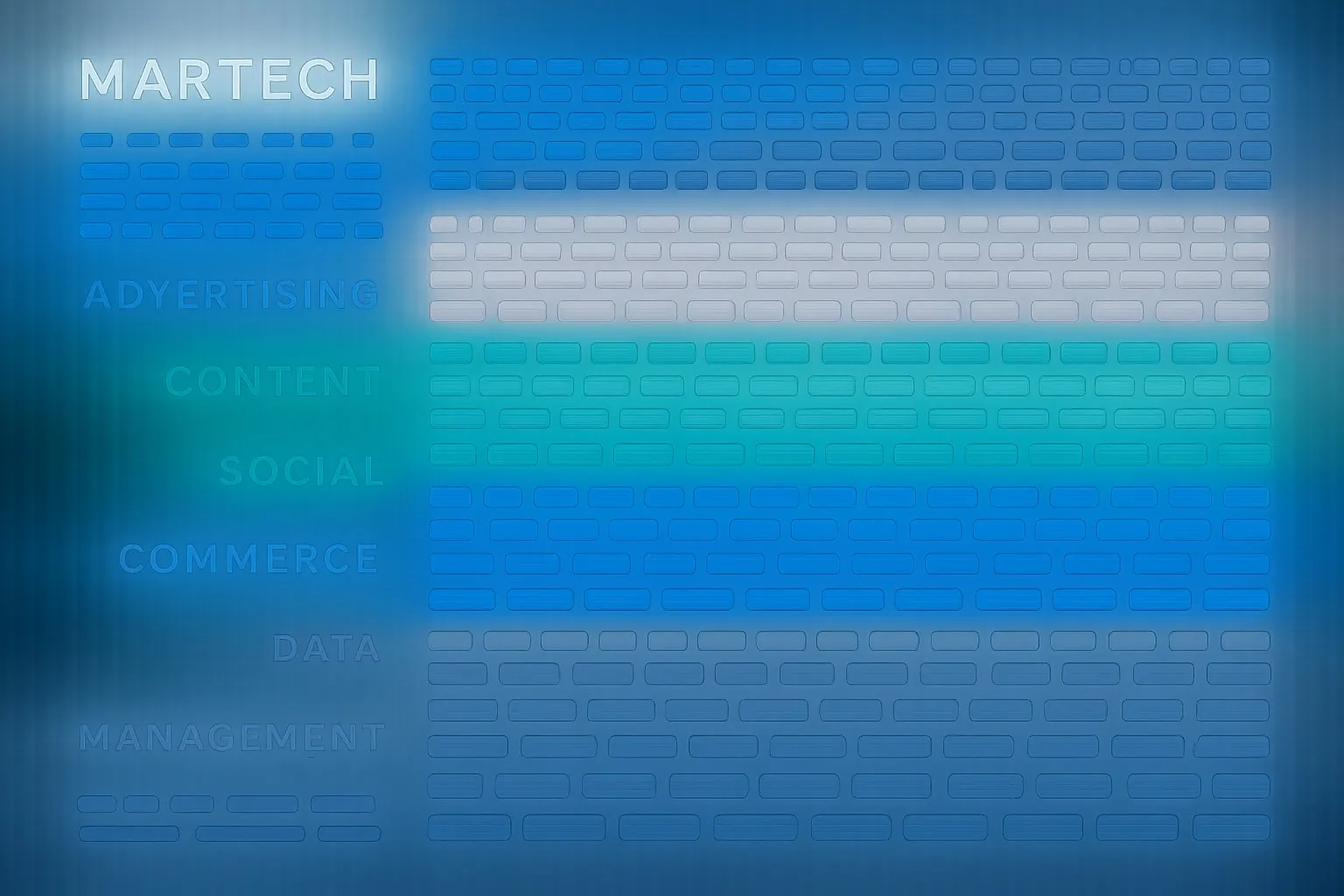
Despite the steady rise in new vendors and consistently strong adoption rates — particularly in the B2B space — many organizations eventually reach the same conclusion: off-the-shelf solutions simply don't address all of their specific business needs and goals. At that point, the conversation shifts from vendor selection to custom development.
Custom MarTech development comes with a well-known set of anxieties: fear of project failure, concern about lengthy timelines, and uncertainty about whether the finished product will actually solve the original problem. These concerns are legitimate, but they're also largely addressable. The approach that consistently works in this space combines rapid prototyping, minimum viable product (MVP) development, and agile methodologies — applied in sequence.
Rapid Prototyping
Rapid prototyping is a design process used to create an early working, interactive, and visual model of a MarTech solution. It incorporates traditional design artefacts like wireframes, but goes further by turning static designs into an interactive model that can actually be navigated and tested.
A complete rapid prototype typically includes:
- Screen flows
- Wireframes
- Low-fidelity prototype
- High-fidelity prototype (including interactive components such as buttons and navigational features)
Why Rapid Prototyping Matters
Bringing ideas to life. Screen flows and wireframes let a team see a platform concept, but an interactive rapid prototype lets them experience it. That distinction matters — usability flaws that are invisible on a static wireframe become immediately apparent when someone actually tries to click through a flow. Catching those issues at the prototype stage costs a fraction of what it costs to fix them after development is underway.
Stakeholder alignment. An interactive model is far more effective than a written spec when it comes to communicating product goals and design intent. Marketing teams, investors, and other stakeholders can explore the prototype themselves and provide concrete, grounded feedback — well before any production code has been written.
Reducing handoff risk. In software development, the transition from design to development is one of the highest-risk moments in a project. A high-fidelity, interactive prototype gives the development team a clear visual and functional reference, significantly reducing the ambiguity — and the resulting back-and-forth — that typically causes delays and scope creep at this stage.
Minimum Viable Product (MVP)
A minimum viable product (MVP) is the first working version of a MarTech solution. It contains only the essential features and functions needed for deployment, and it's released to a defined group of early adopters — either customers or internal team members — whose feedback shapes the next stage of development.
Building an MVP rather than launching directly into full-scale development answers some of the most important questions a product team faces: Who are the actual users? What does the market actually need? Where are the friction points that weren't anticipated in the design phase?
The outcomes of an MVP release aren't just validating — they're directional. Results confirm whether to continue on the original path or to pivot and adjust course before investing further.
MVP development is structured around six repeating stages, applied to each new feature or improvement throughout the MVP phase:
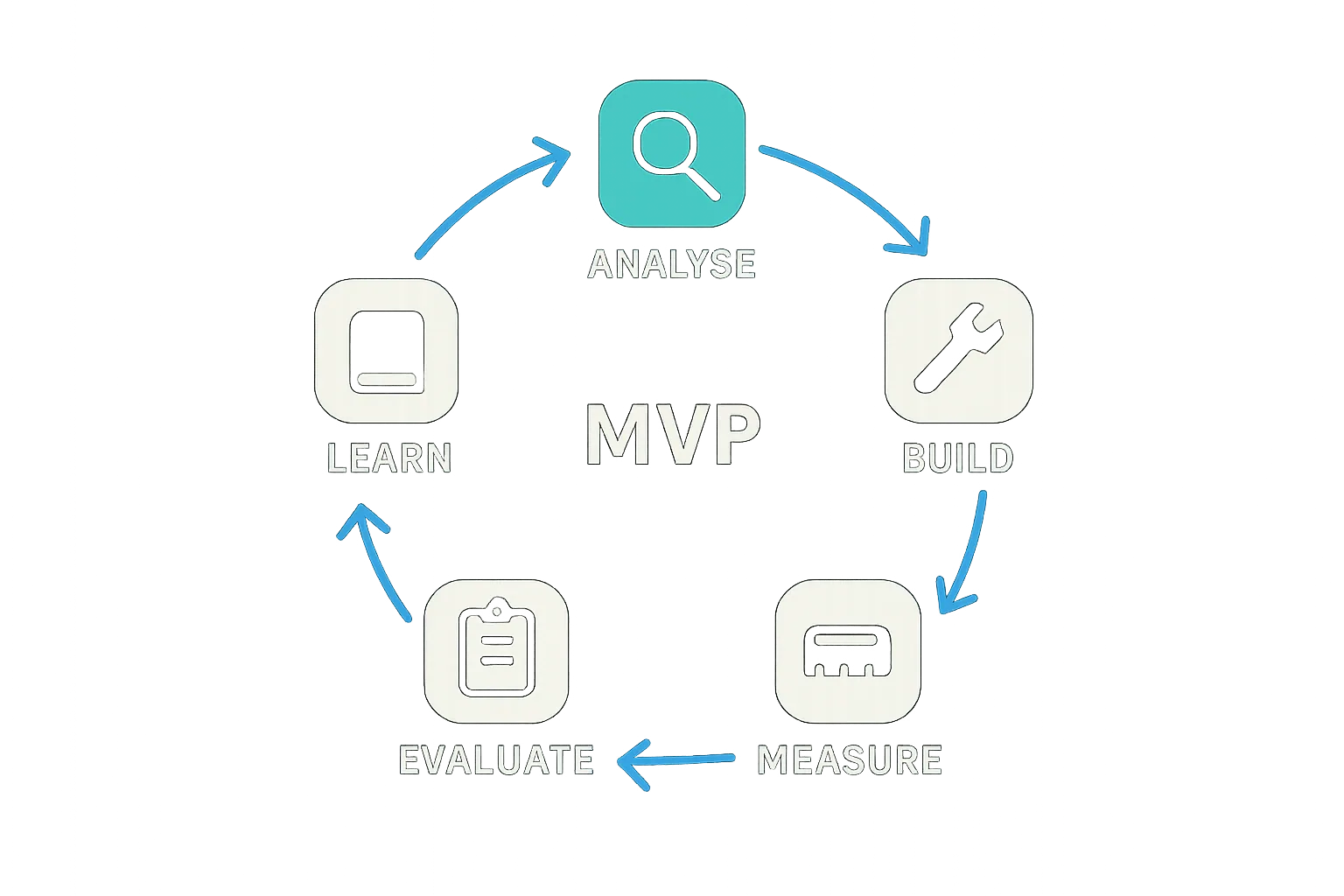
Depending on project complexity, MVP development typically takes somewhere in the range of three to four months.
Agile Development
Once the MVP is built and released, the next stage involves processing feedback from initial users and building out new features. This is where agile methodologies and incremental development take centre stage — although it's worth noting that rapid prototyping and MVP development are themselves expressions of agile thinking.
Agile is a broad topic, and different teams apply its principles in different ways. But the single most impactful practice is this: incremental releases delivered through two-week sprints.
Working in two-week sprints produces a range of concrete advantages:
- New or improved features reach users sooner, enabling faster feedback loops.
- Problems and blockers are identified and addressed more quickly.
- The rhythm encourages sound agile habits — reducing work-in-progress, cutting waste, and improving overall throughput.
- Testing is performed continuously on each new piece of code, so bugs are caught and fixed as development progresses rather than accumulating until a release date.
- Regular touchpoints between the development team and stakeholders create natural opportunities for feedback, concerns, and course corrections.
Putting It Together
The three-part framework — rapid prototyping, MVP development, and agile iteration — isn't just a methodology for managing risk. It's a structured way of building confidence: confidence that the product being built is the right one, that design intent survives the handoff to engineering, and that early users are shaping the platform in meaningful ways before significant resources are committed to features that may not be needed.
For teams weighing whether to build a custom MarTech solution, this approach offers a practical path from concept to production with meaningful checkpoints along the way.