RTB, Private Marketplace, and Programmatic Direct: How Each Model Works
The online advertising industry operates across several distinct media-buying models, and even experienced practitioners can find the terminology confusing. Real-time bidding (RTB), private marketplace (PMP), and programmatic direct all fall under the programmatic umbrella — yet they work quite differently from one another. Understanding those differences matters for anyone involved in buying or selling digital inventory.
Before getting into the mechanics of each model, it's worth establishing what "programmatic" actually means.
What is Programmatic?
There's no single industry-wide definition, but programmatic generally refers to the use of technology, algorithms, and user data to automate the buying and selling of online media quickly and efficiently.
Programmatic stands in contrast to traditional manual insertion orders, where advertisers contacted publishers directly to purchase ad space — a process commonly called manual media buying.
Manual Media Buying
In the early days of online advertising, the manual media-buying process typically looked like this:
- Campaign creatives were set up and placed in the advertiser's ad server.
- Ad codes were delivered to the publisher (often via email).
- The publisher's Ad Ops team placed those codes in the publisher's ad server.
- The campaign went live.
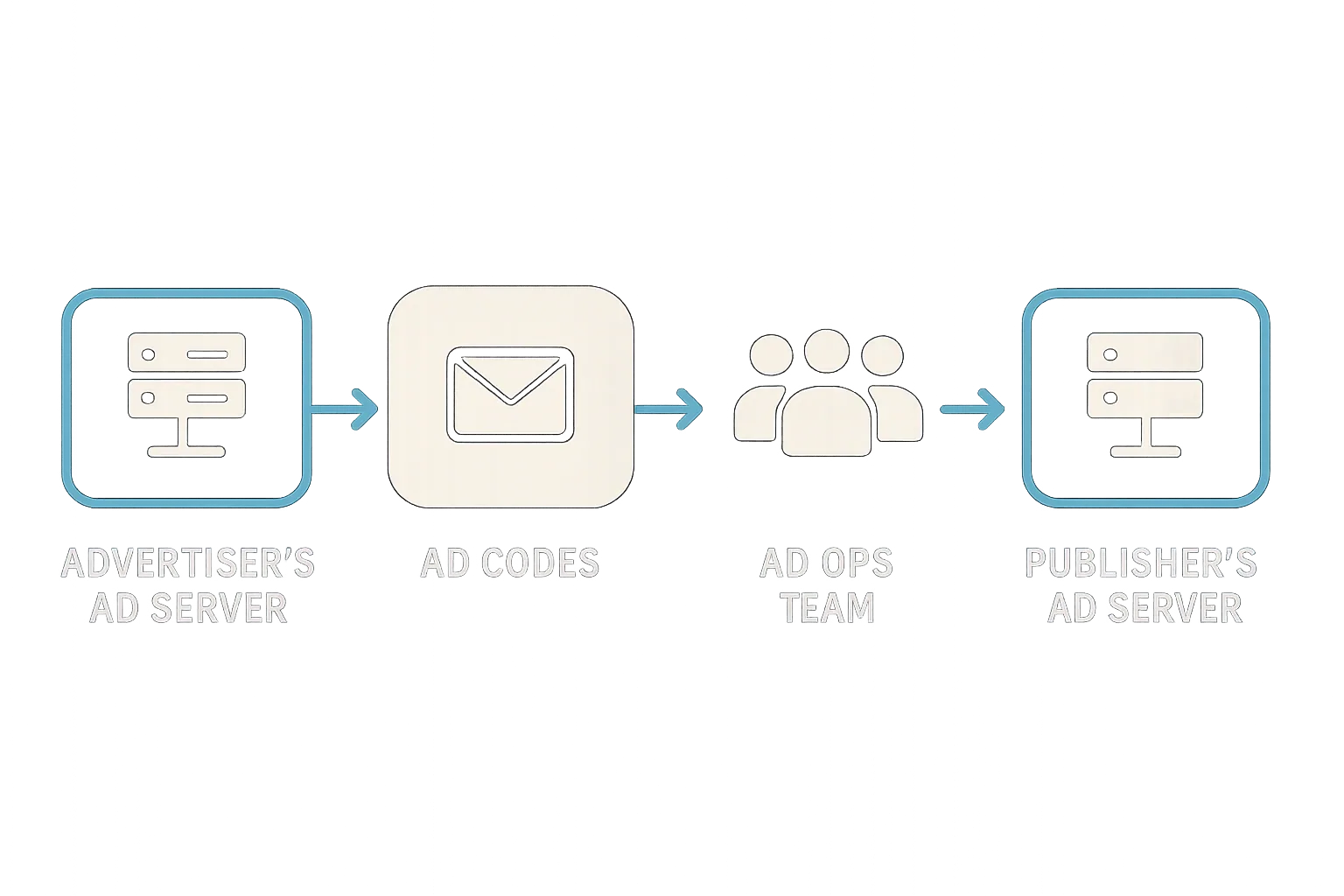
Manual media buying is relatively inefficient, offers limited scalability, and makes on-the-fly adjustments difficult. Every change to a campaign had to route through the publisher's Ad Ops team, requiring time-consuming manual edits in the ad server. These structural inefficiencies drove the shift toward programmatic.
Programmatic Media Buying
Programmatic technology emerged in the mid-1990s and, while more technically complex, it delivered a fully automated and far more efficient media-buying process. Both advertisers and publishers could minimize human interaction, dramatically reducing the time required to set up, run, and optimize campaigns.
A typical programmatic media-buying workflow operates as follows:
programmatic media-buying process
- An advertiser (such as a brand) hires an advertising agency to run campaigns on its behalf; the agency works through an agency trading desk.
- The trading desk uses a demand-side platform (DSP) to manage the campaign.
- The DSP connects to an ad exchange (such as DoubleClick, AppNexus, Rubicon Project, or PubMatic), which aggregates inventory from ad networks and supply-side platforms (SSPs) alongside third-party data from a data-management platform (DMP) or data broker.
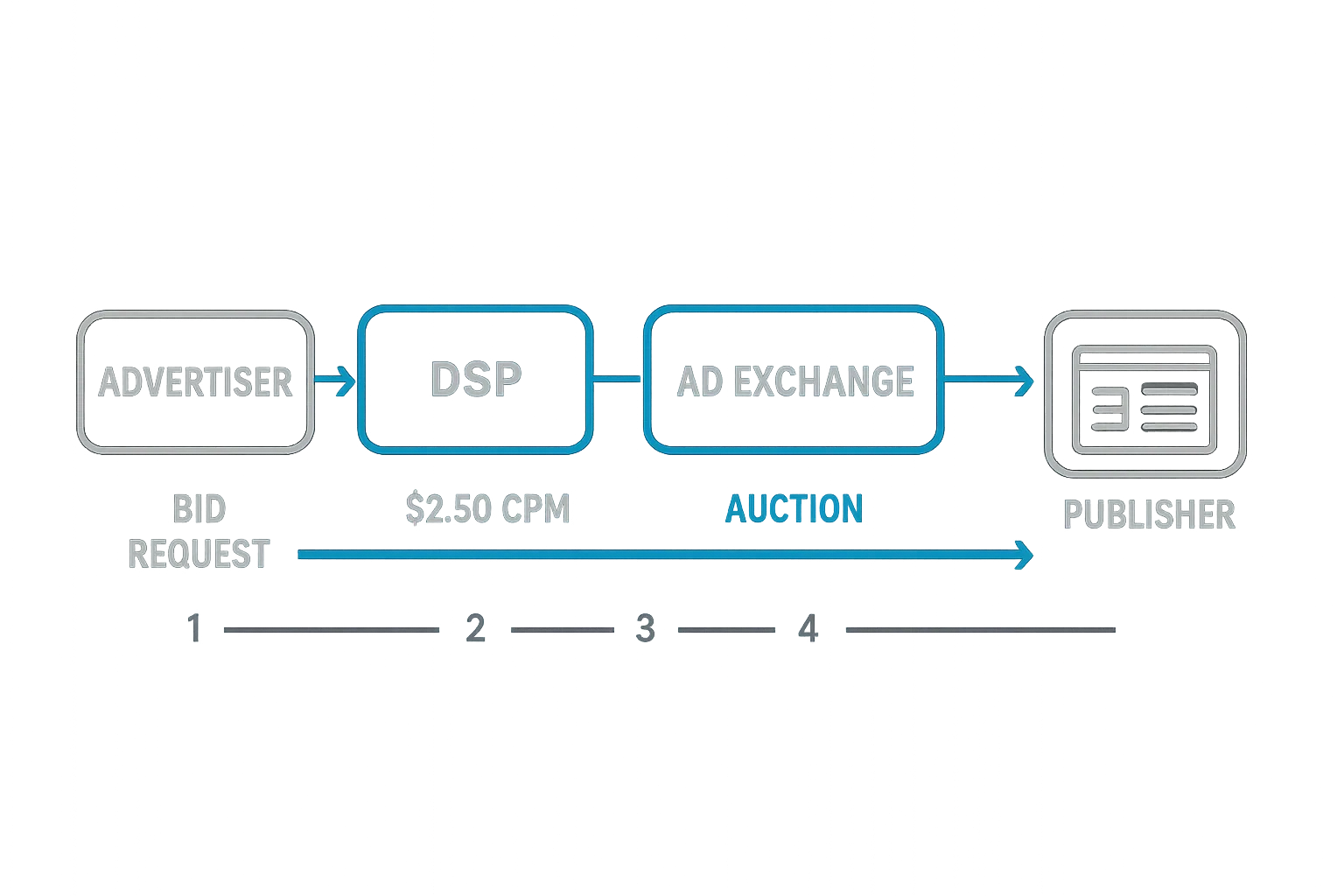
- Each time ad space on a publisher's site becomes available, the ad exchange runs an auction in which the DSP bids on the impression.
- If the DSP wins the bid, the advertiser's creative is passed to the publisher and displayed to the visitor.
Manual vs. Programmatic: Speed and Flexibility
One of the most significant practical differences between the two models is the speed of campaign execution and modification.
With programmatic, starting a campaign after creatives are ready is a matter of minutes — campaign setup, insertion orders, trafficking, and adjustments on a DSP all happen rapidly, with changes reflected in near real-time. The same tasks in a non-programmatic workflow would typically take hours or days, since all changes passed through the publisher's Ad Ops team.
This speed and automation allows brands to react quickly to market changes and optimize campaigns while they're running.
Programmatic, as a broader concept, encompasses several distinct media-buying models: RTB, private marketplace, and programmatic direct. Here's how each works and what sets them apart.
Real-Time Bidding (RTB)
RTB is the most widely used method for buying online media programmatically, enabling billions of ad impressions to be served to internet users every day.
It is an auction-based bidding protocol in which advertisers compete in real time for the right to display an ad to a specific user. RTB offers extensive data capabilities, access to vast inventory types, and is broadly regarded as the most flexible programmatic model available.
DSPs can implement proprietary algorithms for custom bidding and targeting strategies, including AI and machine learning. Some platforms — AppNexus being one example — even extend programmable bidding capabilities directly to end advertisers.
RTB auctions are fully automated and governed by various auction mechanics, with ad targeting based on users' cookies.
Real-time bidding was introduced in the late 2000s, at a time when ad networks were struggling with inventory fill rates — suffering from either underfilling (unsold inventory going to waste) or overfilling (oversupply driving down value).
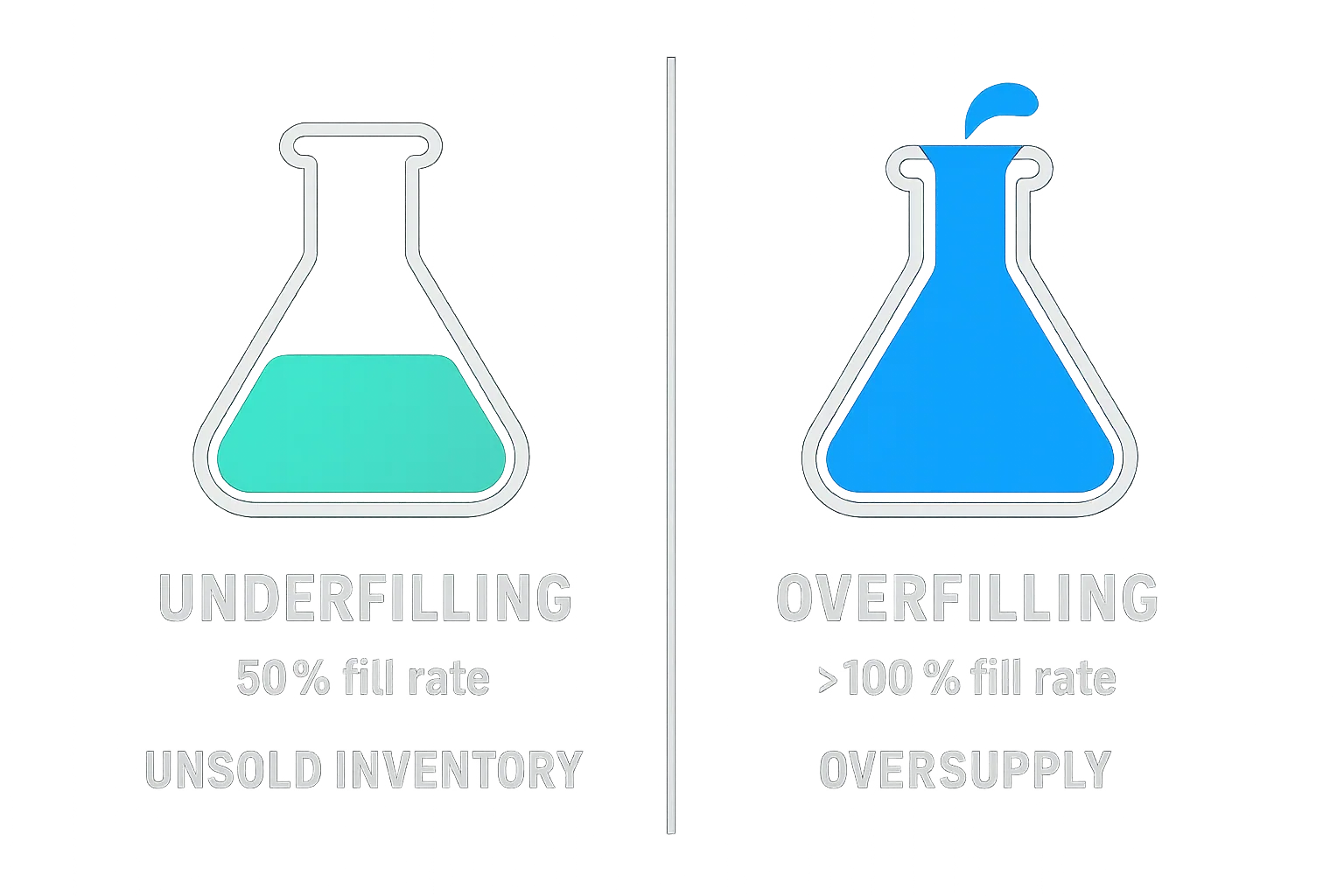
RTB emerged as a mechanism to control publisher fill rates by using real-time auctions to trade remnant (unsold) inventory and dynamically balance supply and demand.
While many platforms participate in an RTB transaction, three are central to the process: a demand-side platform (DSP), an ad exchange, and a supply-side platform (SSP).
The Benefits of RTB
Per-impression buying. RTB lets brands bid on individual impressions rather than agreeing to a predetermined fixed price. Buying at impression level is cost-effective, reduces wasted spend, and helps prevent advertisers from overpaying for media.
Unified campaign management. Advertisers and publishers control their campaigns through a single DSP or SSP dashboard, rather than managing multiple direct relationships with different partners.
Easy testing and adjustment. Impression-level data lets advertisers analyze performance across audiences, contexts, and creatives — enabling a more adaptive campaign strategy.
Real-time inventory insights. Publishers have live visibility into their best-performing inventory segments and can see which placements are most valued by advertisers.
Monetization of remnant inventory. Because RTB auctions fire automatically when a target visitor arrives, inventory that might otherwise go unsold can be filled — preventing waste.
Private Marketplace (PMP)
A private marketplace — sometimes called programmatic guaranteed, programmatic reserved, or automated guaranteed — is an invite-only variation of the RTB model.
In a PMP, a limited group of pre-selected advertisers bid against one another for access to a publisher's inventory. This model is typically offered by publishers with premium inventory: major media properties like Forbes, the Wall Street Journal, and The New York Times, for example.
Advertisers interested in such inventory can reserve or guarantee placements before the publisher offers them in a public RTB marketplace.
In private marketplace deals, the ad exchange and SSP intermediaries are removed from the equation. This gives advertisers more direct control over where their ads appear, while publishers benefit from premium rates and the assurance of selling to vetted buyers. Advertisers, in turn, receive preferential access to publisher inventory before it hits open auctions.
Unlike traditional RTB, where advertisers often have limited visibility into the specifics of a media buy — ad placement, site context — PMPs provide both parties with transparency around placement and pricing.
Benefits of Private Marketplace
Transparency on inventory and pricing. Both publisher and advertiser have a clear understanding of what inventory is being purchased, the applicable CPM, and the types of creatives being served.
Programmatic efficiency. Advertisers can quickly activate new buys on top-tier sites, or across curated packages of inventory segmented by vertical.
Broad platform support. PMPs are available on many of the largest programmatic exchanges, including DoubleClick Ad Exchange, AppNexus, MediaOcean, and Kantar Media.
Potential to reduce reliance on direct-sales teams. Managing a direct-sales team is expensive and resource-intensive. PMPs can, in many cases, replicate the function of a sales team through technology.
One common misconception is that PMPs are exclusively for premium inventory while open auction is only for cheap remnant ads. In practice, a PMP is simply a different sales channel. Open auction can, in specific cases, generate better yield even for quality inventory — the right approach depends on the publisher's goals and market position.
Programmatic Direct
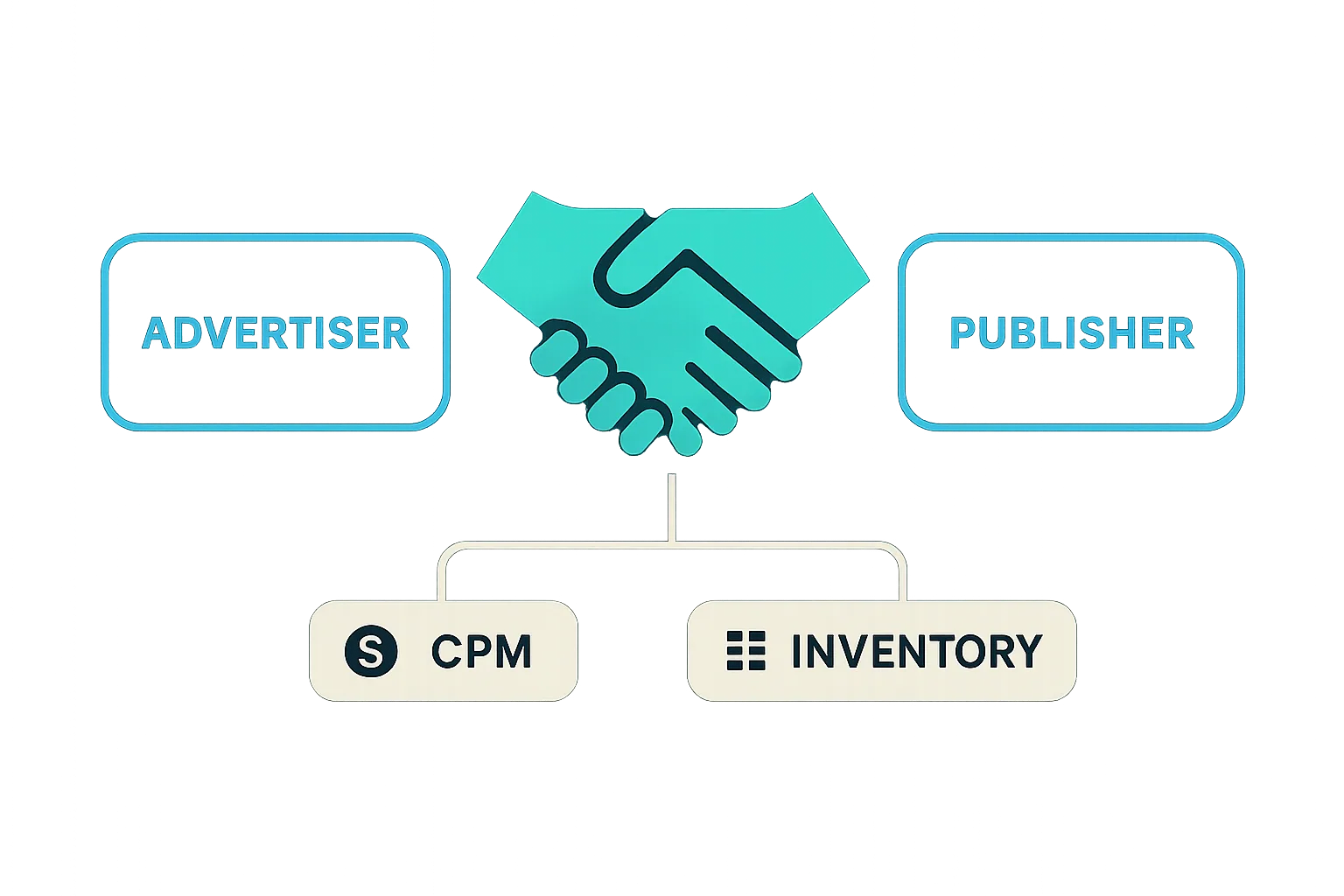
Programmatic direct is a one-to-one media-buying process that closely resembles the traditional direct sales model — where a publisher's sales representative and an advertiser negotiate and agree on a deal.
The key distinction from a private marketplace is that advertiser and publisher agree on specific inventory at a fixed CPM. There is no bidding competition; the price is predetermined.
The process may involve some human negotiation — a publisher's sales rep may work directly with an advertiser to structure the deal. Alternatively, a publisher can set fixed prices in a self-serve environment where advertisers simply accept or decline, making the experience as frictionless as open auction RTB. Either way, once terms are agreed upon, the ad placement and delivery are handled programmatically.
The programmatic direct workflow typically unfolds as follows:
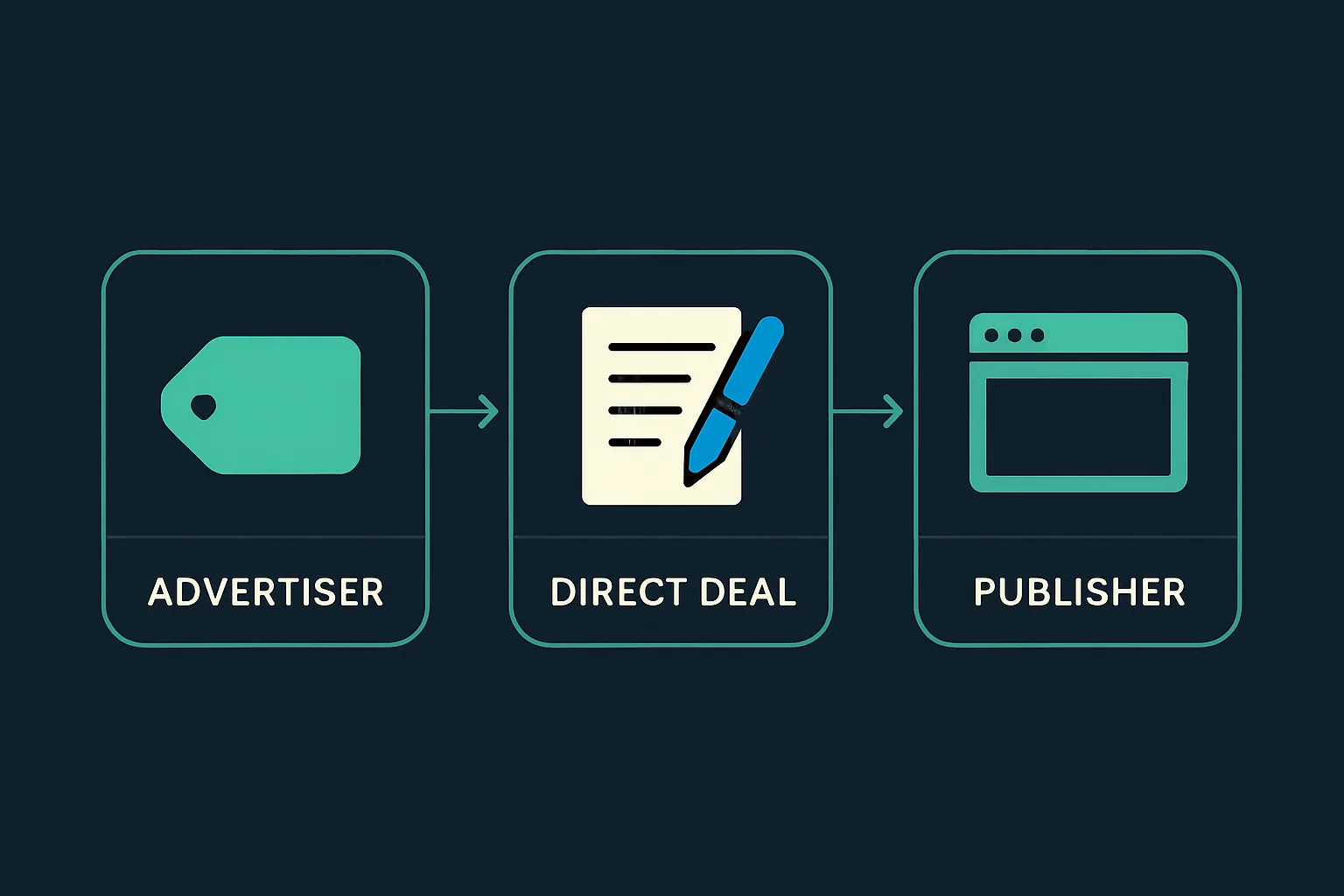
- An advertiser browses a catalogue of available publisher sites and placements.
- The advertiser selects placements and configures flight dates and impression volumes.
- Creatives and any additional tracking pixels are configured.
- The advertiser places an order on the platform.
- The publisher audits and verifies the campaign.
- The order executes without further Ad Ops involvement beyond the initial audit.
Programmatic direct is most commonly associated with premium publishers — those that reserve a portion of their inventory specifically for direct deals, rather than exposing it to open market auctions where CPMs are often lower. Because these campaigns still execute through an API with minimal human involvement, they remain "programmatic" in the true sense of the word.

Beyond fixed-price direct deals, publishers with significant market clout sometimes organize private auctions, giving them greater control over both pricing and buyer selection. Advertisers tend to favour this structure as well, since it provides stronger guarantees about where their ads will appear.
Advantages of Programmatic Direct
Transparency. Ad fraud remains one of the most persistent challenges in digital advertising. According to a report published by Digiday UK, 81% of programmatic ad impressions in Japan in 2017 were fraudulent; Brazil came second at 36%, the U.S. third at 35%, and the U.K. — despite having the third-highest volume of programmatic impressions — saw 15% fraudulent desktop impressions. Programmatic direct's guaranteed, audited inventory significantly reduces exposure to this kind of fraud. Transparency also benefits publishers: knowing precisely how many impressions will be served and which creatives are loading for which audiences helps streamline workflow and gives publishers greater control over the look and context of their sites.
Automation. Programmatic direct automates insertion orders and ad-code configuration, eliminating the human error inherent in manual processes.
Better audience insights and pricing control. Publishers gain deeper insight into the audiences consuming their premium inventory, can better identify high-value buyers, and can price inventory based on the actual value of their traffic.
Directness. Because campaign data doesn't route through multiple intermediary tools before reaching the advertiser, there's more immediate visibility into impressions served and the audiences that viewed them — making advertisers more confident in the transaction and more willing to pay a premium.
Summary
The progression from open RTB to private marketplace to programmatic direct reflects a spectrum of trade-offs: transparency, inventory control, pricing certainty, and operational complexity all shift as you move along that spectrum. Critically, these are not competing models — they're complementary approaches designed to address different needs for both publishers and advertisers, and most sophisticated players in the market use all three in combination.
| Media execution type | Programmatic – Real-time bidding (RTB): Public auctions | Programmatic – Real-time bidding (RTB): Private marketplaces (PMP / Deal ID) | Programmatic – Programmatic direct | Non-programmatic (direct campaigns) |
|---|---|---|---|---|
| Price | Auction | Auction and/or Deal ID terms | Pre-defined | Pre-defined |
| Direct Advertiser - Publisher relationship | No | Yes | Yes / Limited | Yes |
| Inventory volume | Non-guaranteed | Non-guaranteed | Guaranteed | Guaranteed |
| Inventory | All inventory that the publisher decides to put on a public auction | Premium inventory | All, including premium inventory. Bulk inventory (sometimes robust targeting is available) | All, including premium inventory. Bulk inventory with limited targeting. |
| Delivery | DSP / Over RTB pipes | DSP / Over RTB pipes with a Deal ID set | Programmatic direct platform integrated with the publisher's ad server. | Email/phone, manual ad tags entered in the publisher's ad server. |