What Is Print Programmatic and How Does It Work?
Programmatic technology has steadily expanded beyond its digital origins, moving into out-of-home, audio, and now print. This article explains what print programmatic is, how the process works mechanically, who is already doing it, and what challenges the format still needs to overcome.
What Is Print Programmatic?
Print programmatic (sometimes called programmatic print) is the use of programmatic ad selling and distribution methods for traditional print ads and direct mail. The technology works along similar lines to programmatic display advertising, with one important distinction: the whole process is considerably slower — it is decidedly not real-time in the way display ads are.
Targeting is also less granular than what RTB display campaigns offer. This is a practical constraint: publishers cannot afford to print dozens or hundreds of versions of the same magazine and route different copies to different subscribers.
How Print Programmatic Works
Print programmatic is not a true RTB-based process — it is neither real-time nor bidding-based in the traditional sense. Given the technical constraints of physical media, it more closely resembles an invite-only variation of programmatic guaranteed than open-auction RTB.
The specific flow varies by vendor, but the core steps are consistent:
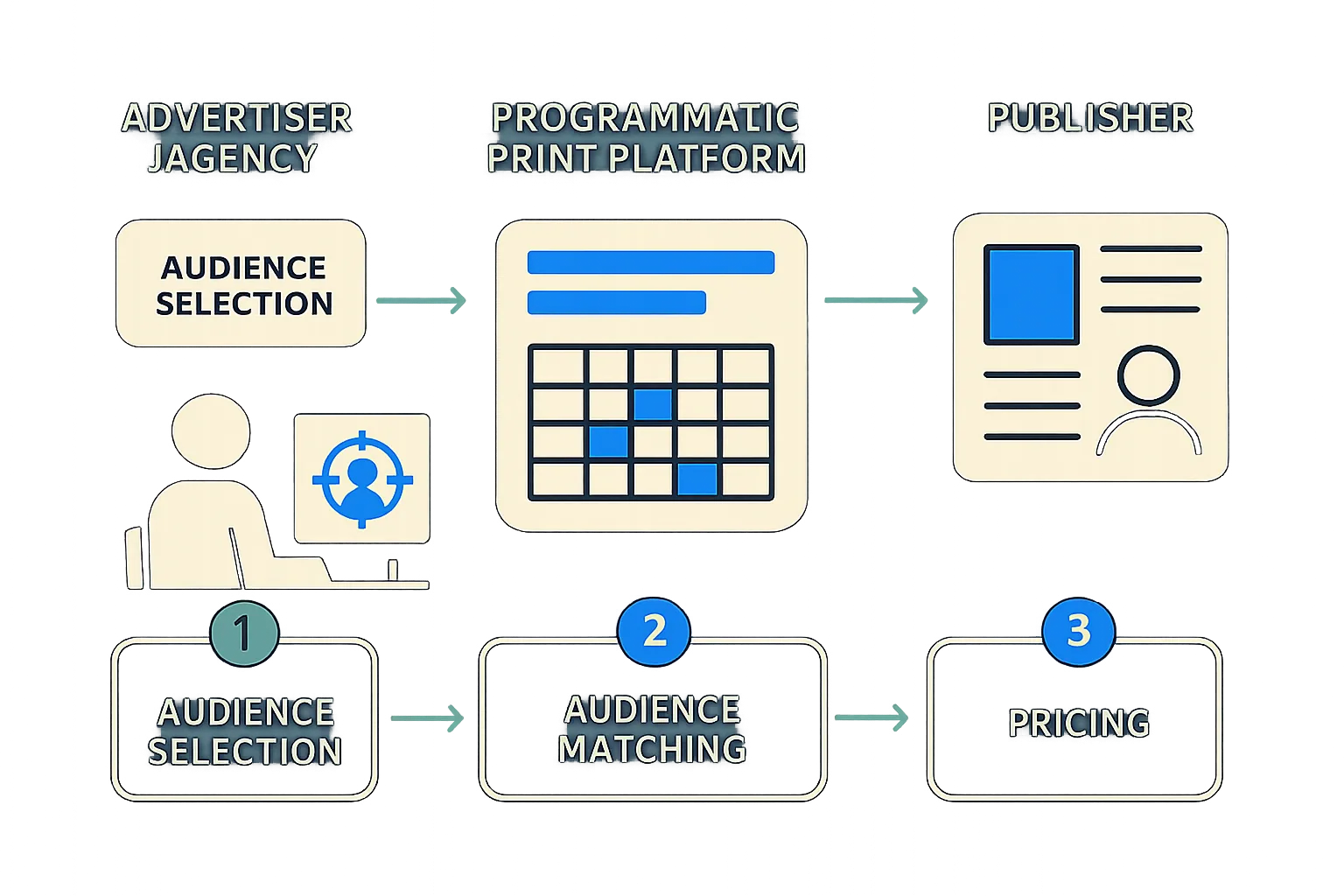
Step 1: Audience Selection
An advertiser or agency uses the programmatic platform to specify the audience segment it wants to reach (for example, women aged 30–45). The publisher and buyer agree on price, and may also negotiate contextual placement — such as adjacent to a specific editorial section.
Step 2: Audience Matching
The print programmatic platform matches the buyer's target audience against the available inventory across its print publications.
Step 3: Pricing
Audiences are sold on a CPM basis, mirroring the model familiar from online advertising. In print, however, a two-month lead time is required to accommodate production schedules.
Example: A full-page ad in a magazine that costs $100,000 and reaches an audience of 10 million adults translates to a CPM of $10.00.
Benefits of Print Programmatic
Print has moved well past its peak in terms of advertiser demand, but the medium still carries genuine appeal. Print ads are resistant to ad-blocking software and offer access to specific, highly engaged audience segments — for instance, readers aged 65 and over — that can be difficult to reach efficiently through digital display alone.
The combination of programmatic technology with print offers meaningful advantages for both sides of the marketplace.
Automation
Print programmatic moves the industry toward a more streamlined, cost-efficient ad-delivery process — one where the right message reaches the right person at the right time. Automation offers access to premium print inventory through the same mechanisms that now govern digital inventory procurement.
Additional Revenue for Publishers
For publishers, programmatic print is an additional source of ad revenue, helping to maximize yield from inventory that might otherwise go unsold. Time Inc. reported that advertisers had already purchased more than a million dollars of programmatically sold print inventory, with further growth anticipated.
Access to Untapped Audiences
For advertisers, print programmatic opens doors to non-digital audiences that have been largely unreachable through conventional digital campaigns. It is an early step toward a genuinely multi-publisher, cross-platform system where print inventory can be bought and sold with minimal human intervention. Many consumers remain either sceptical of display advertising or simply do not see it — whether due to banner blindness or ad-blocking tools.
Consumer Trust
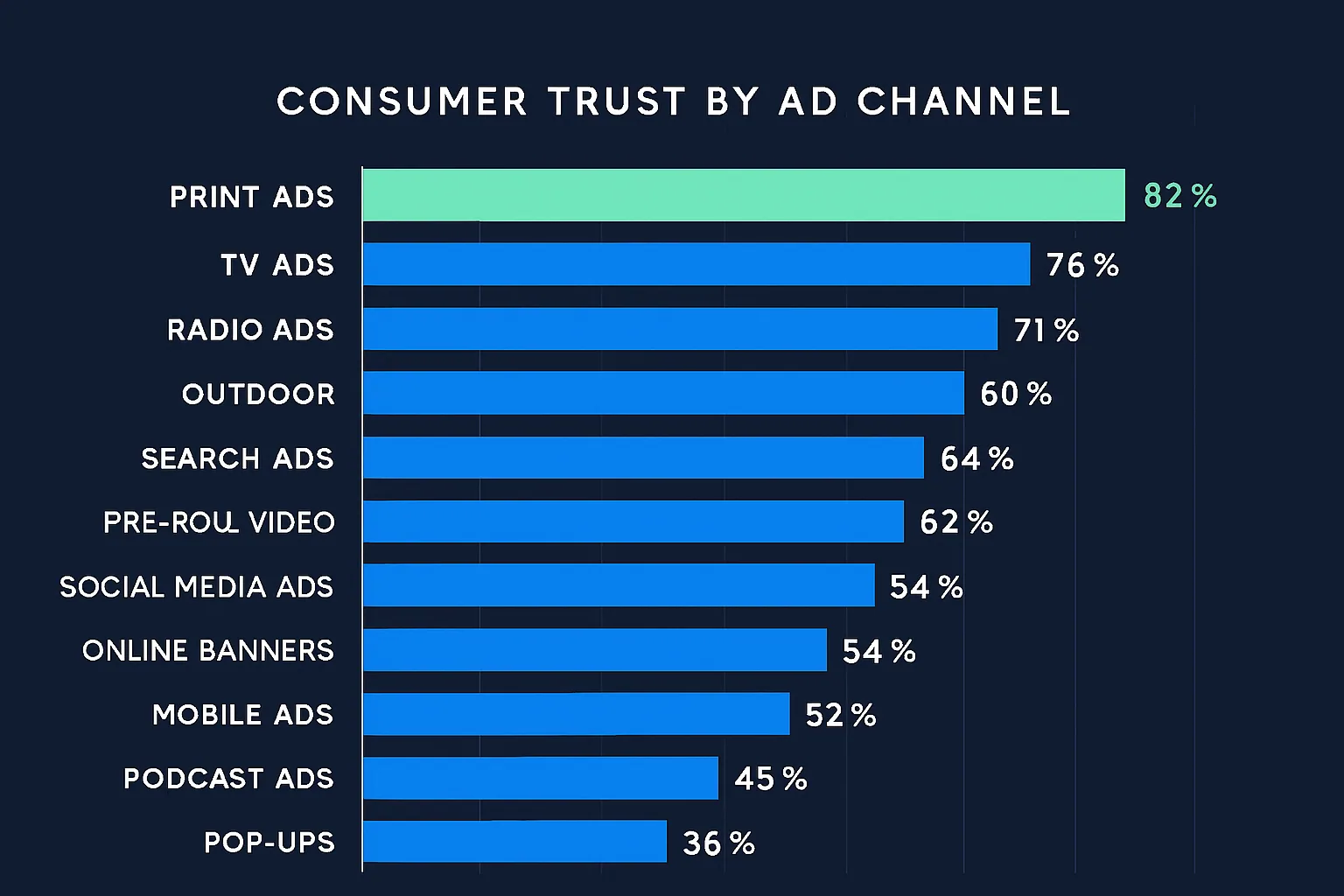
Print consistently scores high on consumer trust. According to research cited by Digiday, 82 percent of consumers say print is the most trustworthy medium for making purchasing decisions. Print ads cannot reverse the structural decline of the medium, but their credibility advantage is real.
Cost Efficiency and Convenience
Print programmatic automates several specific elements of the ad-delivery process: audience targeting, guaranteed deal execution, and engagement measurement. It reduces or eliminates the need for a dedicated human salesperson — an attractive proposition for efficiency-focused buyers.
Time Inc. programmatic print interface
Using a programmatic platform, agencies and advertisers can identify relevant magazine titles, browse available inventory across publications, and execute a multi-publisher campaign in a single transaction. Publishers can also guarantee the editorial context in which an ad will appear.
Challenges and Growing Pains
Print programmatic comes with a set of problems, many of which are inherent to applying programmatic logic to a slow-moving physical medium.
Lack of Scale
The supply of print inventory available programmatically still far exceeds demand. This imbalance makes competitive auctions difficult to run and tends to push prices down. In the current environment, a programmatic guaranteed (or even non-programmatic direct) approach makes more sense for most transactions while the industry waits for demand to catch up.
Erosion of Premium Pricing
Print has historically been considered premium, high-value inventory. Major advertising deals were negotiated personally between executives, and rates reflected that positioning. Programmatic print — partly because of its modest current scale — commoditizes the medium and puts downward pressure on prices.
Publishers want to give advertisers the data-matching capabilities that make programmatic useful, while simultaneously protecting the value of their inventory. Time Inc. addressed this tension directly by sticking to guaranteed pricing floors to prevent programmatic mechanisms from pushing rates below acceptable levels.
Who Is Doing It?
Time Inc. — home to titles including People, Time, Sports Illustrated, and InStyle — has been among the most prominent publishers offering programmatic technology for print sales. The capability was built in collaboration with AdTech vendor MediaMath and makes Time Inc.'s print audience segments available within the digital programmatic marketplace, allowing buyers to purchase them the same way they would book online display ads.
Time Inc. currently offers advertisers six audience segments programmatically: Women, Men, Lifestyle, Luxury, Business/Finance, and Rapid Scale (the last covering its weekly titles such as Time, People, and Sports Illustrated).
Programmatic Direct Mail
Print programmatic is not limited to magazine and newspaper placements. Vendors are experimenting with automated direct mail as another application of the same underlying approach.
Programmatic Direct Mail® — a term coined by PebblePost — uses online user data to send retargeted messages through the post. The concept bridges online behavioural signals with offline physical delivery.
Royal Mail offers an automated system designed to help online retailers improve conversion rates. The platform sends individualized direct mail to people who visited a page, interacted with a site, or completed a specific action such as abandoning a shopping cart. The same mechanic can also support upsell and cross-sell campaigns.
UK-based JD Williams, an online fashion retailer within the N Brown Group, has used Royal Mail's programmatic mail platform specifically to address cart abandonment. Each piece of direct mail is personalized for the individual customer and includes details about the item left in their basket. The process requires contact data including physical address, which must be obtained with explicit user consent under GDPR. The message — including product details and images — is prepared and printed automatically, with delivery typically occurring within 24 hours.
The results from JD Williams' implementation are worth noting: response rates increased by 6%, order value increased by 8%, and cart abandonment decreased by 14%.
Germany's Deutsche Post operates a similar system called Consentric. It targets relatively small audiences with physical direct mail based on online behaviour and individual profiles. As with Royal Mail's platform, the printing and mailing process is fully automated.
Takeaway
The examples above illustrate that connecting online behavioural data to follow-up contact through physical mail is producing measurable results. Brands increasingly need presence across multiple touchpoints, and programmatic print gives non-digital media a mechanism to participate in the same automated ad-selling infrastructure that now drives digital growth.
Given that programmatic is already a significant driver of digital ad revenue growth — not just for large magazine publishers but across the industry — extending that approach to print is a logical next step, even if the format still has scale and pricing challenges to work through.