What Is a Supply-Side Platform (SSP) and How Does It Work?
When publishers first began their exodus from print media towards digital, they started looking for new ways to generate revenue. The most intuitive model was the one they had already been using in print — advertising.
Display advertising emerged to replicate printed ads in the online world and enable website monetization, which remains the bread and butter of digital media today. Advertisers, meanwhile, were looking for relevant publisher websites that could expose their messages to a target audience.
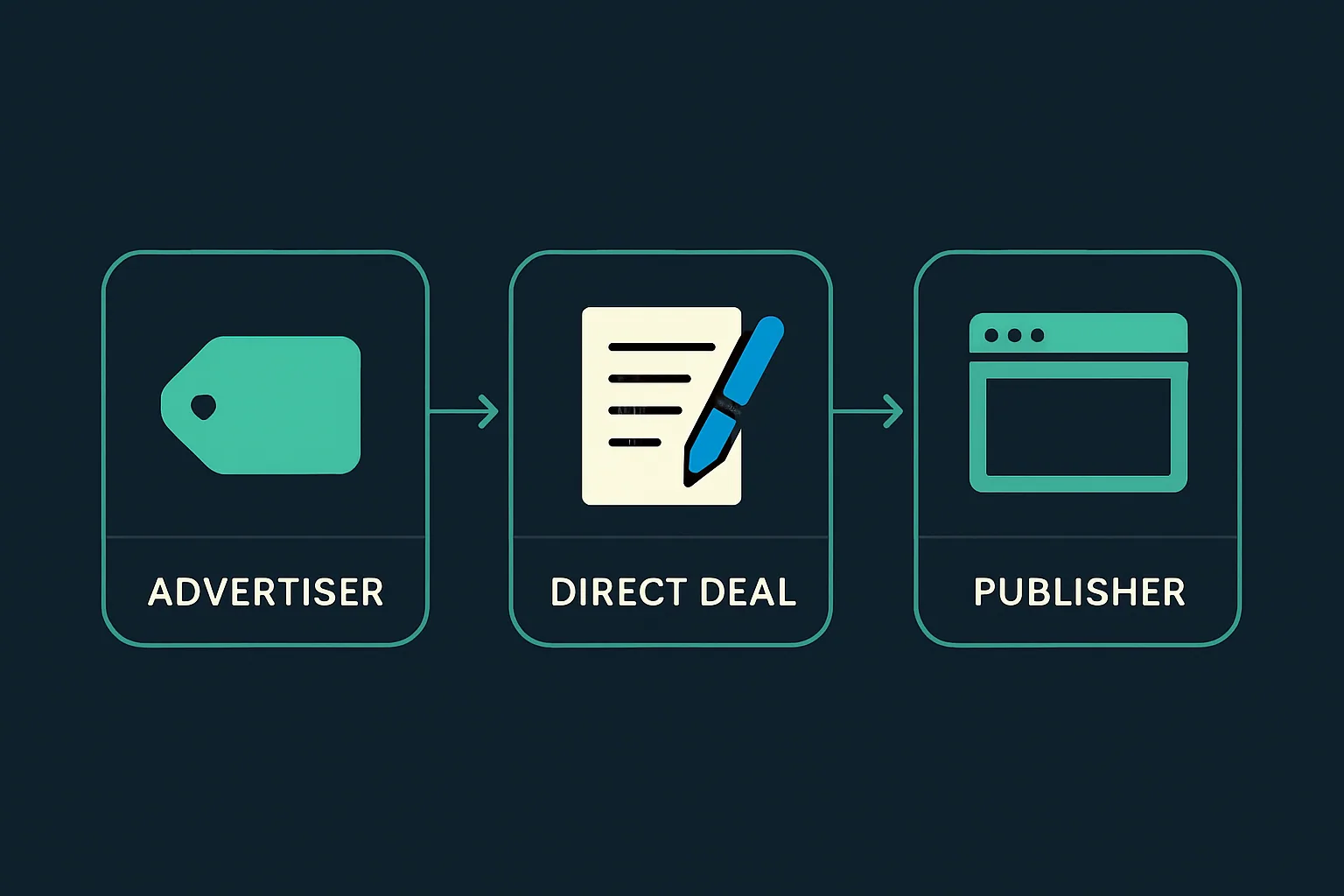
Initially, publishers sold ad space directly to advertisers. As the display-ad industry grew, however, a significant problem surfaced: fill risk. Because some inventory could end up unsold, there was a clear need for an intermediary — a technology layer that could efficiently sell remnant inventory and automate the process. That's where the ad network came in.
An ad network is a technology platform that acts as a broker between publishers and advertisers. As more ad networks entered the market, another layer of platforms followed: network optimizers. These AdTech platforms were responsible for deciding which ad network would deliver the best performance for a given publisher's inventory — that is, sell impressions at the highest possible price.
When real-time bidding (RTB) was introduced in the late 2000s, network optimizers evolved into a new type of AdTech platform known today as supply-side platforms (SSPs).
Modern SSPs do far more than route inventory to the best-performing ad network. They are a central component of the RTB process, allowing publishers to optimize yield by simultaneously connecting their inventory to multiple ad exchanges and demand-side platforms.
What Is a Supply-Side Platform?
A supply-side platform is an advertising technology (AdTech) platform used by publishers to manage, sell, and optimize available ad inventory — display, video, and native ad space — on their websites and mobile apps in an automated and efficient way. By using an SSP, publishers can monetize their properties across desktop and mobile without managing each transaction manually.
Over the years, SSPs have expanded well beyond their original scope. Many now incorporate ad-exchange mechanisms, enabling publishers to connect directly to demand-side platforms (DSPs) rather than routing exclusively through third-party ad exchanges.
Where SSPs Sit in the Online Advertising Ecosystem
SSPs are one of the primary players in the online advertising ecosystem and play a central role in RTB media transactions. They connect to ad exchanges, ad networks, data-management platforms (DMPs), and demand-side platforms (DSPs) to sell ad inventory on behalf of publishers — website owners, app developers, and digital media companies.
SSPs help publishers manage the complexity and volatility of programmatic ad buying, particularly when working with multiple ad networks that each carry different requirements and limitations.
There are several processes SSPs handle automatically:
Real-time bidding transactions: SSPs sell a publisher's inventory to DSPs via ad exchanges (detailed below).
Ad-network optimization: A publisher may have several ad networks available to purchase inventory, but each network performs differently. One network might pay a $2.00 CPM but only fill 20% of the time; another might pay $1.00 CPM and fill 70% of the time; a third might pay $0.50 but fill 100% of the time. Using historical performance data, an SSP determines which ad network to call when each impression opportunity becomes available on the publisher's website.
Frequency capping: SSPs and DSPs sync and match cookies to implement frequency capping — the process of recording how many times a specific visitor has been shown a particular ad and limiting further exposures. This restriction is applied across all websites serving ads from the same campaign in a DSP.
Geographic filtering: Some ad networks only accept impressions from specific geographies. An SSP ensures that only networks relevant to a given user's location are included in the consideration set.
Latency management: An SSP automatically selects ad networks that consistently deliver the lowest latency, improving the overall RTB process. This optimization function is, in fact, why these platforms were originally called Network Optimizers.
SSPs handle all of these variables — sometimes using advanced algorithms — to predict which network will produce the highest effective yield at any given moment. The result is reduced latency, improved revenue, and a substantially lighter burden on ad-operations (AdOps) teams.
How a Supply-Side Platform Works
SSPs can sell a publisher's inventory in several ways: directly to ad networks, via direct deals with DSPs, or — most commonly — via RTB auctions.
Here is a brief overview of the RTB flow using an SSP:
- A publisher makes its ad inventory available on an SSP.
- Each time the publisher's webpage loads, an ad request is sent to multiple ad exchanges and sometimes directly to DSPs — either from the webpage itself to the SSP, or from the publisher's ad server to the SSP.
- Various DSPs place bids on the impression being offered.
- The winning bid is delivered to the website via the SSP and the ad is displayed to the visitor.
Advantages SSPs Provide Publishers
SSPs offer publishers a range of concrete operational and financial benefits.
Automated selling of inventory: Publishers can sell all of their available inventory — display, video, and native ad space across desktop and mobile — without manual intervention. Because every transaction is handled programmatically, publishers of all sizes can benefit: an SSP can sell five impressions on a small e-commerce website just as readily as it can sell millions of impressions on a large media property. Some SSPs do require publishers to meet minimum impression or traffic thresholds before gaining access to the platform.
Reporting: SSPs provide publishers with detailed visibility into who is bidding on their inventory, at what price, and how much individual advertisers are purchasing. This data offers meaningful insight into how different advertisers value a publisher's audience.
Aggregation of multiple demand sources: Relying on a single ad network or ad exchange risks driving down inventory value due to insufficient competition. By connecting to multiple networks, ad exchanges, and DSPs simultaneously, SSPs bring more buyers into each auction and can meaningfully improve yield.
Yield optimization with price floors: Publishers have increasingly sought to recapture revenue lost to the gap between bid price and clearing price in second-price auctions. SSPs address this in two ways: by expanding demand access and by enabling price floors — minimum price thresholds below which inventory will not be sold. Some SSPs and ad exchanges now implement a combination of soft and hard price floors, effectively creating a hybrid between first- and second-price auction mechanics.

Brand safety: SSPs act as a filter on behalf of publishers, blocking unwanted ads from appearing on their properties. Publishers can blacklist specific IAB categories, advertiser domains, or individual creatives. Inventory can be restricted to specific buyers or distributed only through approved channels. For cases where no acceptable paid ad is available, publishers can opt to serve house ads rather than display something inappropriate.
Main Features and Components of an SSP
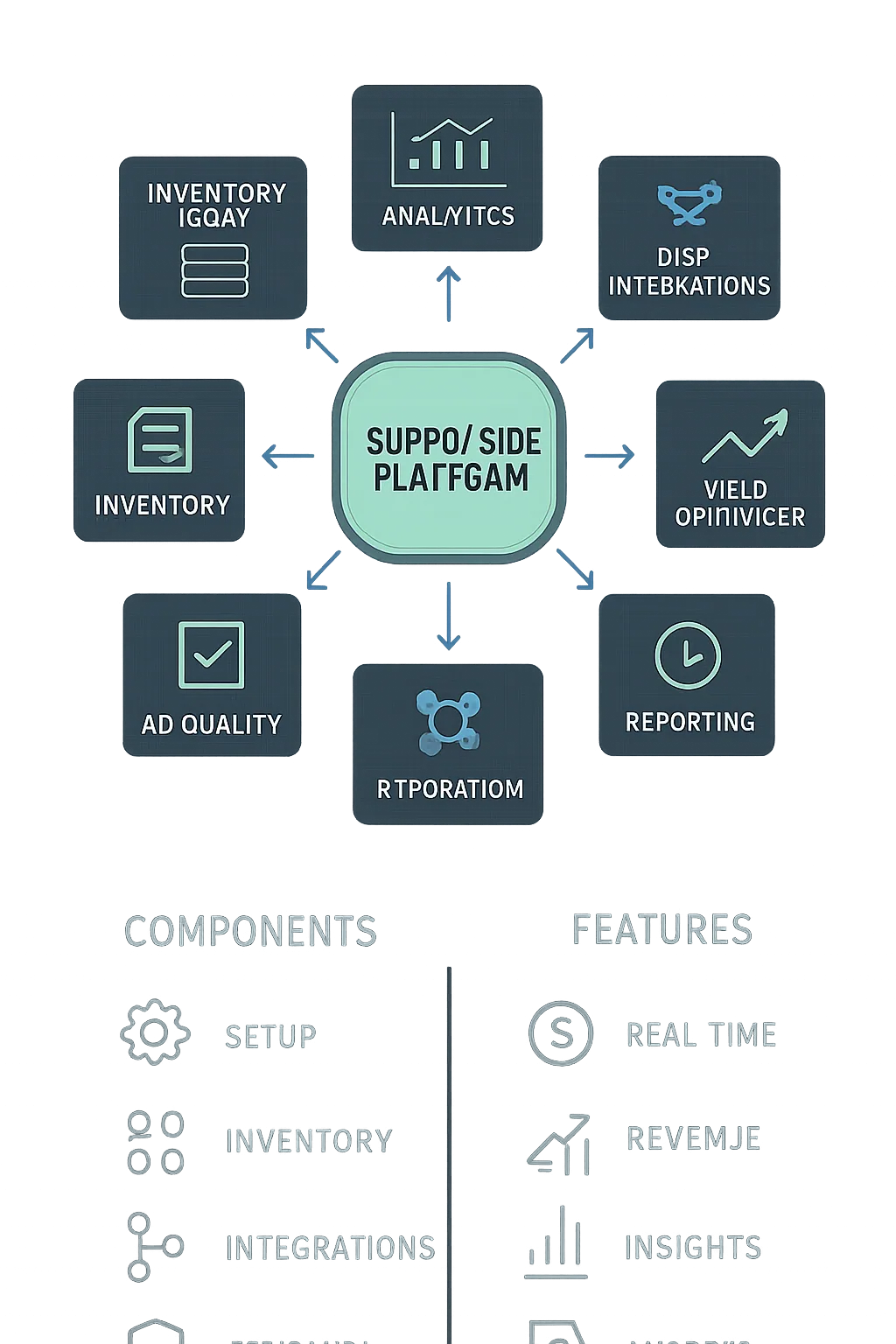
Major SSP Providers
The choice of SSP typically depends on a publisher's strategy, goals, budget, ad formats, and target audience. Each platform carries its own feature set, fee structure, and performance characteristics. Widely used SSP providers include:
DoubleClick
Google DoubleClick Ad Exchange (AdX): A full ad-revenue engine designed to help publishers maximize yield across all demand sources and channels. Through AdX integration, publishers gain access to millions of quality advertisers, and a natively integrated sales-management platform helps streamline operations for maximized revenue at reduced cost.
Pubmatic
PubMatic: An automation-solutions company for the open digital media industry, featuring an omni-channel revenue-automation platform for publishers alongside enterprise-grade programmatic tools for media buyers. PubMatic's publisher-first approach is designed to give advertisers access to premium inventory at scale.
AppNexus
AppNexus: One of the veterans of the online advertising technology space, AppNexus initially launched as an ad exchange and subsequently expanded its product lineup to include an ad server, SSP, and programmable bidder. AppNexus was acquired by AT&T in June 2018.
ONE by AOL
ONE by AOL: Built by industry veterans from Advertising.com and AOL, ONE is designed to help publishers maximize digital advertising revenue while providing controls to minimize sales-channel conflicts.
OpenX
OpenX: A programmatic advertising technology company that has developed an integrated platform combining an ad server, a real-time bidding exchange, and a standard SSP.
Rubicon
Rubicon Project's Seller Cloud: An independent advertising marketplace connecting publishers to a global landscape of vetted, high-quality buyers. The platform is designed to help publishers maximize yield across inventory and audiences on all screens and formats.
Custom Supply-Side Platforms
While third-party SSPs offer a broad range of monetization features, building a custom SSP is a viable path for publishers with specific requirements. The main advantages include:
Ownership of data and technology. A custom-built SSP gives publishers control not only over the technology stack but also over the data it generates. This is particularly valuable for companies managing multiple websites, where proprietary audience data represents a significant asset.
Elimination of vendor fees. Building a custom SSP will not eliminate all of the fees and commissions involved in the programmatic media-buying chain, but it does remove the known and hidden fees charged by third-party SSP vendors.
Control over the product roadmap. Most commercial SSPs come loaded with features that may not suit every publisher's use case. Building a custom platform provides full control over which features get built and when — meaning the product can be shaped precisely around the publisher's operational reality rather than a vendor's generic template.
Summary
Supply-side platforms provide the programmatic infrastructure publishers need to navigate an increasingly complex AdTech ecosystem. Shifting fill rates, dynamic price floors, latency variability, brand safety requirements, and multi-network demand aggregation would be practically unmanageable without automated tooling. Whether a publisher opts for a third-party SSP or builds its own, understanding how these platforms function — and what levers they expose — is foundational to running an effective programmatic monetization strategy.