The Anatomy of a Data-Management Platform (DMP)
Data-management platforms (DMPs) are widely used across the programmatic advertising ecosystem by advertisers, agencies, and publishers alike. They are complex pieces of software that incorporate many different components and features — and understanding how those pieces fit together is essential for anyone working with audience data at scale.
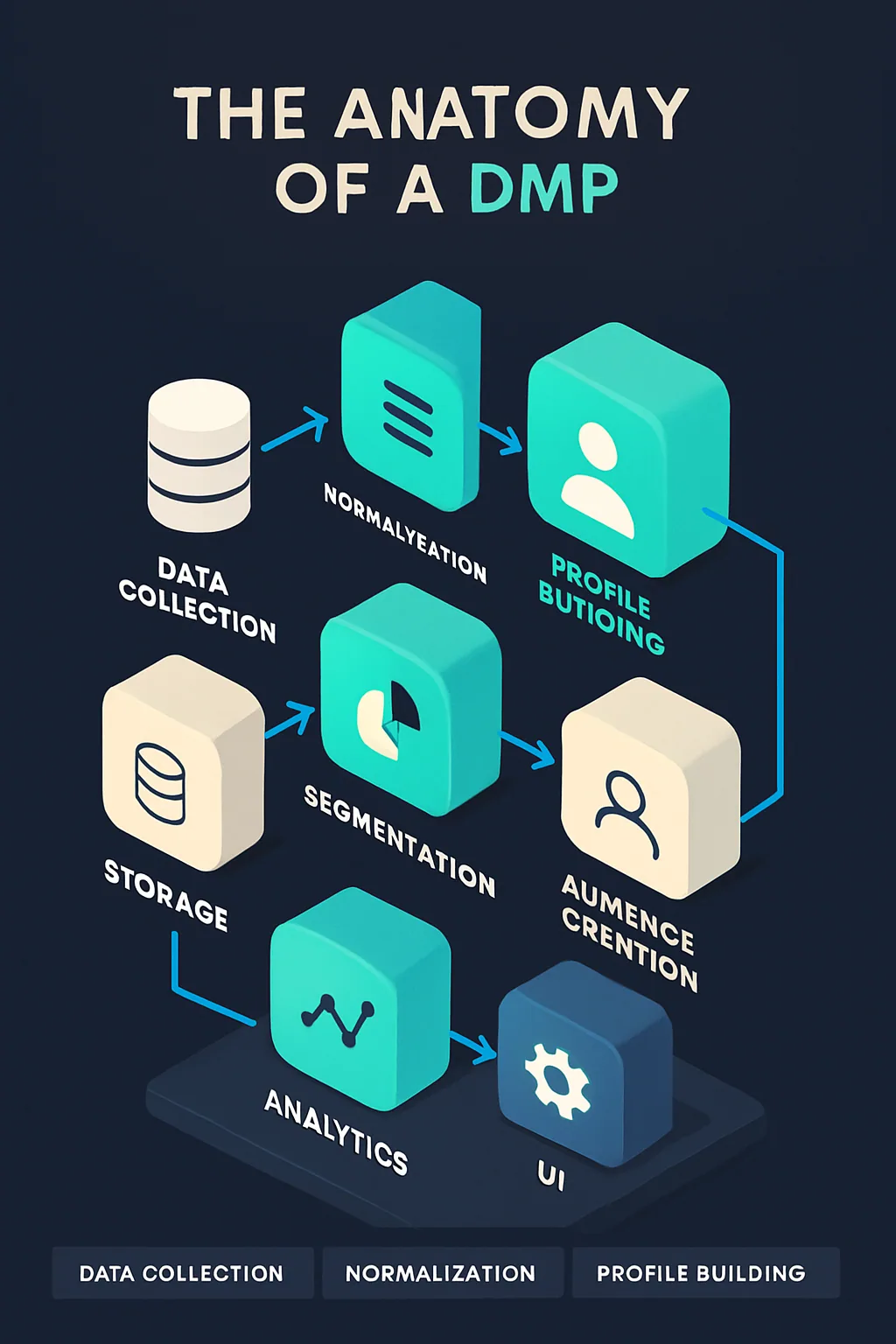
The infographic below maps out the key components that make up a DMP and how they connect to one another. Click on the infographic to enlarge it.
What Is a Data-Management Platform (DMP)?
A data-management platform (DMP) is a complex piece of software that collects, stores, organizes, and reports on and exports data. Its primary use case is on the buy side: advertisers — whether brands or agencies — use DMPs to improve the targeting of online media campaigns by building and activating audience segments.
Publishers also have a strong use case for DMPs. On the sell side, a DMP helps optimize the monetization of ad inventory by enabling more precise audience packaging, and it can power website personalization through product and content recommendations tailored to individual visitors.
Because DMPs collect large volumes of behavioural data from across channels and devices, they are also well suited to more advanced analytical work — including cross-device attribution and cross-channel attribution — that would be difficult or impossible to perform without a centralized data layer.